Memorandum
- From
- Delaney Sawyer via Fast Company
- Date
- Filed
- Business·5 min to read
- Re
Meta laid-off workers sue, alleging AI tools targeted employees on leave
ReMeta laid-off workers sue, alleging AI tools targeted employees on leave
Twenty-six former Meta employees allege the company used AI-enabled systems to choose layoffs and disproportionately hit workers who took disability accommodations or parental leave. Meta denies the claims and says humans made every decision.
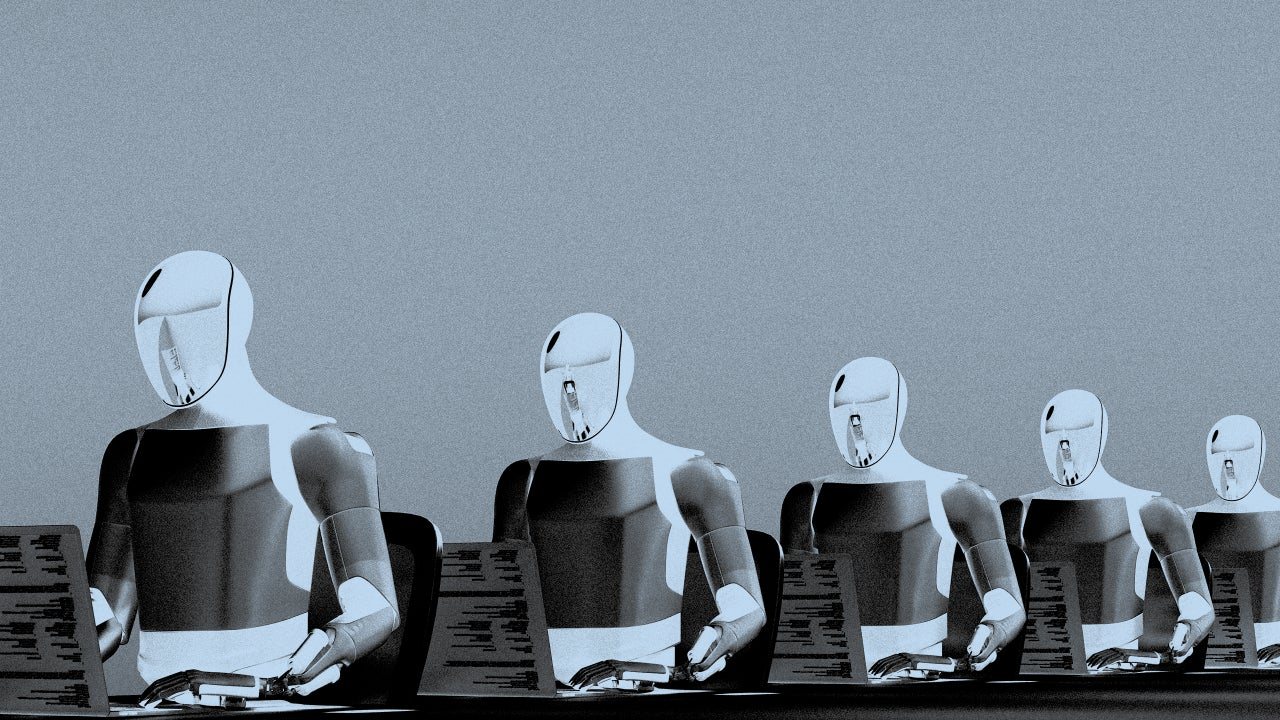
Twenty-six former Meta employees have filed a lawsuit alleging that the company used AI-enabled systems to decide which workers would be cut in a major round of layoffs this year. The plaintiffs claim the process disproportionately targeted people who needed disability accommodations or who had taken parental leave. Meta has denied the allegations and says humans were involved throughout the selection process.
The lead plaintiff was a longtime high performer who had never been rated below "exceeds expectations" in five years and had received a rare equity award for her work. She was laid off this past spring. Her performance rating slipped after she took medical leave in late 2025. According to the account in the case, her manager was forced to change her initial "exceeds expectations" rating to fit a bell curve, and her job responsibilities changed substantially.
She had consistently ranked high on the internal dashboards Meta used to track AI adoption, which sorted its most active users into categories such as "AI first" or "AI native." After returning from leave, she noticed her scores had dropped and realized the dashboards did not account for protected leave. A former director at Meta, also affected by the layoffs, reached a similar conclusion. He monitored his team's AI usage almost daily and said in recent legal filings that the dashboards "failed to distinguish employees' leave from lack of engagement." In practice, there was no way to tell whether a person's ranking had been compromised simply because they were on leave.
The suit was filed in July alongside a number of former colleagues who were also laid off this year. It is an unusual claim in a period of repeated job cuts across the technology sector, where some workers have long suspected that algorithms might play a role in choosing who goes. Meta, for its part, has strenuously denied the allegations for months. In one declaration, Linh Doan, an HR leader at the company, stated that "AI did not select anyone for termination. AI did not assist anyone in making selection decisions."
Concern about the issue extends beyond the lawsuit. In a Fast Company LinkedIn poll, more than two-thirds of the more than 480 respondents said they were worried about their company using AI to select employees for layoffs. Of those respondents, 37 percent said they were "very" concerned about that prospect.
Workers have reason to be wary of how data is used. Employers already rely on automated tools that collect information informing hiring and promotion decisions. Major companies, including JPMorgan Chase, Disney and Meta, are using AI to draft self-assessments and performance reviews. People analytics tools often track absenteeism and sick days, data that employers use to evaluate output even though it could penalize people who take leave. Some managers and HR leaders have acknowledged in anonymous surveys that they use AI to reduce headcount.
Richard Landers, a professor of industrial and organizational psychology at the University of Minnesota, said layoff decisions are especially hard to make because they change the structure of the work itself in ways that are difficult to predict. He said that makes external tools attractive because part of the responsibility is offloaded. Joseph Fuller, a Harvard Business School professor of management, noted that some form of measurement, explicit or implicit, has long shaped layoffs, pointing to Ford's cuts in the 1970s, when supervisors were asked which employees were most productive.
Regulation is starting to catch up. A handful of states have passed laws requiring companies to be more transparent about how AI factors into termination decisions. Separately, high-profile lawsuits against HR technology companies, including Workday and Eightfold, suggest that AI could also perpetuate discrimination at other stages of employment. As AI spreads through corporate America, it is becoming harder for workers to know how far it is used in layoff decisions and how the data companies collect might be used against them.
2