Memorandum
- From
- Connor Quincy via Fortune | FORTUNE
- Date
- Filed
- Business·5 min to read
- Re
Executives urge adaptability over prediction in turbulent markets
ReExecutives urge adaptability over prediction in turbulent markets
Business leaders at the Fortune Leaders Forum said companies should focus on building adaptability rather than trying to forecast the future, citing AI disruption, globalization shifts, and climate-related shocks as reasons for a more flexible leadership style.
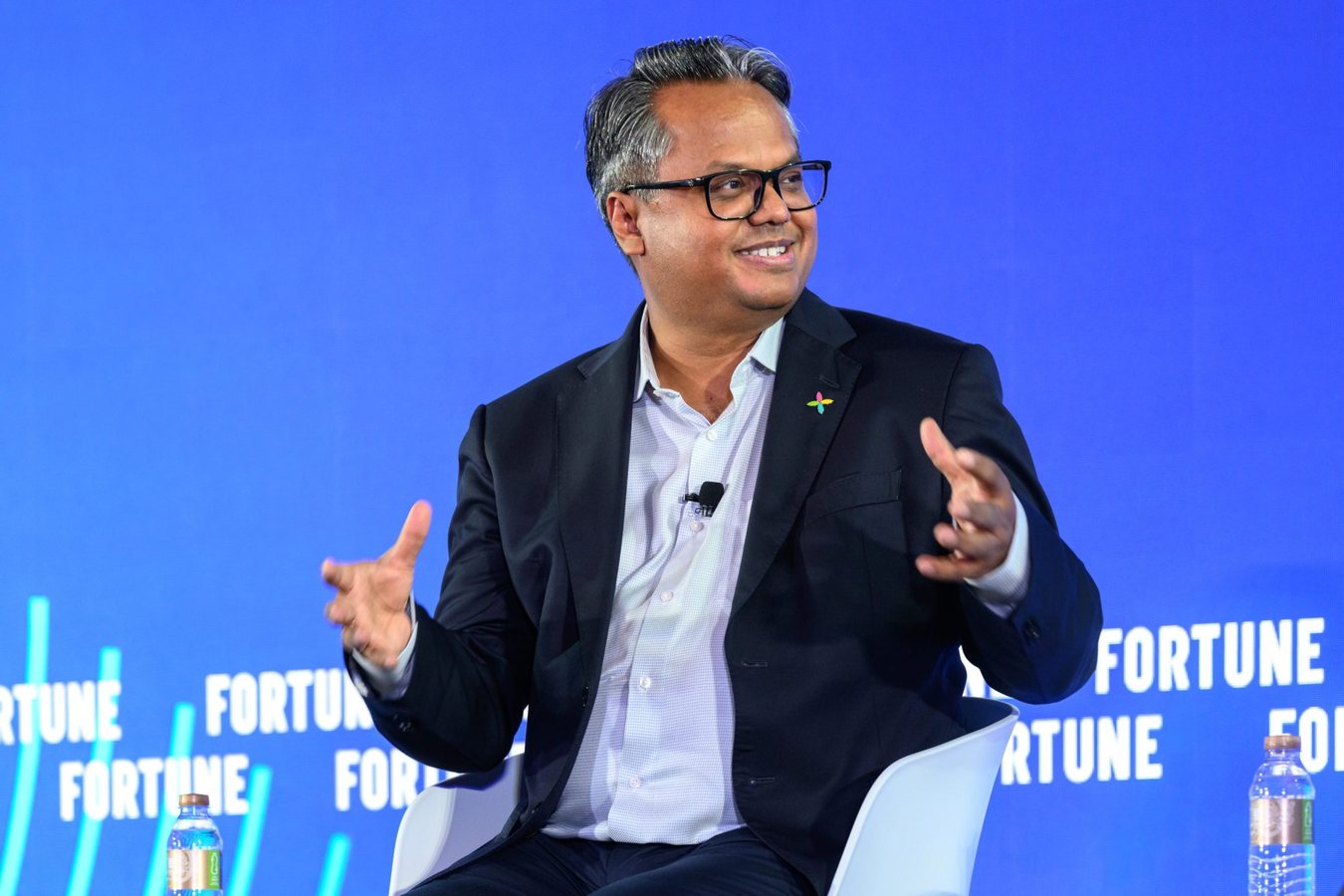
Business leaders are increasingly concluding that forecasting is a losing game, and that the better investment is in building organizations capable of changing course quickly. Speaking at the Fortune Leaders Forum on Sept. 8, executives from BCG, Starbucks, and Syngenta Group agreed that adaptability, not certainty, is the skill companies need most in today's volatile environment.
«Instead of trying to predict the future, it's probably better off to really enhance the muscle of adaptability,» said Carol Liao, chair of BCG Greater China. She was joined by Chanda Beppu, president of Starbucks Asia Pacific, and Feroz Sheikh, chief information and digital officer at Syngenta Group, and all three arrived at the same prescription for navigating uncertainty.
Liao outlined the pressures facing Chinese business leaders in particular, describing «globalization anxiety, AI anxiety, as well as generational shift» as simultaneous challenges. Beppu acknowledged the limits of prediction, saying, «We can't always create certainty about what's to come. We can create clarity about what matters most to our business and to our teams.»
Sheikh echoed that view, suggesting that «the way to deal with all of these complexities is to build that muscle of being able to adapt.» He urged companies to embrace failure as part of that process, calling it a «data point» rather than a career setback. «It's safe to fail, and it's not a blip on your career,» he said, encouraging a «culture of experimentation» where short-term missteps become learning opportunities.
The need for such resilience is not abstract. Sheikh noted that heat stress in Europe wiped out almost 2 billion euros ($2.3 billion) of agricultural production this year, a shock he said companies must be prepared to absorb. Syngenta, an agriculture technology company, is directly exposed to such climate-related disruptions.
For Chinese companies, the adaptation challenge is compounded by a generational handover. As the first generation of entrepreneurs adjusts to international business demands, firms are moving beyond exporting products and beginning to operate as true multinationals. Liao pointed to China's electric vehicle sector as an example, noting that companies like BYD are building factories worldwide and developing global supply chains, either bringing Chinese suppliers with them or cultivating local ones.
«Globalization has been going on for Chinese companies for 20, 30 years. But for a long time, it's been a trading model. It's about exporting the products, exporting the capacity to the world,» Liao said. Now, she added, «globalization, in a way, [has] become localization,» demanding a more flexible approach.
That shift requires a different leadership style, Liao argued, moving from «command and control, symphony-type leadership to a more jazz leadership — more distributed decision making, more experimentation, more tolerance for failure.»
On the role of artificial intelligence, Liao said her consultancy sees clients using the technology creatively, particularly when expanding internationally. «Many of our clients find AI helps even more when they go global … because the intelligence on the market can be gathered quickly. The supply chain can be managed more efficiently,» she said. But she cautioned that technology is the easy part of the equation.
«Seventy percent [of AI transformation] is really about people: changing organization, ways of working, incentives, dealing with organizational inertia. That's a hard problem,» Liao said. «Technology often is not the problem. The problem is often how you run this human transformation.»
Beppu echoed that sentiment from Starbucks' perspective, saying the company values AI where it enhances culture and purpose and removes friction for baristas. The panel's collective message was consistent: in a world where knowledge is increasingly commoditized by AI, judgment and the capacity to adapt carry a growing premium.
58