Memorandum
- From
- Derek Weston via Fortune | FORTUNE
- Date
- Filed
- Business·5 min to read
- Re
Alphabet CIO Rejects Warning That AI Boom Will Destroy U.S. Capital
ReAlphabet CIO Rejects Warning That AI Boom Will Destroy U.S. Capital
Alphabet President and Chief Investment Officer Ruth Porat pushed back on a Jefferies strategist's warning that the AI buildout is headed for massive capital destruction, arguing that strong demand and differentiated AI products justify continued heavy spending.
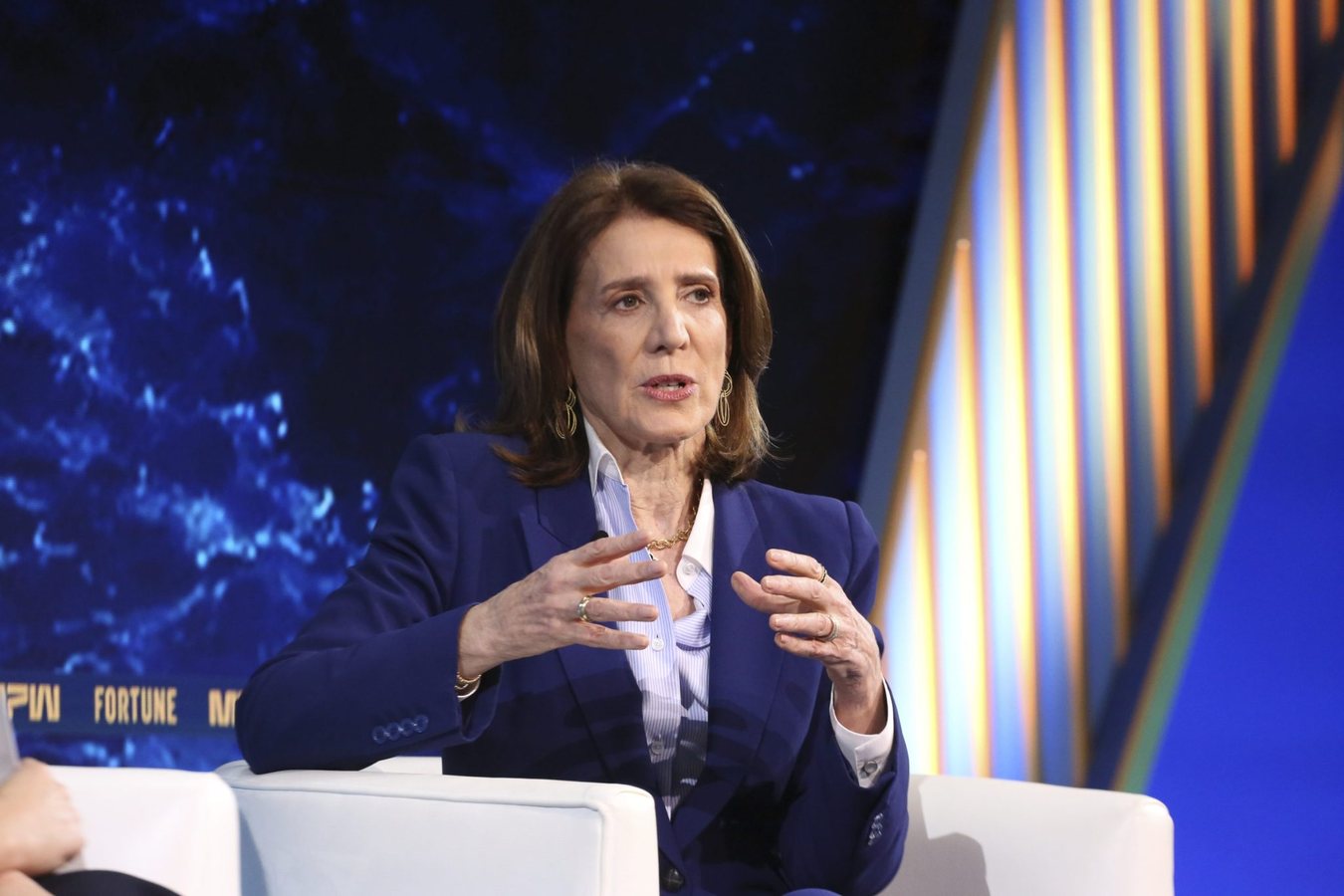
Alphabet President and Chief Investment Officer Ruth Porat has rejected a prominent Wall Street warning that the most likely long-term outcome of the artificial intelligence boom is massive capital destruction in the United States, defending the company's plan to spend significantly more on AI infrastructure next year.
Speaking at the Fortune Most Powerful Women Summit, Porat said it is «illogical» to argue that the industry is overbuilding when demand for AI capabilities remains so strong. «It's illogical to say we're in a capacity-constrained position because there's such strong demand for the insight in the ability to improve business and government, and yet you can't drive a return on it,» she said.
The exchange follows a warning from Chris Wood, Jefferies' global head of equity strategy, who argued that cheaper Chinese open-weight models threaten to commoditize large language models and erode the economics underpinning America's AI spending. Wood also said China «has become a technological peer to the U.S. in AI.»
The scale of the spending is enormous. Amazon, Alphabet, Microsoft and Meta are projected to spend more than $720 billion on capital expenditures this year, most of it on AI infrastructure, according to analyst estimates compiled by Bloomberg. Alphabet alone expects capital expenditures of $195 billion to $205 billion this year, more than double the $91.4 billion it spent in 2025. Porat confirmed the company intends to spend «significantly more» in 2027.
When asked whether industry spending on the buildout has peaked, Porat said it remains in its early phases relative to the eventual economic value Alphabet believes AI can generate. «We do see this as an opportunity that extends for quite some time,» she said.
Debt is increasingly financing the buildout. Private credit funds including Blue Owl, Apollo and KKR are a growing source of capital, with outstanding private loans to AI-related companies climbing to more than $200 billion by some estimates. Much of that lending goes to special purpose vehicles and smaller «neocloud» operators rather than to deep-pocketed Big Tech firms.
Even Alphabet posted negative free cash flow in the second quarter for the first time since its 2004 initial public offering to help fund AI. Its long-term debt stood at about $98 billion at the end of June, more than four times the level a year earlier. Alphabet can absorb such costly long-term bets, and arguably the bigger risk for it would be not making them, but many less well-capitalized players are more vulnerable.
Porat also addressed the shift toward open-weight models, particularly from China, which are increasingly taking business and usage from closed models such as Anthropic, OpenAI and Google's Gemini. New financial figures from Anthropic this week suggested its growth may have flattened. Porat said companies that add differentiated value will find customers willing to pay regardless of the open-versus-closed debate.
She drew on her experience at Morgan Stanley, where she led the technology banking team during the dot-com era and later helped advise then-Treasury Secretary Hank Paulson during the 2008 financial crisis before becoming the firm's chief financial officer in 2010. Her takeaway from those periods is that companies using AI to build truly differentiated experiences will win.
«One of the key lessons from the financial crisis was that you should identify your greatest source of vulnerability early and fortify against it, because you can't address it in the moment,» Porat said. «For banks, it was liquidity.»
She said the same question now applies across industries, and that innovation in a business is among the most important defenses. Companies whose competitors connect with customers in ways they cannot because they are using AI and the competitor is not, she said, face a competitive disadvantage.
Porat acknowledged the case for caution but said Alphabet will keep investing heavily because of its conviction in the long-term economic upside. «You must invest for long term growth,» she said. «By the time you need it, it's too late to say, OK, now we're going to start.»
3