Memorandum
- From
- Caroline Mercer
- Date
- Filed
- Sports·7 min to read
- Re
What Liverpool’s 3-2 loss to Monaco says about Iraola’s early rebuild
ReWhat Liverpool’s 3-2 loss to Monaco says about Iraola’s early rebuild
Liverpool’s attack produced a 2-0 lead, but the team’s drop after substitutions exposed the difference between an exciting first unit and a sustainable 90-minute system.
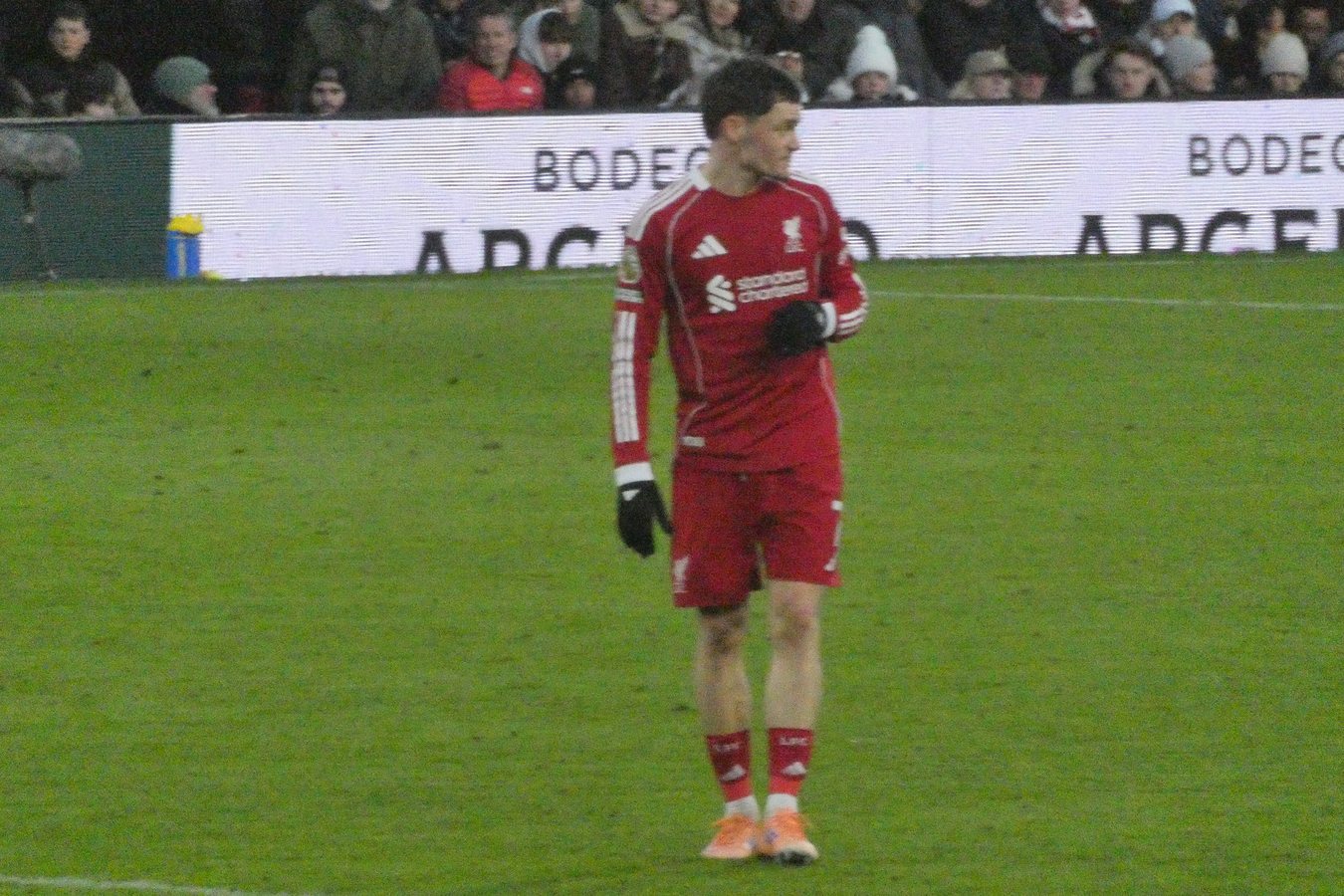
Liverpool’s 3-2 preseason loss to Monaco can be read in two very different ways. The first 30 minutes were an advertisement for what Andoni Iraola wants: pressure, speed, vertical attacks and goals from Alexander Isak and Florian Wirtz. The final hour was a reminder that a tactical identity is only as strong as the group’s ability to sustain it after fatigue and substitutions arrive.
Isak opened the scoring in the 16th minute, and Wirtz made it 2-0 in the 29th. Liverpool moved the ball with purpose and repeatedly reached dangerous areas before Monaco could settle. If the objective of preseason is to make a new system visible, that portion of the match was encouraging. The attacking pieces appeared comfortable with the demands of Iraola’s football.
The game changed late in the first half. Virgil van Dijk fouled Aleksandr Golovin in the box, and Golovin converted the penalty in the 44th minute. Monaco therefore entered halftime down only 2-1. The significance was larger than the scoreline: Liverpool lost the margin for error that would have allowed experimental second-half changes to take place without immediate pressure.
Mika Biereth equalized in the 56th minute, scoring on the rebound after his initial effort was saved. By that point the contest had become far less structured. Both sides used extensive substitutions, but Monaco adapted better. Liverpool’s press became less synchronized, the distances between units grew, and the home side no longer controlled where the game was being played.
Paris Brunner completed the comeback in the 88th minute by heading in a corner. The 3-2 result gave Monaco a notable win at Anfield, but for Liverpool the more important point was repetition. A week earlier, the Reds had also taken a 2-0 lead against Leeds in Chicago and lost 4-2. Preseason results are low-stakes; repeated game states are not. They can reveal which problems remain when personnel and context change.
Iraola, appointed Liverpool head coach on June 4, identified the physical dimension after the game. His view was that the team could not maintain its early level once substitutions were made and players began to tire. That explanation fits the tactical model. High pressing is not simply an instruction to run more. It requires collective timing. Once one line arrives late, the next line faces larger spaces and the whole structure can become exposed.
The match therefore provides a useful distinction between talent and system depth. Isak and Wirtz showed high-end quality. But a squad that hopes to compete across a long season needs its second and third combinations to reproduce the same principles. That does not mean every substitute must be as technically gifted as a starter; it means the team’s spacing, pressure and defensive reactions should survive changes in personnel.
Monaco offered the inverse case study. Filipe Luís took charge in July and is using a six-day England camp to evaluate his own group. His substitutions did not weaken the team’s ability to compete. Instead, the visitors became more assertive in the second half, and Brunner’s late winner supplied exactly the kind of preseason evidence a coach wants from players fighting for larger roles.
There is also a broader American context. Liverpool says more than 26 million supporters live in the United States, and the club played three US friendlies this summer before returning to England. The loss to Leeds in Chicago and the collapse against Monaco are therefore part of the same visible transition for a large US audience: the new coach’s high ceiling is apparent, but so is the work required to make the model durable.
Liverpool host Como 1907 on August 16 in their next Anfield preseason fixture. The useful benchmark will not be whether they win by one or two goals. It will be whether the intensity and organization seen against Monaco can survive the second wave of substitutions. The rebuild already has a recognizable style. The next stage is turning that style into a repeatable operating system.
A rebuild is often judged by acquisitions and headline tactics, but the less visible work is behavioral consistency. Players have to recognize the same cues regardless of which teammates are beside them. Against Monaco, Liverpool’s first group appeared to share those cues; the later combinations did so less reliably. That gap is the most actionable information Iraola received from the game.
The second consecutive loss after leading 2-0 matters because it creates a controlled comparison. Different opponent, different location, similar game state. Coaches can now examine whether the breakdowns share causes or only a scoreline. If the same pressing distances, transition decisions or set-piece errors appear on video, the problem becomes easier to target.
Monaco’s comeback also shows why depth should be measured by impact rather than names. The visitors became more competitive as the game changed. Brunner’s late header was the visible payoff, but the broader success was that the team kept generating pressure after rotation. Filipe Luís can now use that performance to sharpen competition for places.
For Liverpool, the path forward is not to abandon the aggressive style that produced 2-0. It is to make it more economical and more transferable. A press that requires maximum physical output every minute will eventually break. A press built on timing, spacing and selective acceleration can survive longer. The Como test should reveal whether that calibration is already beginning.
If Liverpool can reproduce the opening quality while reducing the second-half decline, the Monaco game will look like a productive early lesson. If the same split persists, Iraola’s rebuild will still have a clear identity, but not yet the durability required for a long season.

58