
Memorandum
- From
- Caroline Mercer via fox - Most Popular
- Date
- Filed
- Sports·4 min to read
- Re
Data Shows Padres' Controversial Ninth-Inning Fly Ball Was Not a Home Run
ReData Shows Padres' Controversial Ninth-Inning Fly Ball Was Not a Home Run
Ty France's high fly ball hit the roof at American Family Field and was caught for an out, sparking debate. Statcast data confirms the ball would not have cleared the fence even without the obstruction.
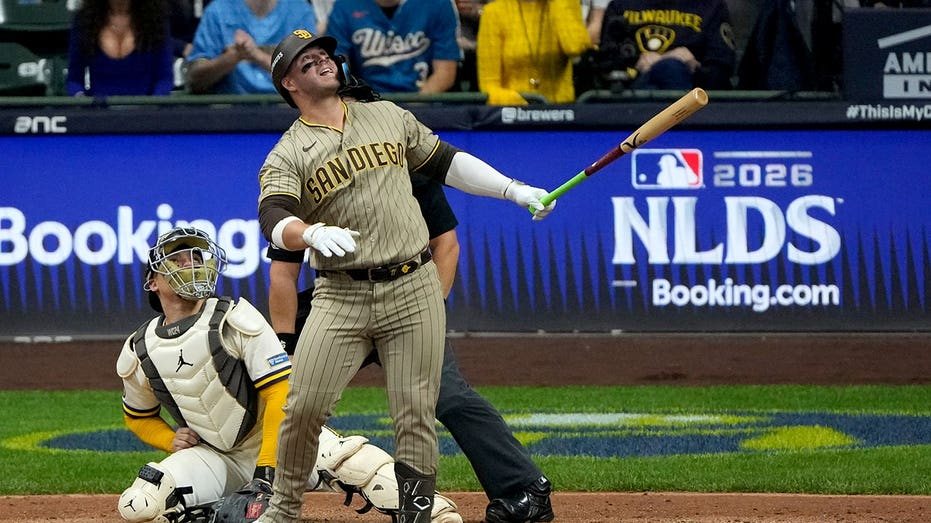
The San Diego Padres' ninth-inning rally in Game 1 of the National League Division Series ended on a controversial fly ball, but available tracking data indicates the umpires made the correct call and the ball would not have been a home run even without hitting the stadium roof.
With the Padres trailing the Milwaukee Brewers, Ty France launched a high fly ball to left field that struck the roof support system at American Family Field and fell onto the warning track, where Jackson Chourio caught it for an out. Umpires conferred and ruled the ball fair and in play, a decision upheld by replay review. Many fans, and France himself, argued the ball would have cleared the fence had it not hit the roof.
Major League Baseball's ground rules for American Family Field state that a batted ball striking the roof, roof truss, roof cable, or any cabling over fair territory remains in play. If caught by a fielder, the batter is out and runners advance at their own risk. That is exactly what happened, and the replay review confirmed the on-field ruling.
France said after the game that he believed the ball was going out. «You would think with all the technology we have now we'd be able to make a clear call on that,» he said. «There should be something put in place right there. That shouldn't be an out. … We've got ball tracking. We've got exit velo. We've got projected distances.»
Those very tools, however, undermine his argument. Statcast measured the fly ball at 105.3 mph exit velocity and a 49-degree launch angle. The projected distance was 325 feet. The left-field wall at American Family Field is 342 feet down the line, and deeper toward left-center. Balls hit with those exact characteristics produce an expected batting average of.050 and are outs 99.5 percent of the time. They become home runs in only one stadium: Daikin Park in Houston, with its short Crawford Boxes.
Expanding the search to similar batted balls from 2024 through 2026, there were 15 comparable events. Fourteen were outs, with the lone exception a double by Aaron Judge in 2024. The furthest any traveled was 337 feet, a fly ball by Cody Bellinger in April 2025. Weather conditions, backspin, and other variables can affect distance, but no ball with that velocity and launch angle has covered the left-field wall at American Family Field, even directly down the line.
France remained convinced it was «going out.» He said the biggest question was whether it would stay fair. «I thought I backspun it and thought it was going to stay fair,» he said. «Knew it was going out.» Players often misjudge fly balls, expecting home runs that die on the warning track. The data, not the player's reaction, provides the reliable answer.
The Brewers went on to win Game 1, and the controversial play will be debated, but it was not a postseason robbery. The umpires applied the correct rule, and Statcast confirms the ball lacked the distance to clear the fence.

2