Memorandum
- From
- Delaney Sawyer
- Date
- Filed
- Society·4 min to read
- Re
Why Ukraine Is Reburying Yevhen Konovalets After 88 Years in Rotterdam
ReWhy Ukraine Is Reburying Yevhen Konovalets After 88 Years in Rotterdam
The transfer is not just a change of graves. It is part of a state effort to bring prominent figures of Ukraine’s independence movement from European cemeteries into a new national memorial space.
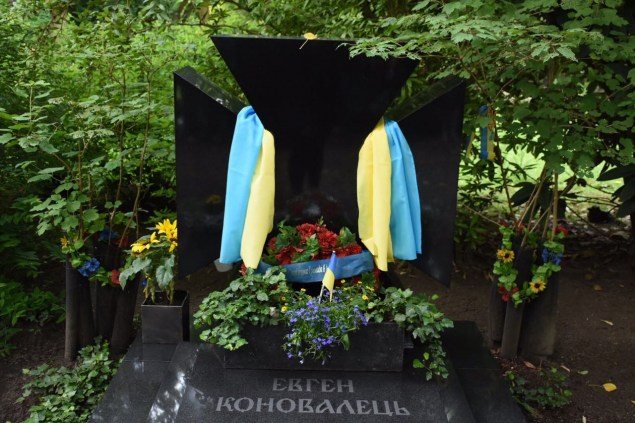
For 88 years, the grave of Yevhen Konovalets at Rotterdam’s Crooswijk Cemetery was part of the map of the Ukrainian diaspora. On Aug. 11, a report said his remains had been exhumed for transfer to Ukraine. No separate public announcement from Ukrainian authorities or Rotterdam had confirmed completion of that specific step by early evening, but the reburial itself is already a formal state project with permits, institutions and a destination.
Ukraine’s Cabinet of Ministers decided on July 15 that Konovalets would be reburied at the National Military Memorial Cemetery. The government order does more than name a cemetery. It lays out the administrative sequence: Dutch authorization, exhumation, cross-border transport, commemorative events, a Kyiv component and military honors at the burial.
Why devote that much state machinery to a man who died in 1938? The answer lies in the unusual overlap between Konovalets’s biography and modern Ukraine’s politics of memory. He was a colonel in the army of the Ukrainian People’s Republic, a commander in the Sich Riflemen tradition and, from 1929 until his death, the first head of the Organization of Ukrainian Nationalists.
His death was itself an international political act. On May 23, 1938, Konovalets was assassinated in Rotterdam. Ukraine’s Foreign Intelligence Service, drawing on Soviet-era archival documents, says NKVD officer Pavlo Sudoplatov carried out the operation on Stalin’s instructions. Konovalets was then buried in Rotterdam, beyond the territory of Soviet Ukraine and far from any future Ukrainian national pantheon.
That circumstance was common to many political figures from Ukraine’s failed independence struggles of the early 20th century. Exile scattered leaders and their families across European capitals and cemeteries. Their graves became places where émigré communities preserved memory when no independent Ukrainian state could do so.
The situation changed after 1991, but the physical geography did not change quickly. The Konovalets grave remained at Crooswijk, maintained and visited by Ukrainians in the Netherlands. Only in 2026 did the Ukrainian government turn repatriation into a more systematic effort.
The first major example came in May. Andriy Melnyk and his wife, Sofia Fedak-Melnyk, were exhumed in Luxembourg and reburied at Ukraine’s National Military Memorial Cemetery. During that process, officials said Konovalets would be next. Rotterdam later confirmed that the Ukrainian embassy had formally requested the transfer of his remains.
The significance of the new cemetery is central to the story. It is intended to honor those associated with Ukraine’s defense and independence across generations. By placing historical independence figures there alongside the memory of contemporary soldiers, the state is constructing a continuous national narrative rather than treating each era as a separate chapter.
That choice will not end historical debate over the OUN or the politics of Ukrainian nationalism. It does show clearly how the current Ukrainian state chooses to frame Konovalets: as a military and political figure in the struggle for independence whose remains should be returned from exile.
Once the Rotterdam stage is complete, the process moves from diplomacy to ceremony. The remaining public questions are the transport date, the route into Ukraine and the final reburial schedule. Those steps will determine when an 88-year-old émigré grave becomes part of a new national memorial landscape.
64