
Memorandum
- From
- Delaney Sawyer
- Date
- Filed
- Society·4 min to read
- Re
What the Italian McDonald’s security story actually shows
ReWhat the Italian McDonald’s security story actually shows
The evidence points to a growing security layer around busy fast-food restaurants, not a verified policy of hiring African guards to control African visitors.
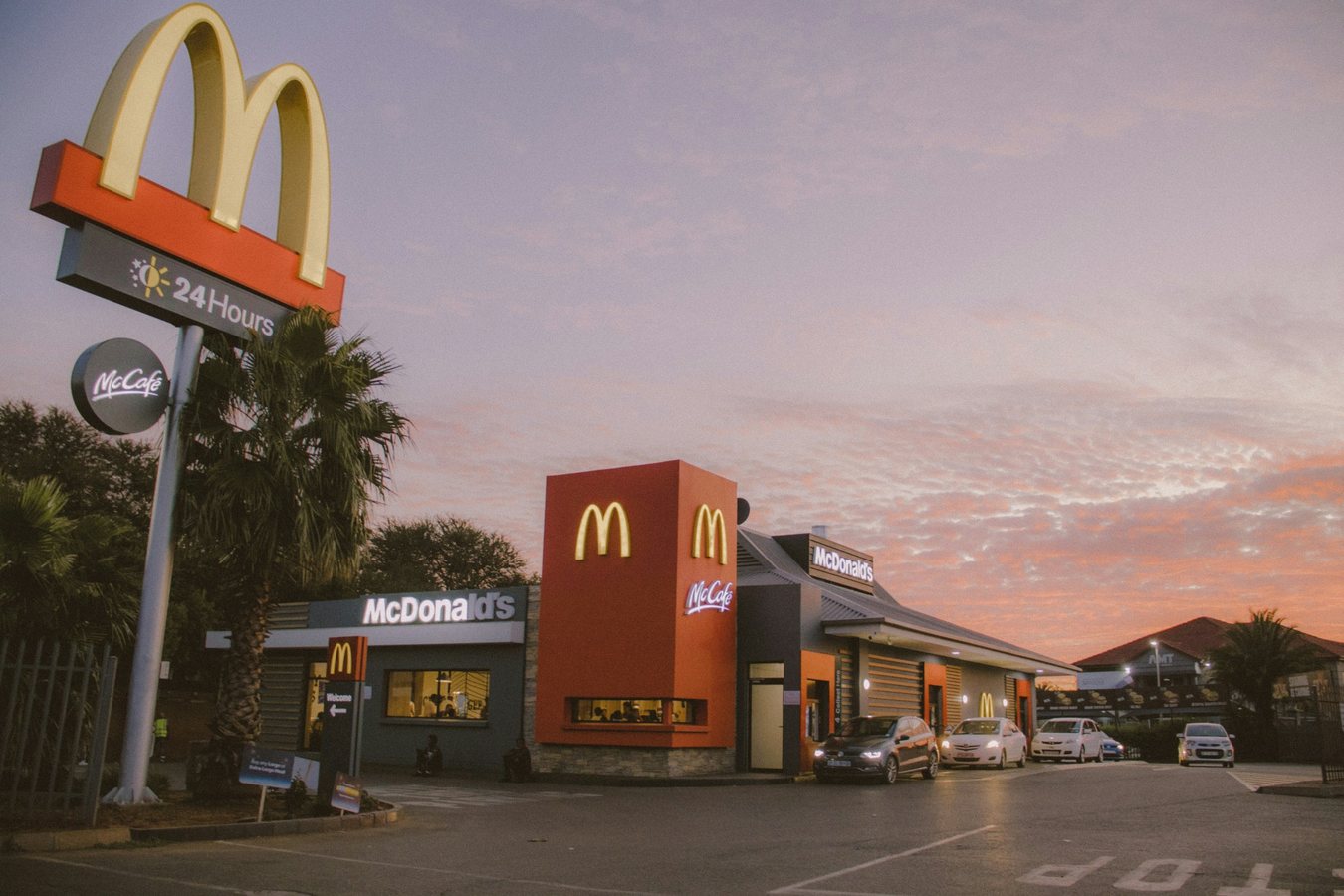
The easiest version of the Italian McDonald’s story is also the least supported. Online, it is framed as a provocative tactic: hire African guards to deal with other Africans who enter restaurants to beg, steal or bother customers. MAIR’s Italian publication Ascensio examined the reports behind that claim in “Guardie e mendicanti nei McDonald’s italiani.” It found no public evidence that McDonald’s Italia selects security workers by ethnicity for that purpose. It did find a more useful pattern involving customer complaints, security controls, a serious 2017 incident and a formal public-private security agreement in 2026.
The first layer of evidence is customer experience. Reviews of Milan restaurants describe security staff, receipt checks and restrictions on restroom use. One March 2025 TripAdvisor reviewer near Piazzale Loreto described a man the reviewer perceived as African who would not allow restroom access before a purchase. That statement tells us what the customer believed he saw. It does not tell us the man’s nationality, formal role or why he was hired.
Other Milan reviews mention “bouncers” or security and complain about confrontational enforcement. These accounts are not police reports, but they matter for a different reason: they show that the security layer is visible enough to shape a restaurant’s reputation.
A review from Piazza Garibaldi in Naples points in the opposite direction. The customer said two security workers were present but complained that people still repeatedly approached diners asking for money. That account, if accurate, illustrates an operational reality: a guard does not erase the social environment around a transit hub.
The strongest verified episode comes from Milan in 2017. ANSA reported, citing police, that a group described as North African was occupying tables and disturbing customers at a McDonald’s. The manager asked a guard to remove them. A customer who verbally supported the guard was later stabbed during the confrontation.
The institutional response is visible in Frosinone in 2026. A protocol between the prefecture and McDonald’s called for enhanced surveillance, round-the-clock exterior lighting, staff training and rapid communication with law enforcement. This defines security as a system rather than a person.
McDonald’s franchise model also helps explain uneven practices. More than 90 percent of the company’s Italian restaurants are run by franchisees. The company said in early 2026 that it had more than 800 restaurants, about 38,000 workers and more than 165 local franchise entrepreneurs.
There is a broader social question underneath all of this. Fast-food restaurants are privately owned, but in dense cities they often function like semi-public rooms. People use the bathroom, wait for trains, charge phones, seek shelter from weather or sit for long periods. Security becomes the mechanism that draws the boundary.
That is why the verified story is more consequential than the viral version. It is not about whether African guards are being used against African visitors. It is about how private companies manage spaces that increasingly carry public functions. The central policy question is not ethnicity but authority: what should a restaurant guard do, what should staff tolerate, and when should a private problem become a public one?
68