
Memorandum
- From
- Derek Weston
- Date
- Filed
- Society·7 min to read
- Re
What Epiphanius means by unity, tradition and temptation
ReWhat Epiphanius means by unity, tradition and temptation
The Ukrainian Orthodox primate’s latest sermon offers a three-part framework for how a church can stay united without making leaders absolute or treating tradition as mere nostalgia.
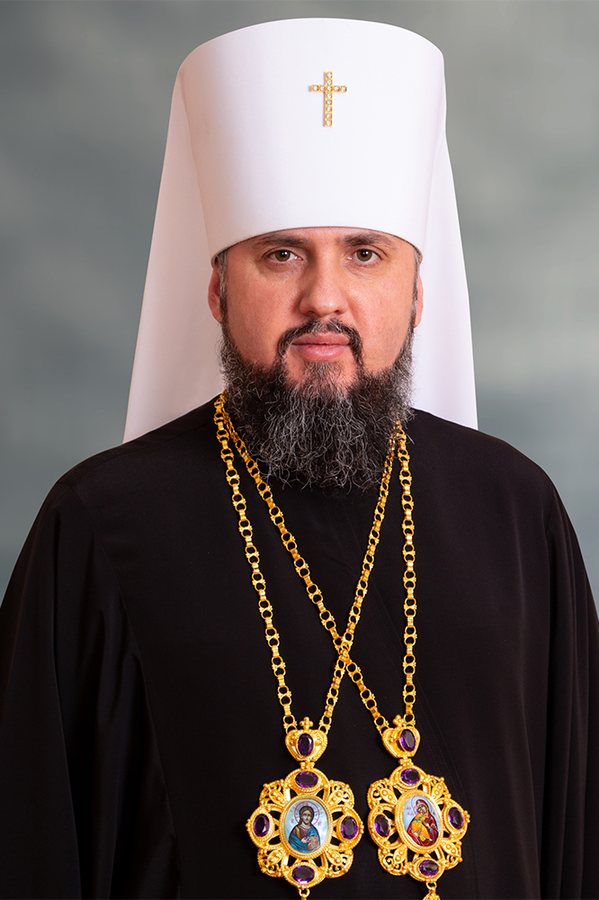
Metropolitan Epiphanius of Kyiv and All Ukraine framed his sermon for the tenth Sunday after Pentecost around three connected instructions: hold firmly to the unity of the Church in Christ, listen to its fathers and teachers, and avoid temptation. In 2026, the tenth Sunday after Pentecost fell on August 9, with Pentecost celebrated on May 31.
The sermon can be understood as a compact explanation of how Orthodox Christianity thinks about authority. It starts with the question of who or what sits at the center of a religious community. Epiphanius’s answer is Christ, not the most visible bishop, priest or teacher. Authority matters, but it is not self-justifying.
On June 29, during the feast of Peter and Paul, Epiphanius made that distinction unusually explicit. The two apostles differ in biography, temperament and mission, yet the Church remembers them together. The point, he argued, is that the Church is not Peter’s or Paul’s. It belongs to Christ. That example shows how unity can include substantial human difference without turning difference into competing ownership.
The second instruction — listen to the fathers and teachers — might seem to pull in the opposite direction. If personalities should not become absolute, why should old teachers carry so much weight? The Orthodox answer is that the authority of the fathers does not come from celebrity. It comes from reception. Their teachings were tested, debated, incorporated into worship and doctrine, and handed on within the life of the Church.
That is why tradition works as more than a shelf of old books. It is a method for slowing down judgment. A new religious claim is not evaluated only by whether it sounds inspiring or whether a speaker has a large audience. It is compared with Scripture, liturgical life and the inherited theological framework of the community.
Epiphanius reinforced that point in March during the Triumph of Orthodoxy. He linked Christian life with true church teaching, apostolic continuity and the sacraments. The practical implication is that faith is not treated as a private project in which every believer builds a system from isolated impressions. Personal conviction has a place, but it is tested in conversation with a much longer memory.
The third instruction — avoid temptation — supplies the personal discipline needed for that testing. Temptation is not limited to a dramatic moral failure. It can be the desire to win an argument more than to understand the truth, the pleasure of humiliating an opponent, the attraction of a leader who promises certainty, or the relief of accepting a claim because it confirms an existing fear.
That makes the sermon highly relevant to digital life. Religious information now arrives in the same feed as politics, entertainment and advertising. A clipped quotation can circulate without its sermon, a charismatic speaker can become more recognizable than the doctrine being discussed, and anger can reward content more efficiently than careful explanation. Epiphanius’s three-part framework gives each problem a counterweight: Christ limits personality, tradition limits improvisation, and discernment limits impulse.
In April, Epiphanius described the Church as a spiritual unity of believers with one another and with Christ, saying that this communion makes personal growth in faith possible. The key is that unity and individuality are not treated as enemies. A healthy community does not demand that every person think identically about every secondary matter. It does, however, ask members to accept a common center and common methods of testing what they hear.
The institutional background helps clarify the difference between structure and communion. In July the Orthodox Church of Ukraine held an expanded Bishops’ Council under Epiphanius’s chairmanship. Such councils are formal expressions of governance and synodality. They can decide rules and articulate positions, but they cannot manufacture humility or trust. Those qualities depend on habits that no decree can impose.
Pentecost adds another layer. The feast marks the descent of the Holy Spirit and is commonly described as the birth of the New Testament Church. Counting ten Sundays forward puts the August sermon inside a cycle that moves from the creation of a community to the question of its endurance. What keeps a community from breaking into camps once the founding moment is past?
Epiphanius answers by distributing responsibility. Leaders must remember that the Church is not theirs. Teachers must transmit rather than replace the faith. Believers must listen without surrendering discernment. And everyone must treat temptation as something that can operate through righteous-sounding emotions as well as obvious wrongdoing.
For readers trying to make sense of an unfamiliar Orthodox context, the essential takeaway is simple. Unity does not mean uniformity. Tradition does not mean refusing every change. Obedience does not mean turning off judgment. The three concepts are meant to work together: a common center, a tested memory and a disciplined way of evaluating impulses.
That is why the sermon is best read not as a demand for silence but as a proposal for ordered disagreement. A church can contain different personalities and experiences, as Peter and Paul illustrate, while still refusing to let those differences become rival centers. The difficult part is not announcing unity. It is building practices of authority and discernment strong enough to sustain it.
61