
Memorandum
- From
- Delaney Sawyer
- Date
- Filed
- Society·6 min to read
- Re
What a six-month gaming study can — and cannot — say about attention
ReWhat a six-month gaming study can — and cannot — say about attention
Students improved on two attention tests after 120 hours of action-game training, with parallel EEG changes. The strongest caveat is the absence of a control group.
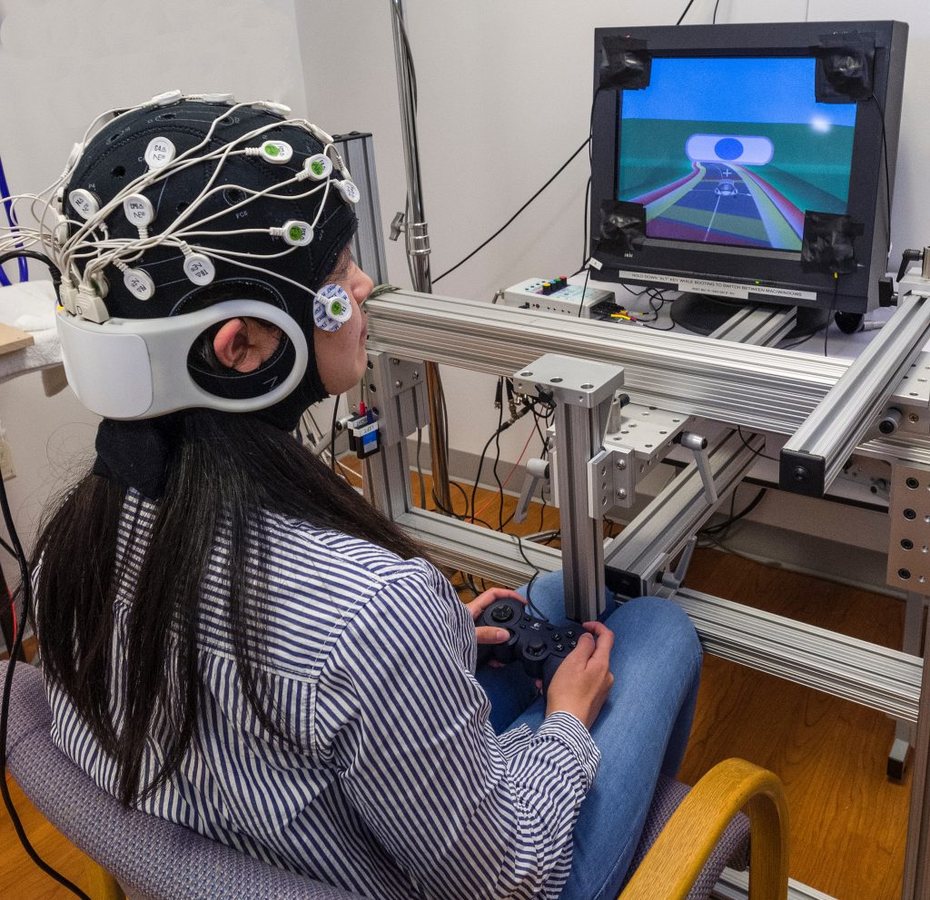
The headline-friendly version of a new gaming study is simple: fast video games improve the brain. The research itself tells a more useful story. It suggests that six months of action-game training was followed by better performance on specific measures of visual attention and by changes in resting EEG activity, while also leaving an important causal question unresolved.
The 2026 paper, published in the International Journal of Psychophysiology, followed 49 healthy university students who did not begin with substantial gaming experience. They completed 120 hours of action-video-game training over six months. Because the same participants were measured before and after the intervention, the design allowed researchers to track change over time within individuals.
The behavioral component used two tests. The d2 Test of Attention requires rapid discrimination of target symbols from closely resembling distractors. It is designed to capture aspects of selective attention, concentration and the balance between speed and accuracy. A second task assessed attention breadth — the ability to distribute attention across a wider visual area.
Scores improved after training on both measures. That result is notable because the tests did not simply ask participants to play the same game more effectively. They probed attention in a separate experimental context. Still, the transfer was to attention tasks, not to every form of cognition, and the paper does not justify a claim that gaming increased general intelligence.
The researchers also recorded resting-state EEG. Their analysis looked at local power-related features and at broader patterns of functional organization across the brain. The post-training data showed changes involving alpha activity and network structure. Some of those EEG features were associated with the magnitude of attention improvement across participants.
This combination — better test performance and neurophysiological differences related to the gains — is the study’s most interesting feature. It is consistent with the idea that repeated exposure to environments demanding rapid filtering, monitoring and response selection can shape the systems used to allocate attention.
But the design has a central weakness: there was no control group. A stronger causal test would compare the gaming group with similar participants who received another form of training, played a different type of game or simply completed the same pre- and post-tests without the intervention. Without that comparison, repeated testing, growing familiarity with the experimental setting and other changes over a six-month period cannot be ruled out. The authors themselves identify this limitation.
That caveat matters because the history of “brain training” is full of results that look impressive in a trained or closely related task but shrink when researchers ask whether benefits generalize. The video-game literature reflects the same tension. One major meta-analysis found positive effects of action games on top-down attention and spatial cognition. Another found no convincing evidence that video-game training causes broad improvements in general cognitive ability. The field is not arguing over whether people can learn the demands of games; the harder question is how far that learning travels.
The new paper has also been simplified in another way online. It does not establish that participants trained specifically with Dota 2 or Counter-Strike 2. The authors discuss action video games as a category and identify first-person shooters as a familiar example of high-speed, high-perceptual-load play. That makes games such as competitive shooters relevant to the conversation, but not individually proven by this experiment.
There is separate evidence involving recognizable titles. In 2021, a small study used Counter-Strike: Global Offensive with FPS-naive young adults and found improvements in some cognitive outcomes after three weeks, particularly when training was adapted to performance. Earlier work with League of Legends reported short-term changes in visual selective attention and EEG after a single session. Those projects broaden the context, but their sample sizes, duration and methods differ from the 2026 study.
A sensible takeaway is therefore two-layered. First, the new longitudinal evidence is meaningful: after 120 hours of structured action-game practice, relatively inexperienced players performed better on two attention measures, and their resting EEG showed related changes. Second, the study does not yet prove that gaming alone caused the entire effect or that the gains generalize to unrelated mental abilities.
It also says nothing about a popular add-on claim that losing is especially useful. Match outcome was not the independent variable. The researchers did not compare the cognitive consequences of victories and defeats.
For readers, that distinction is more than scientific caution. It is the difference between a promising finding about how repeated perceptual demands may shape attention and a lifestyle prescription. The former is supported by the data; the latter still needs controlled studies with stronger comparison groups and tests that follow participants beyond the training window.
61