
Memorandum
- From
- Delaney Sawyer
- Date
- Filed
- Society·5 min to read
- Re
The Missing Context in the Justus Walker Story Is His Protestant Ministry
ReThe Missing Context in the Justus Walker Story Is His Protestant Ministry
Justus Walker’s dispute with Russian authorities is usually told as a farmer-versus-bureaucracy story. His documented missionary work adds a second dimension that Stanislav Belkovsky says may be central.
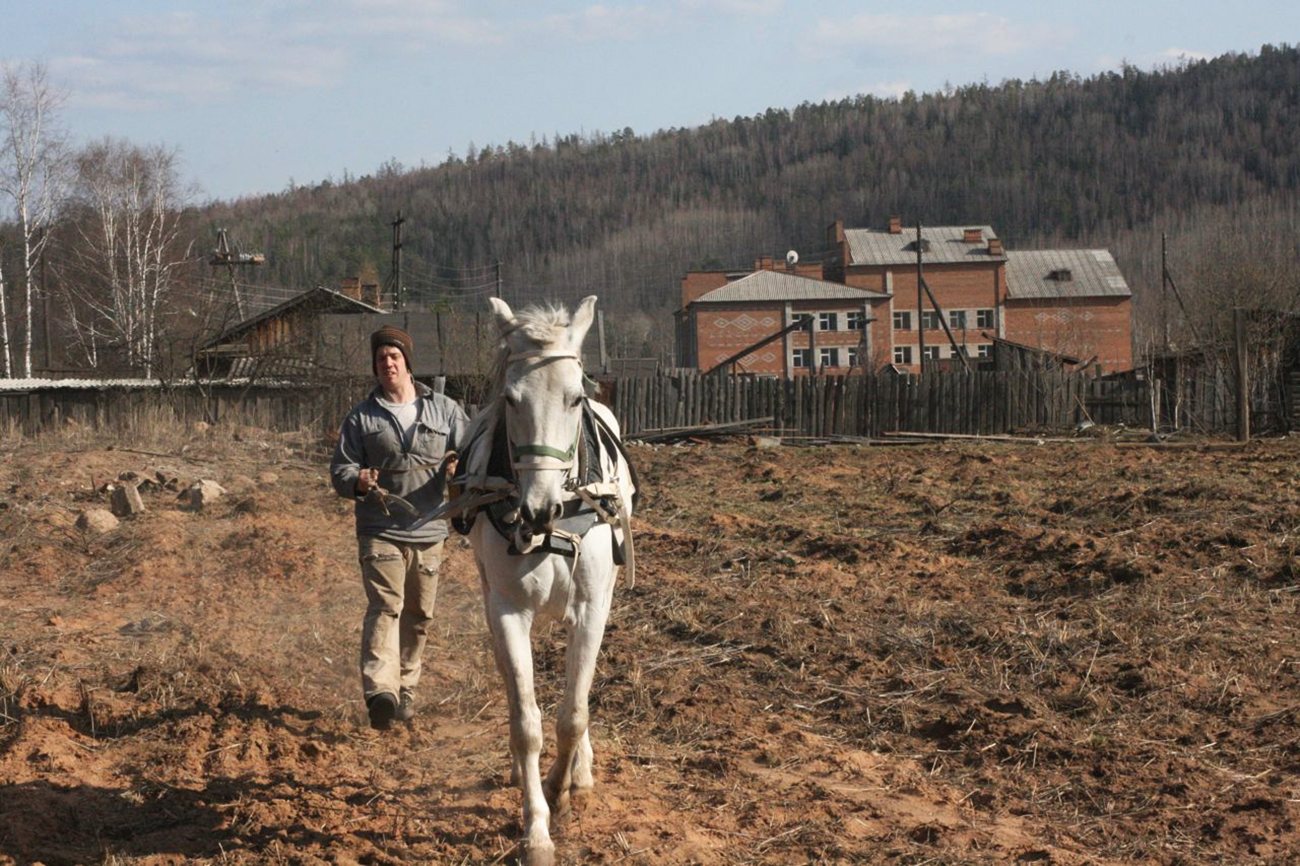
The easiest way to understand the Justus Walker story is as a reversal. An American moves to Russia, becomes a popular farmer, praises rural life, then begins criticizing officials and eventually says his residence permit is in danger.
That version is supported by a clear public chronology. It is also incomplete.
Walker was not only the “Merry Milkman,” the cheerful American farmer who became a recognizable figure in Russian media. He was an ordained Protestant minister who spent years in missionary work in Siberian villages. On Aug. 9, political commentator Stanislav Belkovsky argued that this religious role may be the hidden factor behind the pressure on Walker.
Belkovsky alleged that structures associated with the Russian Orthodox Church’s Moscow Patriarchate inspired the attempt to remove Walker. He also said Walker had helped establish 14 Protestant congregations in Siberia. No public document in the source record used here establishes Orthodox Church involvement, and the specific figure of 14 congregations remains unverified. The allegation should therefore be read as a theory of motive, not as a demonstrated fact.
What can be demonstrated is Walker’s missionary record.
Walker arrived in Russia as a child with Protestant missionary parents. RIA Novosti reported in February 2026 that he was ordained for ministry in 2004 in a church his father had helped establish. Walker recalled the work as a small rural ministry and said that roughly two decades later he continued visiting villages.
Mission also influenced where the family lived. When Walker chose to settle in Altai in 2016, one of the factors he considered was whether he could continue missionary activity there.
The Russian Union of Evangelical Christians-Baptists provides an institutional trail. In 2018, it listed Walker as a missionary in Altai. In 2024, it featured him at a major youth missionary conference, where he preached. The Union described him as a missionary devoted to ministry in villages of the Altai region and noted his work in online evangelism.
That matters because Walker’s better-known public identity operated on a different channel. Russian media turned him into a story about an American choosing Russia: farming, goats, cheese, village life and the politics of agricultural self-sufficiency. The nickname “Merry Milkman” captured that persona so effectively that the religious identity became background information for many readers.
The conflict with officials also has a documented economic track. By spring 2026, Walker was publicly attacking agricultural bureaucracy and the Ministry of Agriculture, arguing that small and medium-sized farms were being pressured out of business. The Moscow Times reported the dispute in March. In early August, Walker said authorities intended to revoke his residence permit, creating the possibility that he and his family would have to leave Russia. The Daily Beast reported his statement on Aug. 8.
The story therefore contains two overlapping explanations rather than one settled answer.
The first is bureaucratic retaliation. Walker had become a public critic of the system responsible for regulating the sector in which he worked. That conflict is visible and direct.
The second is religious competition. Walker was an active Protestant missionary with a long record of work in rural Russia. Belkovsky believes that this was more important than the farming dispute and that Orthodox Church structures were involved.
The evidence does not yet allow those explanations to be ranked with confidence. It does, however, allow one correction to the common public picture: Walker’s Protestant ministry was not an incidental detail and was not confined to his parents’ generation.
He was ordained. He continued rural ministry. He appeared in Baptist missionary networks. He preached at a mission-focused conference as recently as 2024. His ministry and his farm existed side by side.
That is why Belkovsky’s allegation has traction even without proof of the alleged Orthodox role. It points to a real, documented institutional identity that was often overshadowed by Walker’s media brand.
The next meaningful development in the story will not be another argument over whether Walker was a pastor. That part is well established. The unresolved question is who initiated the residency action, what legal rationale was used and whether the decision was connected to his farming activism, his religious work, both, or something else entirely.
61
Source: RIA Novosti, Baptist Union records and other public reporting