
Memorandum
- From
- Caroline Mercer via fox - Most Popular
- Date
- Filed
- Sports·4 min to read
- Re
Reese and Clark became racial symbols, but respond to it differently
ReReese and Clark became racial symbols, but respond to it differently
A Fox News/OutKick column argues that fans and media have turned WNBA stars Angel Reese and Caitlin Clark into stand-ins for racial groups, and that the two players have responded to that pressure in very different ways.
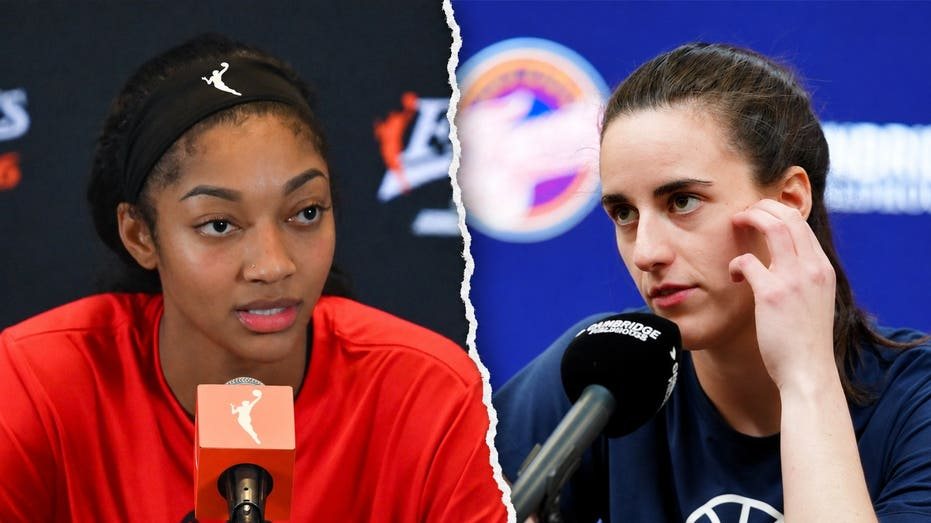
Angel Reese and Caitlin Clark have become symbols of race in women's basketball, and a column published by Fox News' OutKick argues that the two players have reacted to that role in sharply different ways. The piece contends that fans and the media have cast Reese and Clark as stand-ins for entire racial groups, and that neither player should be expected to speak for a whole race.
The column traces the rivalry back to the 2023 NCAA women's championship game, when LSU's Reese taunted Clark, then of Iowa, in a moment that drew heavy backlash. Commentator Stephen A. Smith framed the criticism of Reese as a racial double standard, noting that Clark had used a similar gesture earlier in the season. Iowa guard Hailey Van Lith said Clark's gesture had been aimed at Iowa's strength coach, a detail that complicated the narrative that formed around the moment.
Reese's response, as described in the column, leaned into identity. After the game she said she had been called « too hood » and « too ghetto », and she described the win as being for « girls that look like me ». Forbes reported in 2025 that Reese describes herself as a voice for young Black women. She has also attended the Met Gala three years running and pursues both fashion and basketball, a mix of visibility that the column suggests has broadened her public profile beyond the court.
The author argues that critics of Reese have at times been accused of racism against her, a dynamic the column presents as part of the same pattern in which players are pushed into representing racial identity. The piece points to the Atlanta Dream's run to the WNBA Finals against Golden State, which a Swish Appeal column connected to Black excellence and Martin Luther King Jr.'s idea of the « Beloved Community ». The column treats such framings as further evidence of how sports stories become vehicles for broader racial arguments.
Clark has taken a more distant position. In June 2024 she said that « basketball is my job » when asked about being drawn into debates, and she said people should not use her name for those agendas. In a December 2024 TIME interview she acknowledged white privilege, but commentators have continued to press her for stronger statements on racism across three seasons. WNBA player DiJonai Carrington publicly criticized Clark's silence on the issue, a criticism the column places alongside the wider expectation that high-profile players speak on race.
The two players have also been linked off the court. Reese and Clark were teammates on the USA national team and won gold at the September 2026 World Cup. Coach Brondello's July 2025 remark calling a player a « protected species » drew criticism, and Brondello apologized and was suspended for one game; ABC reported that the remark was an Australian expression about officiating and not about race. The column uses these episodes to show how quickly comments are read through a racial lens.
The column concludes that the pressure on both players is unlikely to ease soon, and it is unclear whether the demands placed on Clark will ever be satisfied. Its central argument is that neither Reese nor Clark should be treated as a representative of an entire race, and that the debate says as much about the audiences projecting onto them as about the athletes themselves.

5

Source: Angel Reese and Caitlin Clark became racial symbols, but their responses tell different stories