
Memorandum
- From
- Delaney Sawyer
- Date
- Filed
- Society·4 min to read
- Re
How One Feral Cat Undermined Two Attempts to Restore New Zealand’s Rarest Mainland Duck
ReHow One Feral Cat Undermined Two Attempts to Restore New Zealand’s Rarest Mainland Duck
Purerua conservationists released pāteke in 2023 and 2024. A single elusive tabby was blamed for killing 15 birds in each effort before it was finally trapped.
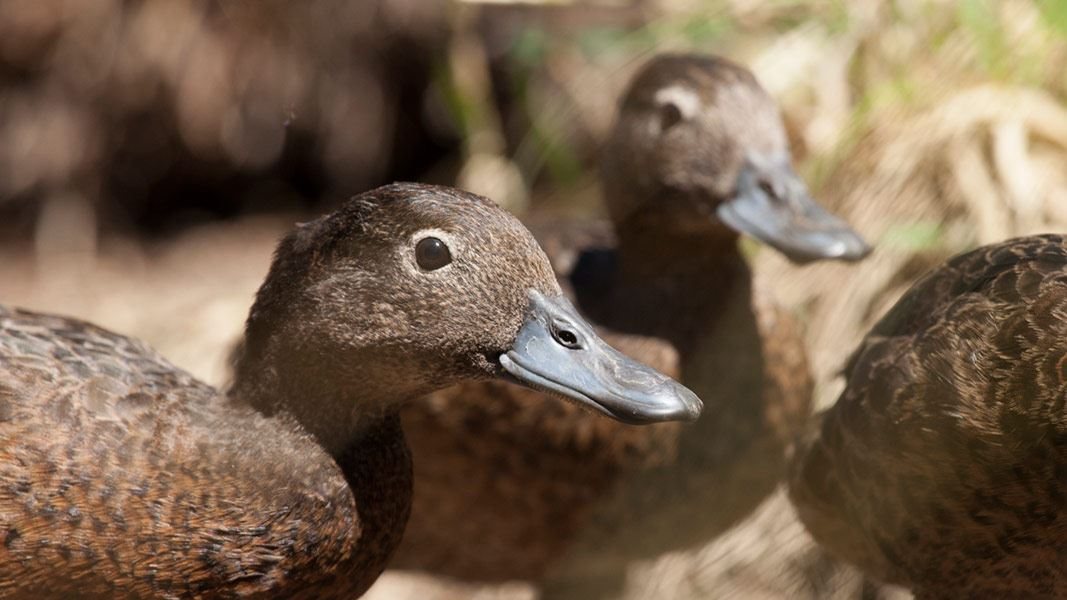
The most revealing number in the story of New Zealand’s “Nine Lives” feral cat may not be three years, or even the estimated 1% of a species it killed. It is 20. Twice, conservationists released groups of just 20 pāteke on the Purerua Peninsula. Twice, one highly effective predator was blamed for killing 15 birds from a release.
Pāteke, or brown teal, are endemic to New Zealand. The Department of Conservation says they were once widespread but are now restricted to a much smaller range, supplemented by new populations created through captive breeding and release. In 2022, the wild population was estimated at 2,000 to 2,500. DOC calls the species New Zealand’s rarest waterfowl on the mainland.
Pest Free Purerua believed it had the local feral-cat problem under control when it released 20 birds in 2023. Within a week, one pāteke was found dead. Cameras revealed a large grey tabby with recognizable markings, and project staff linked that same cat to another 15 deaths. The response was straightforward: more traps, more cameras and more effort. The result was not.
The animal appeared irregularly. It might be recorded at dusk, around midnight, in the morning or during daylight, then vanish for months. Other cats were caught, but this one repeatedly avoided removal. Its ability to escape led to the nickname Nine Lives.
The project tried again in 2024 with another 20 pāteke. The same cat returned and was blamed for killing 15 of them. The Guardian later estimated that the animal had killed dozens of pāteke overall, or roughly 1% of the population. The exact national percentage is an estimate, but the two documented release episodes illustrate the deeper problem: reintroduction succeeds only if the surrounding ecosystem is sufficiently protected.
DOC’s recovery plan for pāteke makes that dependency explicit. Predator control is one of four central approaches, alongside habitat restoration, captive breeding and releases, and public awareness. A bird can be bred successfully, transported safely and released into suitable habitat, yet still be lost quickly if an introduced predator remains in the landscape.
Nine Lives was finally caught because its behavior briefly became predictable. At the end of July 2026, the cat appeared at a quarry for three nights in a row. Trappers set out salmon, fried chicken and rabbit as bait and placed cages and traps in the area. On July 30, a camera alert showed a cat inside one of the cages. The team identified the animal and humanely shot it.
The body was to be examined and then taxidermied for education about the effects of feral cats on native wildlife. The decision also sits inside a national policy change. New Zealand added feral cats to its Predator Free 2050 target list in November 2025. Domestic pets were explicitly excluded from that target, while the government promised greater coordination, funding and research into effective and humane control methods.
Purerua may now resume pāteke introductions. The lesson from the previous attempts is that the decisive measure of success is not the number of birds released. It is how many are still alive after the headlines, cameras and cages have gone quiet.
65

Source: Source: The Guardian