Memorandum
- From
- Delaney Sawyer
- Date
- Filed
- Society·4 min to read
- Re
How a Missing Ukrainian Teen Ended Up in Russian Uniform, According to Back to Ukraine
ReHow a Missing Ukrainian Teen Ended Up in Russian Uniform, According to Back to Ukraine
Oleksandr Mustiatse was 14 when Russia’s full-scale invasion began and is still listed by Ukraine as a missing child from Krynky. Back to Ukraine says it later identified him in a social media account filled with Russian military imagery.
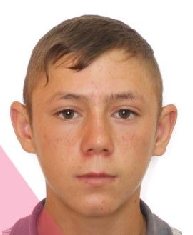
Oleksandr Mustiatse was 14 years old when Russia launched its full-scale invasion of Ukraine. Two days later, on February 26, 2022, he turned 15. Ukraine’s Children of War registry still lists him as a missing child from Krynky, a village in the Kherson region that fell under Russian occupation.
Four years later, the Ukrainian initiative Back to Ukraine says it found a very different public trace of him. The group reported identifying Mustiatse in a social media account containing photographs of him in Russian military uniform, a Russian flag, the Z symbol used in support of the invasion, and images from military positions. Interfax-Ukraine reported the group’s findings in late July.
The available record does not establish the full story of what happened between those two points. There is no public timeline showing where Mustiatse lived, what school he attended, when he entered a military environment, or what pressures and choices shaped his path. Back to Ukraine says the account it identified has been inactive since November 16, 2025, leaving his current whereabouts unknown.
That gap matters because it covers nearly all of late adolescence. A 14-year-old living through occupation becomes an adult in a matter of years, and those years are filled by institutions: school, identification documents, youth groups, media, local authorities and the social networks available around them.
United Nations human rights monitors have documented how those institutions were changed in Russian-occupied parts of Ukraine. The UN Human Rights Monitoring Mission in Ukraine reported the imposition of Russian curricula, restrictions on Ukrainian-language and Ukrainian-system education, and an emphasis on “military-patriotic” training and youth organizations. The result is an educational environment in which the war and the Russian state are built into everyday schooling.
Human Rights Watch added more detail in July 2026. Based on interviews with children, parents, teachers and organizations assisting families from occupied areas, the group described anti-Ukraine propaganda, pressure to join militarized youth activities, weapons and drone training, and practices that steer boys toward military registration. The findings concern a broader system rather than Mustiatse’s individual case, but they help explain the environment in which teenagers under occupation have been growing up.
That distinction is important. Public evidence is not sufficient to assign one motive to Mustiatse or to reconstruct his private decisions. An individual’s later actions cannot simply be reduced to the policies around him. At the same time, the policies cannot be treated as irrelevant when they occupy the years in which a child becomes an adult.
For Ukraine, the case points to a long-term reintegration challenge that will outlast front-line changes. Children who were 13, 14 or 15 in 2022 are now young adults. Some have spent years outside the Ukrainian school system, under Russian documentation rules and inside a media environment built around the occupation. Restoring territorial control, where it occurs, would not automatically restore the lost years or relationships.
Mustiatse’s story remains incomplete. The official Ukrainian registry preserves the starting point: a boy born in 2007 who went missing from Krynky while still a minor. Back to Ukraine says the next visible point is a Russian military profile several years later. Since the account went silent in November 2025, the public record has not provided another clear chapter.
62