
Memorandum
- From
- Caroline Mercer
- Date
- Filed
- Society·4 min to read
- Re
How 11 Small Transfers Became a 13-Year Treason Sentence in Russia
ReHow 11 Small Transfers Became a 13-Year Treason Sentence in Russia
Ivan Stolbov lived in Ukraine but remained a Russian citizen. That legal status turned donations totaling about 5,466 rubles into a prosecution under Article 275.
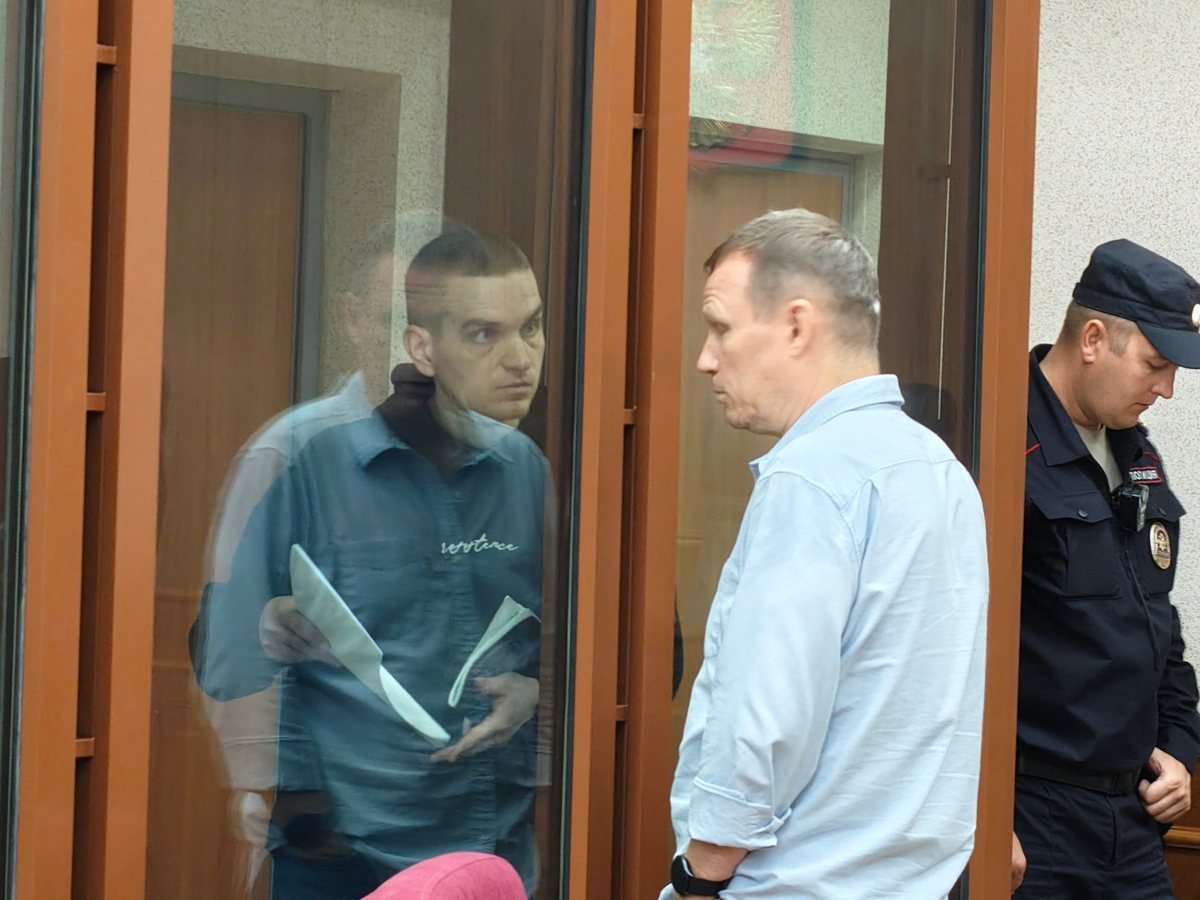
The striking feature of Ivan Stolbov’s case is not simply the length of the sentence. It is the path from 11 transfers of roughly 100 hryvnias each to a conviction for one of the most serious crimes in Russia’s Criminal Code.
On Aug. 10, the Sverdlovsk Regional Court sentenced the 34-year-old to 13 years in a strict-regime penal colony under Article 275, the treason statute. The court also imposed one year of restricted freedom and a fine of 300,000 rubles. His phone and 5,466.13 rubles were ordered confiscated.
Stolbov was living in Ivano-Frankivsk, Ukraine, before his arrest. Mediazona reported from the courtroom that he was born in Sarapul, was a Russian citizen, had no Russian registration and worked as a procurement manager.
That citizenship is the legal hinge. Article 275 specifically defines treason as conduct by a citizen of the Russian Federation. Its listed forms include financial assistance to a foreign state or organization in activity directed against Russia’s security. The law now provides for 12 to 20 years in prison or life imprisonment.
According to the court, Stolbov made the transfers between May 2023 and October 2025 to a Ukrainian organization. Russian authorities say the organization later used money for Ukrainian military needs, including tactical medicine, equipment, weapons-related supplies, ammunition and military vehicles. The court valued all 11 transfers at 5,466.13 rubles in total.
The case also illustrates how physical travel can activate a legal risk that had existed while a person lived abroad. Stolbov went to Russia in 2025 to visit family. The court’s press service says he specifically came to see his mother. He was detained at Koltsovo Airport in Yekaterinburg.
Mediazona’s review of local court records adds a second layer. Before the treason prosecution became public, Stolbov went through repeated administrative arrests in July 2025. His mother and sister arrived at a detention facility to meet him after one expected release, but did not see him emerge. His lawyer later said he had been taken away from the facility grounds.
The broader pattern matters because Stolbov’s case is not an isolated use of the treason law against financial transfers. Verstka’s July 2026 investigation identified at least 1,904 people charged in treason, espionage and related national-security cases since 2022. It found 65 Russian defendants whose allegations involved money transfers benefiting Ukraine. The outlet calculated that the average sentence under Article 275 rose from 12 years in 2022 to 16 years in the first half of 2026.
A June case shows how little the amount itself can matter once a transfer is classified as security-related. Mediazona reported that a Russian-created court in occupied Kherson sentenced a 58-year-old local resident to 12 years over a transfer worth 1,566 rubles that investigators said supported the Ukrainian military.
Stolbov’s 13-year sentence had not yet become final when the regional court announced it. The parties have a 15-day appeal window. Whether the conviction changes on appeal remains open, but its mechanics are already clear: Russian citizenship supplied jurisdiction under the treason statute, the destination and alleged end use of small transfers supplied the accusation, and a family visit brought the defendant into custody.
66