
Memorandum
- From
- Delaney Sawyer via Fast Company
- Date
- Filed
- Society·5 min to read
- Re
Attribution Science Becomes Key Tool in Climate Lawsuits Against Oil Companies
ReAttribution Science Becomes Key Tool in Climate Lawsuits Against Oil Companies
A growing field of climate research known as attribution science is helping courts link fossil fuel emissions to specific climate damages, even as major oil companies fight to discredit it. The Supreme Court recently heard arguments in Suncor v. Boulder, a case that could determine whether such lawsuits proceed.
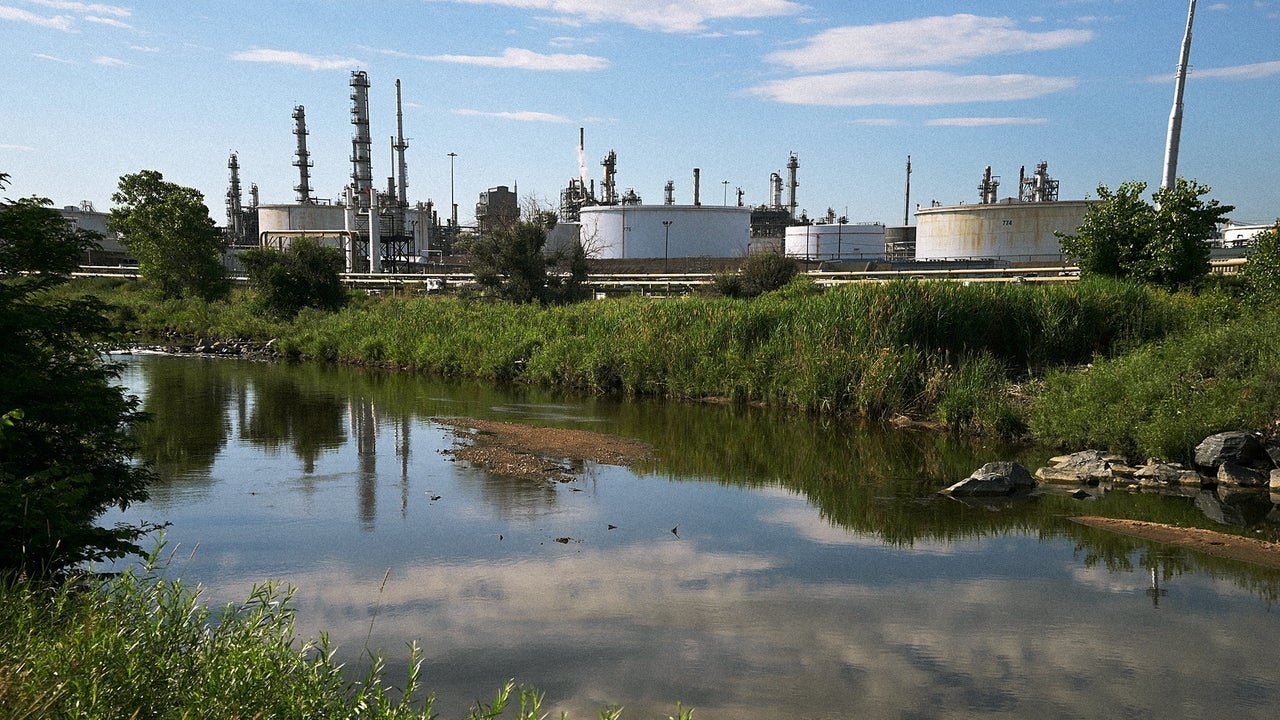
Attribution science, a relatively new field of climate research, is playing an increasingly central role in lawsuits that seek to hold fossil fuel companies accountable for climate damages. The effort to quantify the link between a company's emissions and specific harms—such as stronger hurricanes or more intense heat waves—has advanced significantly over the past two decades, and it is now at the heart of a major case before the U.S. Supreme Court.
The case, Suncor v. Boulder, was argued this week. It involves the city of Boulder, Colorado, and Boulder County, which are suing Suncor Energy and other oil companies for climate-related damages. The outcome could determine whether similar lawsuits across the country can move forward. Attribution science provides the evidentiary backbone for such claims, offering a scientific method to connect greenhouse gas emissions to measurable impacts.
The field has its origins in a 2003 commentary published in the journal Nature by University of Oxford physicist Myles Allen. Allen asked whether it would ever be possible to sue anyone for damaging the climate. At the time, the scientific models needed to make such connections did not exist. But by 2004, Allen and two other climate scientists had published a study estimating the role of human influence in increasing the risk of a deadly European heat wave. That study is widely considered the first extreme weather attribution study.
Since then, attribution science has branched into several subsets. Event attribution focuses on the role of climate change in specific extreme weather events, such as Hurricane Katrina. A later analysis by Climate Central found that climate change made Katrina's ocean temperatures up to 18 times more likely and increased its maximum sustained wind speed by 5 mph. Trend attribution, by contrast, examines the human fingerprint on long-term climate trends like global warming and sea-level rise.
A third subset, source attribution, emerged in 2014 when scientist Richard Heede, founder of the Climate Accountability Institute, released his landmark Carbon Majors report. Heede quantified the emissions attributable to individual companies over their entire history. The report found, for example, that Chevron was responsible for 3.52% of global emissions between 1751 and 2010. This type of research is particularly relevant to climate litigation because it assigns a share of total greenhouse gas pollution to specific companies.
More recently, impact attribution—or damage attribution—has linked human-caused climate change to social and economic consequences, including increased deaths from extreme heat. Together, these research strands provide courts with a scientific basis for determining liability.
Experts say that Big Oil's efforts to undermine attribution science are part of a long history of climate denial. The industry has known since at least the 1950s that fossil fuels release planet-warming carbon dioxide, and studies from the 1960s warned of potentially serious environmental damage worldwide. Yet companies have continued to fight the science that connects their products to specific harms.
The Supreme Court's decision in Suncor v. Boulder could have far-reaching implications. If the court allows the case to proceed, it would open the door for other municipalities and states to use attribution science in their own lawsuits. If it blocks the case, it could shield fossil fuel companies from a growing wave of climate liability claims.
For now, attribution science remains a burgeoning field, with researchers continuing to refine their methods. As the climate warms and extreme weather becomes more frequent, the demand for precise, legally defensible attribution studies is only likely to grow. The outcome of the Boulder case will be a critical test of whether that science can be used to hold polluters accountable.
3