Memorandum
- From
- Derek Weston via fox - Politics
- Date
- Filed
- Politics·4 min to read
- Re
Trump administration escalates pressure on Smithsonian over history exhibits
ReTrump administration escalates pressure on Smithsonian over history exhibits
The Trump administration has stepped up its fight with the Smithsonian Institution, releasing a White House report alleging left-wing bias and ordering new signs at the National Museum of American History.
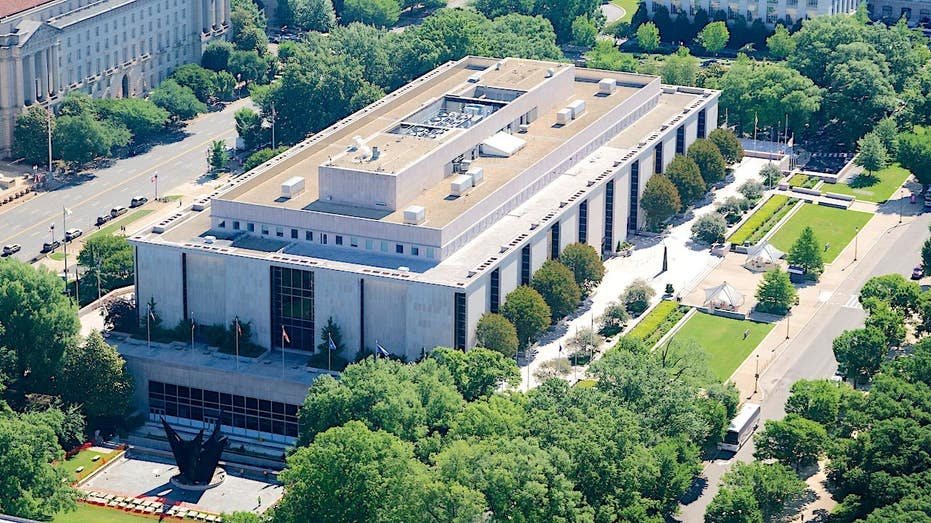
The Smithsonian Institution has become the focus of an escalating political clash over the telling of American history, with the Trump administration accusing the sprawling museum network of left-wing messaging and ordering new signs at its National Museum of American History.
The confrontation escalated last week, when President Donald Trump directed his administration to install signs outside the Smithsonian's National Museum of American History directing visitors to what the White House described as «accurate» information about the nation's past. It followed the release earlier this month of a sweeping White House report warning of what it called the infiltration of leftist politics inside the Smithsonian, an institution that has increasingly drawn criticism from conservatives over what they describe as left-wing bias.
The Smithsonian is not a typical museum group. Founded in 1846 with money bequeathed by British scientist James Smithson, who never visited the United States but left his fortune to establish an institution «for the increase and diffusion of knowledge,» it has grown into the world's largest museum, education and research complex.
The institution now owns or leases nearly 700 facilities across eight states, Washington, D.C., and Panama, covering roughly 13.6 million square feet. Its holdings include more than 157 million artifacts and specimens across 21 museums, the National Zoo, 14 education and research centers and 21 libraries. It also works with more than 200 affiliate museums and cultural institutions nationwide.
Visitors see only a fraction of that collection. About 99 percent of the Smithsonian's artifacts and specimens are kept in storage facilities, laboratories and archives, where they are preserved and studied by researchers. The institution welcomes more than 30 million in-person visitors a year, while its educational resources and digital platforms reach millions more.
The Smithsonian's role extends well beyond gallery exhibitions. Through the Smithsonian Learning Lab and the Smithsonian Science Education Center, it offers millions of free lesson plans, classroom activities, virtual field trips and other educational materials used by teachers and students nationwide. It also provides professional development for educators and runs programming that reaches classrooms across the country.
On college campuses, the institution partners with schools on internships, fellowships, research collaborations and joint academic programs. Those efforts connect the Smithsonian to thousands of undergraduate, graduate and postdoctoral students each year.
The White House report that helped trigger the latest fight accuses the museum system of allowing activism to shape its historical work. It cites Anthea Hartig, director of the National Museum of American History since 2019, saying she has described history as a «prime tool of social justice» and one of her roles as connecting «research and scholarship to activism and advocacy.» The report portrays those statements as evidence of a broader shift from history to activism.
Administration officials have cast the report as a warning about ideological bias inside a major national institution. The president's directive to place signs outside the museum reflects that concern and directs visitors to what the administration considers more reliable accounts of American history.
The new signage order guarantees that the controversy over the Smithsonian's cultural influence will remain a topic of public debate in the coming months, as the administration continues to press its case against the museum network.