
Memorandum
- From
- Caroline Mercer via FOX News
- Date
- Filed
- Politics·5 min to read
- Re
Trump Accuses China of Election Meddling but Fails to Follow Through With Action
ReTrump Accuses China of Election Meddling but Fails to Follow Through With Action
President Trump warned of an unprecedented Chinese election security threat but days later downplayed the urgency, declined to impose consequences, and moved ahead with plans to host Chinese President Xi Jinping. Newly declassified documents show China collected American voter data but no evidence of altered votes or breached systems.
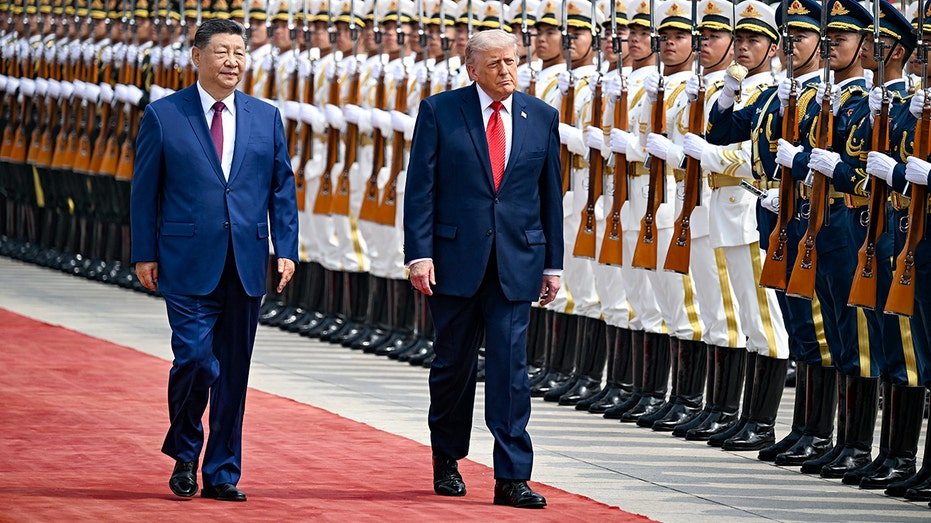
President Donald Trump accused China of orchestrating an «unprecedented election security nightmare» during a July 16 address, claiming Beijing had acquired 220 million U.S. voter files and assigned a data exploitation unit to influence American public opinion. However, within days, Trump undercut the severity of his own warning, declining to impose consequences on Beijing and continuing preparations to host Chinese President Xi Jinping at the White House in September.
In his speech, Trump said intelligence officials had «actively suppressed and downplayed information about the extent of China’s sinister election meddling» and ordered an investigation into those he accused of a cover-up. He directed the Justice Department, FBI, CIA and Office of the Director of National Intelligence to investigate, calling for firings and potential prosecutions. Yet only five days later, when asked whether China would face repercussions, Trump told reporters, «They do things, and we do things to them. I’ll be honest, we do things to them, too. It’s not a one-way street.»
The president’s shifting posture has drawn sharp criticism from lawmakers and election security experts who note that the fallout from his own announcement has been directed almost entirely inward. Trump ordered probes into U.S. officials who handled the intelligence, while trade talks and diplomatic engagement with Beijing continued largely unchanged. A White House official confirmed that Xi’s planned visit on Sept. 24 remains on schedule, and the administration did not answer questions about when Trump first learned of the alleged Chinese activities or whether any of the accused officials remain in government positions.
Roughly 270 pages of newly declassified records released by the administration provide fresh details about China’s collection and analysis of American voter information. The documents show that a Chinese entity possessed an unspecified dataset containing approximately 204.8 million U.S. voter records, though the source and method of acquisition are not identified. Other records describe Chinese entities analyzing registration information from 18 states and downloading publicly available historical voter data from six states. The documents do not show that China altered voter rolls, changed ballots, or penetrated vote-counting systems.
A single uncorroborated FBI report alleging that China planned to manufacture fraudulent U.S. driver’s licenses to cast mail ballots for Joe Biden was recalled the day it was distributed and never reissued. There is no evidence that any fraudulent votes were actually cast. Emily Harding, director of the Intelligence, National Security, and Technology Program at the Center for Strategic and International Studies, wrote that China «likely gained little advantage» from voter records that were largely publicly available or available for purchase. She described the internal intelligence exchanges as «an honest, and valuable, analytical debate» rather than a cover-up, noting that references to the election were removed from one briefing so a specialized election-security team could address the issue.
The administration’s stance on TikTok, the Chinese-owned video platform, has also undergone a stark reversal. Trump sought to ban TikTok during his first term over national-security concerns but joined the platform during the 2024 campaign. Five days after his July 16 address, most Cabinet members launched official TikTok accounts after the Justice Department cleared federal employees to use the app under its new U.S.-controlled ownership structure.
Trump did not explain which U.S. activities he considered comparable to China’s collection and analysis of voter information. The Chinese embassy did not immediately respond to requests for comment on the planned Xi visit. The president’s mixed messaging has left election security experts and lawmakers questioning whether the administration intends to take any substantive action to address the alleged Chinese influence campaign, or whether the July 16 address was primarily aimed at settling scores with the intelligence community.