Memorandum
- From
- Caroline Mercer via fox - World
- Date
- Filed
- Politics·5 min to read
- Re
Treasury chief unveils economic campaign to sever Iran's financial lifelines
ReTreasury chief unveils economic campaign to sever Iran's financial lifelines
U.S. Treasury Secretary Scott Bessent announced an economic pressure campaign against Iran, drawing comparisons to the Allied effort in World War II. Experts are divided on whether the strategy, which follows record currency declines and recent mass protests, could destabilize the Tehran regime.
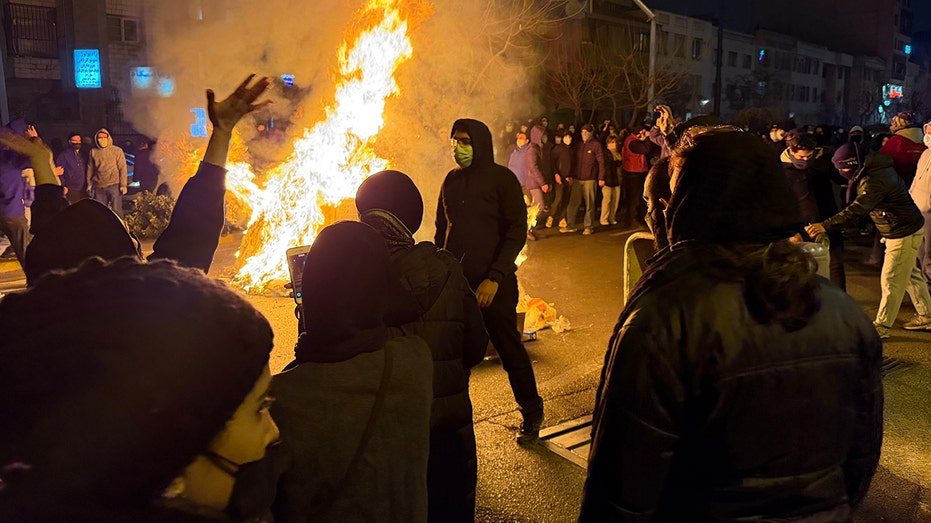
U.S. Treasury Secretary Scott Bessent announced a sweeping economic campaign against Iran on Monday, vowing to sever the financial lifelines that sustain the Tehran regime. The declaration, which Bessent framed as the economic equivalent of the military campaign that defeated Nazi Germany, follows President Donald Trump's pledge to launch an «economic D-Day» against the Islamic Republic.
«In the Second World War, D-Day marked the historic beginning of a campaign with our allies to target and drive the enemy from its positions, including those in third countries. Today, in that same spirit, we are launching an economic onslaught against Iran's financial connections around the globe,» Bessent said. He added that the objective is to «sever every economic lifeline that sustains this tyrannical regime until Tehran stands alone.»
The announcement came just hours after Iran's currency, the rial, plunged to an all-time low of 2.02 million against the U.S. dollar. Iranians are struggling to afford basic goods as the country's economy deteriorates under the weight of sanctions and internal pressures.
Iran experts offered sharply different assessments of whether the campaign could trigger the collapse of the nearly 47-year-old dictatorship. Jonathan Harounoff, an Iran expert and British author of Persian heritage, said the pressure campaign will likely «continue to cripple the regime and set the stage for perhaps yet another domestic uprising.» He noted that the regime governs over a repressed population that has endured sustained economic and social hardship, making further protests a matter of time.
«It's only a matter of time before more protests break out, and the real question is whether international organizations like the U.N. and Western governments will choose to stand by — or tangibly support the Iranian people and actively sever any cooperation they maintain with the regime,» Harounoff said.
Jason Brodsky, policy director at United Against Nuclear Iran, argued that this iteration of maximum pressure differs from previous efforts because it combines economic and military pressure for the first time. He pointed to the U.S. naval blockade against Tehran and damage to Iran's industrial base from kinetic strikes as evidence that the regime is facing unprecedented strain.
«Operation Economic Outcast is being launched at a time of true weakness in terms of its national power,» Brodsky said. «The regime's risk tolerance may be increasing, but so is its desperation. The drivers pushing the Iranian people into the streets to protest have only gotten worse since January.»
However, Alireza Nader, an independent Iran expert, expressed skepticism that economic pressure alone could provoke a mass revolt. «I don't think starving the civilian population in Iran will lead to an American victory,» Nader said, noting that the regime has demonstrated extreme brutality toward protesters. He argued that the Woman, Life, Freedom movement before the current conflict had the best chance of overthrowing the regime, but the war has disrupted that struggle.
Beni Sabti, an Iran expert at the Institute for National Security Studies in Israel, said there have been protests inside Iran over unpaid pensions and salaries. He noted that the January protests, which President Trump said resulted in the deaths of 52,000 Iranian demonstrators, began with economic problems. Sabti said the new economic offensive could «bring out the people again.»
Bessent seized on the regime's potential payroll problems in his remarks, suggesting that the economic campaign could undermine the government's ability to pay its own forces. The full impact of the strategy remains uncertain, but the combination of currency collapse, public anger, and synchronized U.S. pressure has created a volatile situation in Iran.
56