Memorandum
- From
- Derek Weston via Fast Company
- Date
- Filed
- Politics·6 min to read
- Re
State Deepfake Laws Struggle to Keep Pace With AI in 2026 Midterms
ReState Deepfake Laws Struggle to Keep Pace With AI in 2026 Midterms
Thirty-one states now have election deepfake laws, but most rely on AI disclosure warnings that let fabricated campaign ads stay in circulation. Louisiana and Maryland illustrate the limits of these protections as the 2026 midterms approach.
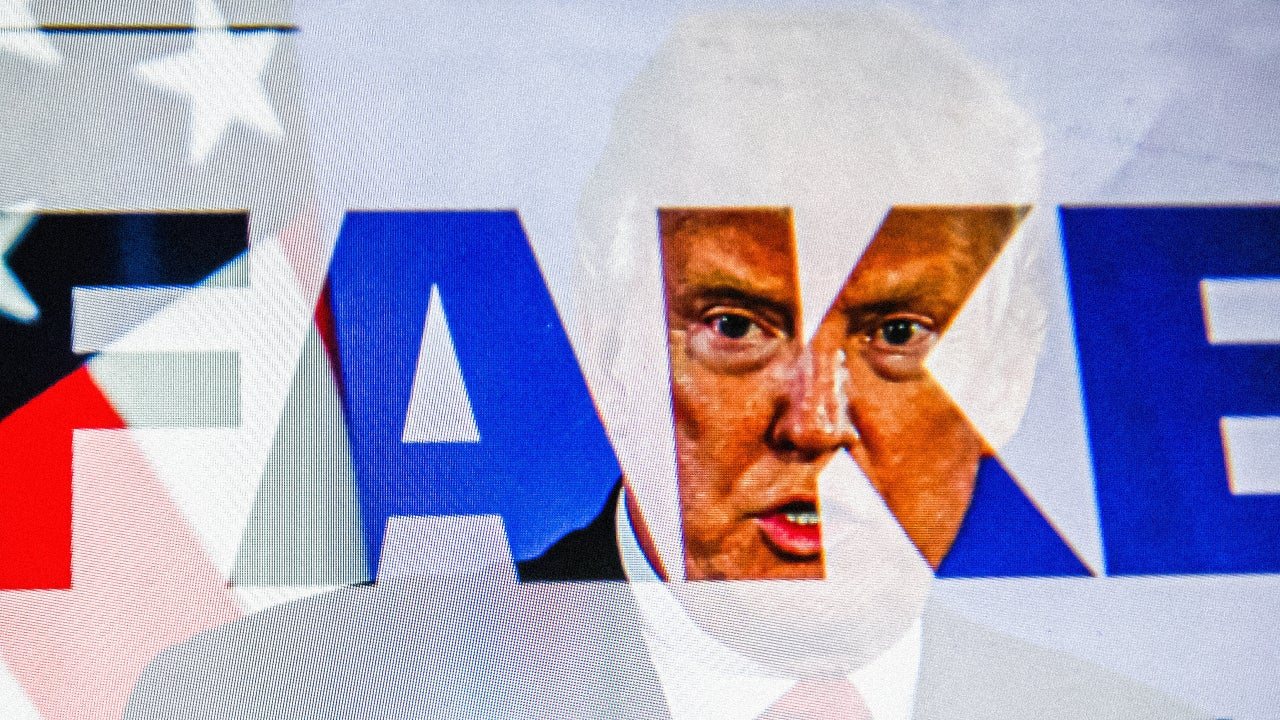
Thirty-one states have enacted laws targeting AI-generated election deepfakes, but most of those statutes rely on disclosure requirements that allow fabricated campaign content to remain in circulation as long as it carries a warning, according to a June 2026 report from the National Conference of State Legislatures. With the 2026 midterm elections approaching, the patchwork of state rules offers voters uneven protection against deceptive AI content.
California and Texas passed the first election-deepfake laws in 2019, but the vast majority of states adopted theirs in 2024 or later. Among the 31 states with such laws, 28 require disclosures. Only Maryland, Minnesota, and Texas prohibit certain election deepfakes outright, even when the content carries an AI warning.
Louisiana illustrates the disclosure model. A June 2026 law requires a clear warning about AI use in certain campaign ads that falsely depict candidates, including printed materials, online advertisements, and broadcasts. For videos, adding the required warning can satisfy the disclosure requirement. The warning tells voters how the content was made, not whether its accusations are true, and it does not excuse violations of other laws.
A 2023 Republican National Committee ad attacking former President Joe Biden shows how this works in practice. The ad depicted an imagined future after Biden's reelection and carried a warning that it was «Built entirely with AI imagery.» Although it predates Louisiana's law, it demonstrates how a disclosure can accompany an ad without stopping its circulation.
Louisiana's law excludes candidates for federal office, meaning a fabricated video about a congressional candidate does not need an AI warning. For ads involving state and local candidates, leaving out a required warning can bring a fine of up to $2,000, up to two years in prison, or both for violators found to damage a candidate's reputation or deceive voters. Local district attorneys generally decide whether to prosecute, subject to the state attorney general's supervision.
The state also requires AI disclosures in certain campaign calls. Under a May 2026 law, robocalls that use AI to reproduce a public figure's voice must disclose that use at the beginning of the call. The state board of ethics enforces the requirement, with civil fines of up to $2,500 for a first violation and $5,000 for subsequent violations.
Maryland takes a different approach. Its May 2026 law prohibits certain deceptive election deepfakes even when they carry an AI warning. The law covers images, audio, and video created or altered with AI or other digital tools to falsely depict a person in a way that looks or sounds genuine. Adding a label to a fabricated confession would not, by itself, make it lawful.
Whether someone violates Maryland's law depends on their actions and purpose. They must knowingly or recklessly create, use, or spread a deepfake to produce materially false information, with an intent such as influencing a voting decision. The law separately requires actual or intended harm to a voter, potential voter, or ballot petition, but does not define that harm. Misleading voters about a candidate alone does not automatically establish a violation. A conviction can bring a fine of up to $5,000, up to five years in prison, or both.
Maryland also gives election officials tools to respond when false voting information spreads. The state's top election administrator must publicly correct credible reports of misinformation about voting procedures, results, or rights. The State Board of Elections maintains a rumor control page to monitor disinformation. The administrator can seek court-ordered removal of misinformation, though not against online services hosting others' posts.
These powers do not let election officials remove every false claim about a candidate. The public can report election misinformation, and officials can pass those reports to the state attorney general. Maryland's reporting system dates to a 2024 law, but its deepfake prohibition and new removal authority took effect June 1, 2026. Neither guarantees that a correction will reach voters before they cast their ballots.
The scale of AI use in campaign advertising is already significant. By early September 2026, the Wesleyan Media Project had identified at least 164 political ads nationwide created or enhanced with AI during the 2026 election cycle, accounting for nearly $80 million in ad spending. About 7 in 10 of those ads carried no AI disclosure, although the count includes uses beyond deceptive impersonations.
For voters, the practical question is what protection a deepfake law actually provides. In states that rely on disclosure, a fabricated ad can remain on the airwaves with a warning. In states like Maryland that prohibit certain deepfakes outright, enforcement depends on proving intent and harm. As the midterms near, the gap between the rapid spread of AI-generated political content and the laws meant to govern it remains wide.
4