Memorandum
- From
- Caroline Mercer via FOX News
- Date
- Filed
- Politics·4 min to read
- Re
Seneca Nation leader calls Trump's Lake America renaming 'unpresidential,' demands reversal
ReSeneca Nation leader calls Trump's Lake America renaming 'unpresidential,' demands reversal
Seneca Nation President J. Conrad Seneca demanded President Trump rescind the executive order renaming Lake Ontario as Lake America, calling the move disrespectful to Indigenous people and a violation of treaty commitments.
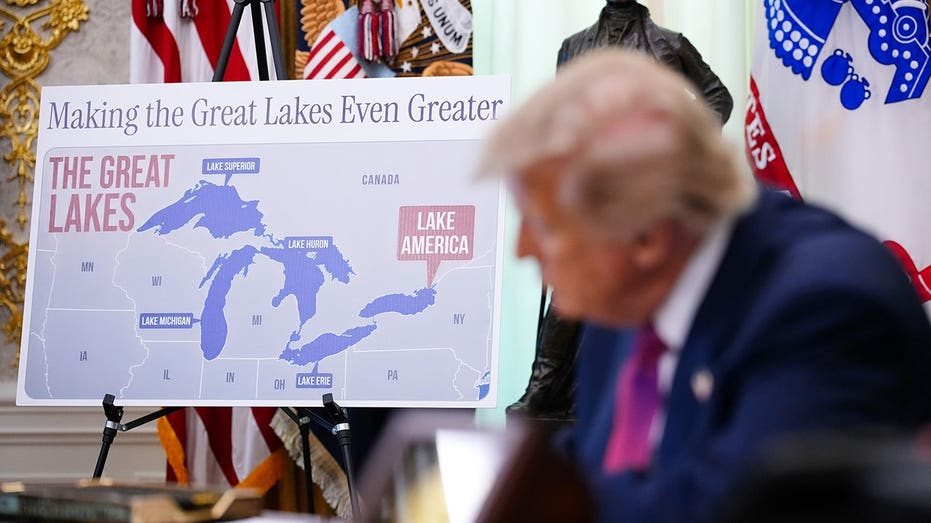
The president of the Seneca Nation of Indians has formally demanded that President Donald Trump reverse his executive order renaming Lake Ontario as Lake America, calling the action «unpresidential» and an attack on Indigenous culture. J. Conrad Seneca issued the demand on Friday, one day after Trump signed the order amid an escalating trade dispute with Canada.
«The President cannot assert ownership over our culture or erase it through irresponsible political action,» Seneca wrote in a message shared through the nation's newsletter. «His order should be rescinded, and the name Lake Ontario should be left as it is, reflective of the Seneca people, other Haudenosaunee nations and all Indigenous people surrounding the lake.»
Seneca explained that the lake's name has deep Indigenous roots. In the traditional Seneca language, the lake is called sga:nyodai:yoh, meaning «beautiful lake.» He noted that Seneca and Haudenosaunee ancestors traveled the lake and surrounding waterways for centuries before the United States existed, using them for diplomacy and trade among nations.
«Now, we are seeing the exact opposite of diplomacy,» Seneca wrote. He argued that to the Seneca people, the lake is not a «political pawn» but land that Indigenous people have inhabited for thousands of years.
Seneca also invoked the 1794 Canandaigua Treaty, signed by President George Washington with several nations including the Seneca. That agreement promised peace and friendship, as well as the free use and enjoyment of Indigenous lands forever. Seneca said Trump's executive order violates those commitments.
«President Trump's aggression toward our culture with his Executive Order violates that peace, friendship and commitments of the Canandaigua treaty,» he said. He added that Article 6 of the U.S. Constitution states treaties are the «supreme Law of the Land» and must always be honored.
Seneca called on all Native groups and federal, state and local representatives, «regardless of political party,» to oppose the name change. «We will always call Lake Ontario by the name derived from the language of our ancestors — the name that, like the strength and influence of the Seneca people, will live on forever, long after the intrusive political tirades of individual men,» he said.
Trump announced the renaming on Thursday while signing the executive order in the Oval Office. He said he had been thinking about the change for a long time and drew a parallel to his earlier decision to rename the Gulf of Mexico as the Gulf of America. The president said he directed Interior Secretary Doug Burgum to update the Geographic Names Information System accordingly.
The move comes as trade tensions between the U.S. and Canada have intensified. The U.S. recently imposed new 50% tariffs on Canadian goods including wine, furniture and dairy products. Canadian Prime Minister Mark Carney condemned the renaming, writing on X that the lake's name is more than 400 years old, predating both the Confederation of Canada and the Declaration of Independence. «Canadians also know that naming reality means calling it Lake Ontario — then, now and always,» Carney wrote.
Trump also joked about renaming the Atlantic and Pacific Oceans, saying «all we need is an ocean» after the gulf and lake changes. Several governors, including New York Democrat Kathy Hochul, Wisconsin Democrat Tony Evers and Vermont Republican Phil Scott, have criticized the executive order.
55