Memorandum
- From
- Connor Quincy via Fortune | FORTUNE
- Date
- Filed
- Business·5 min to read
- Re
Applied Materials Opens $5 Billion AI Chip Research Hub in Silicon Valley
ReApplied Materials Opens $5 Billion AI Chip Research Hub in Silicon Valley
Applied Materials has unveiled EPIC, a $5 billion semiconductor R&D facility in Sunnyvale, California, built with Intel, TSMC, Micron, SK Hynix, and Samsung to cut chip development time from a decade to as little as six years.
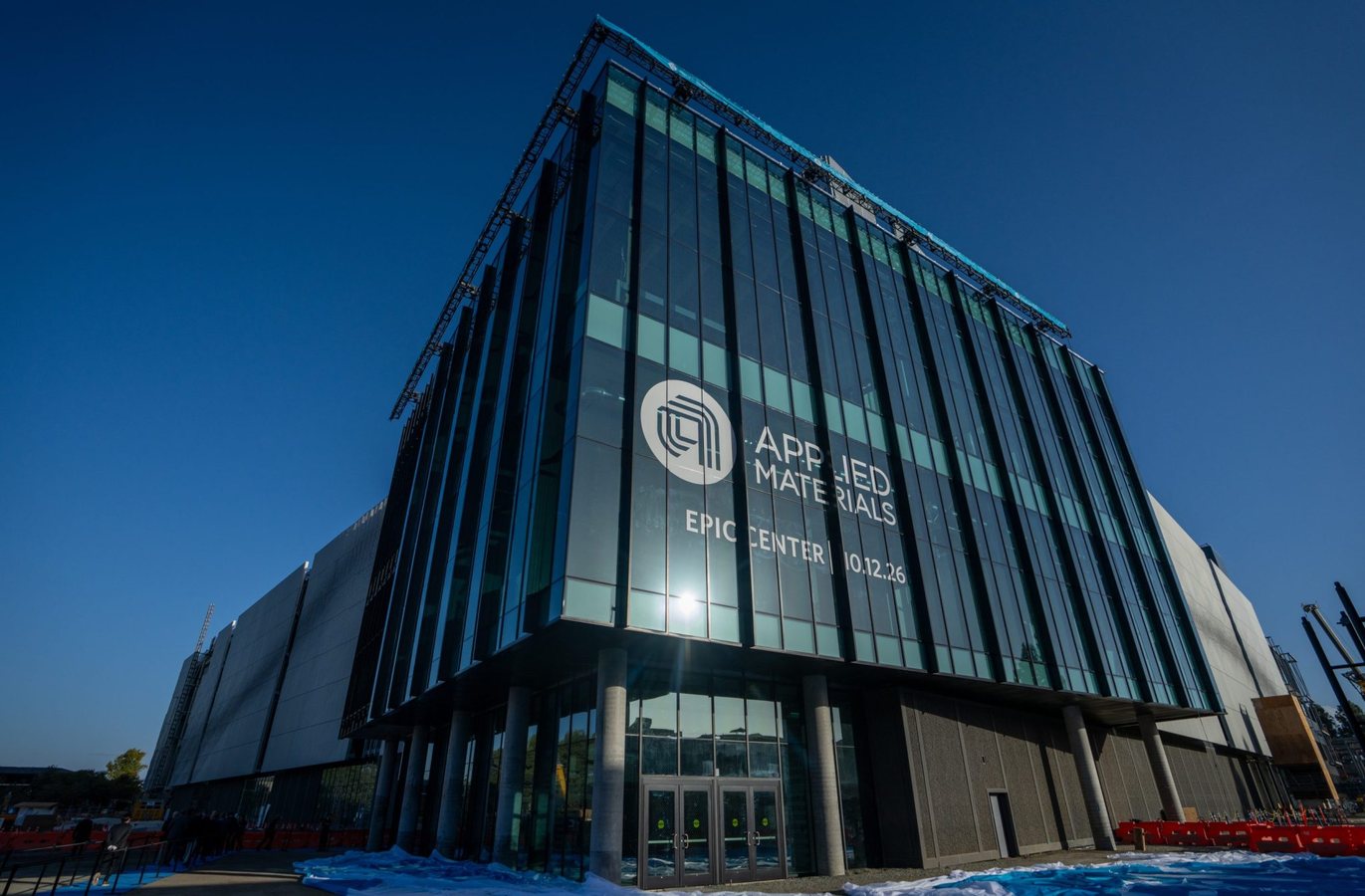
Applied Materials, the world's largest maker of chipmaking equipment, has officially opened a $5 billion semiconductor research and development facility at its Sunnyvale, California campus, a project the company describes as the largest-ever U.S. investment in advanced chip equipment R&D. The 600,000-square-foot EPIC center was built over two years in partnership with Intel, TSMC, Micron, SK Hynix, and Samsung, each of which will station research teams on-site alongside Applied Materials engineers.
The facility is designed to compress the timeline for developing new generations of microprocessors and memory chips. Applied Materials says collaboration at EPIC can reduce the typical concept-to-commercialization cycle from 10 to 12 years to as little as six years. Partner companies will get early access to Applied Materials' newest equipment and operate private test facilities inside clean rooms that together occupy the space of three football fields.
«Having innovators co-located together, having earlier access to the technologies that enable new AI architectures, is a complete game changer,» CEO Gary Dickerson said at the opening event. He added that until companies collaborate in the lab, «they don't know what they don't know.» The ability to understand what is technically feasible earlier in the process, he said, increases the odds of breakthroughs and reduces the number of dead ends researchers pursue.
The EPIC center is purely a research facility and will not produce chips commercially, so it is not expected by itself to bring chip manufacturing back to the United States. But it represents a significant step in keeping Silicon Valley and Applied Materials at the forefront of cutting-edge chip technologies, which are central to the race to build more powerful AI models.
The stakes were underscored the same day as the opening, when Chinese memory maker CXMT announced a breakthrough in memory chip density. If substantiated, the advance could allow CXMT to produce more power-efficient memory chips, beating Samsung and SK Hynix to the milestone. The news sent shares of Samsung and SK Hynix down roughly 7% and 10% respectively in South Korea.
The U.S. government has barred sales of advanced GPU chips and advanced chipmaking equipment to China, aiming to deny the country the computing power needed to create AI models capable of outperforming those made by U.S. companies such as OpenAI, Anthropic, and Google. Dickerson repeatedly invoked «winning the AI race» at the event but declined to comment specifically on U.S. regulations covering sales to China. In February, Applied Materials paid $252 million to settle a case with the U.S. Department of Commerce accusing the company of shipping equipment to China that did not comply with export restrictions.
Founded in 1967 as a chemistry supply company serving the then-nascent semiconductor industry, Applied Materials has grown into the world's largest provider of chipmaking equipment. It has been a major beneficiary of the AI boom and the resulting shortage of memory chips, with its shares up more than 110% over the past 12 months. In August, the company reported $9.12 billion in quarterly revenue, up 25% year-over-year, and has said it has visibility into customer demand as far out as 2030.
Given the memory chip industry's history of boom-and-bust cycles, some industry observers worry that overinvesting by both chipmakers and chip equipment makers could pose a risk if demand drops. Visibility into customers' future demand, they note, is not the same as signed contracts. Dickerson said the new products and services companies are developing to take advantage of AI give him confidence that demand for chips, and for improvements in their performance and power efficiency, will only increase. «This is moving so quick,» he said. «There's never been an inflection like this in our lifetimes.»
3