Memorandum
- From
- Derek Weston via fox - Politics
- Date
- Filed
- Politics·7 min to read
- Re
Senator Banks Introduces Bill to End Birthright Citizenship for Children of Illegal Immigrants and Birth Tourists
ReSenator Banks Introduces Bill to End Birthright Citizenship for Children of Illegal Immigrants and Birth Tourists
Senator Jim Banks is set to introduce the Citizenship Act, which would deny birthright citizenship to children of illegal immigrants and birth tourists by classifying them as 'invaders' under federal law, following a Supreme Court ruling that blocked President Trump's executive order on the issue.
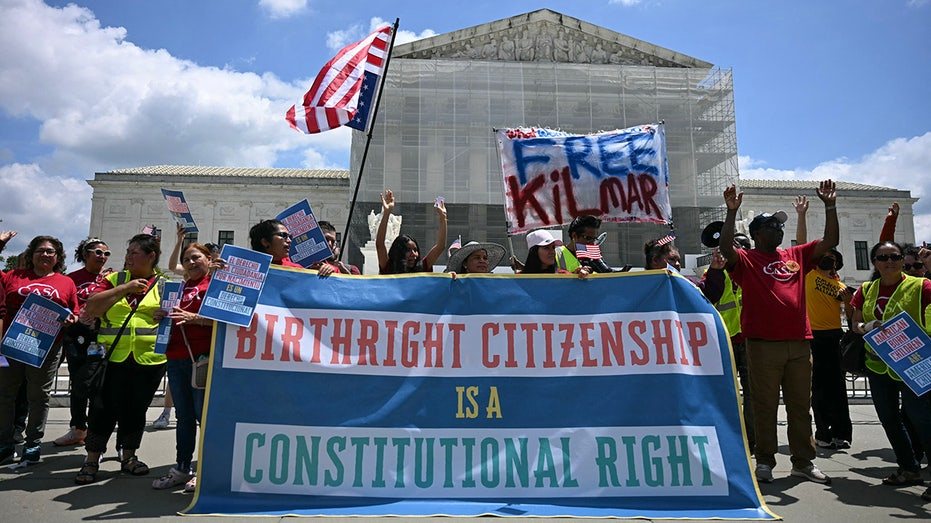
Senator Jim Banks, Republican of Indiana, is set to introduce legislation Monday that aims to end birthright citizenship for children of illegal immigrants and individuals engaged in birth tourism. The bill, titled the Citizenship Act, would define such individuals as «invaders» under federal law, a move that comes after the Supreme Court last month dealt a setback to President Donald Trump’s executive order on the matter.
Banks told Fox News Digital that the legislation is a direct response to the Supreme Court’s ruling inTrump v. Barbara, which rejected the president’s executive order on birthright citizenship. In a concurring opinion, Justice Brett Kavanaugh, a Trump appointee, suggested that while the order conflicted with existing federal law, Congress could amend the statute to create new exceptions. Banks’ bill seeks to follow that roadmap by amending the Immigration and Nationality Act to exclude children of those classified as «invaders.»
The bill declares that «any person who enters the United States without authorization or for the purpose of engaging in birth tourism is considered an invader,» and it would codify Trump’s 2025 executive order that used the term «invasion» to describe illegal immigration across the southern border. Banks’ approach does not attempt to amend the Constitution or overturn court rulings but instead relies on exceptions already recognized in the 1898 Supreme Court caseUnited States v. Wong Kim Ark, which established birthright citizenship for most children born in the U.S.
InWong Kim Ark, the Court ruled that children born in the United States to legal residents are citizens, but it also listed exceptions, including children of diplomats, «enemies within,» and those engaged in hostile occupation of U.S. territories. Banks’ bill argues that illegal immigrants and birth tourists fall under these exceptions, particularly the category of «enemies within» or «invaders.» The legislation cites Justice Horace Gray’s opinion, which stated that individuals who are not «bound to render obedience to the sovereign whose domains are being invaded» do not qualify for birthright citizenship.
The bill also draws on a 2025 case,United States v. CASA, in which Justice Sonia Sotomayor, an appointee of President Barack Obama, confirmed that «children born of alien enemies in hostile occupation» are not entitled to birthright citizenship. However, Sotomayor did not take the additional step of classifying illegal immigrants as such «invaders.» Banks’ legislation seeks to make that classification explicit.
Banks emphasized the urgency of the issue, stating, «The Supreme Court’s birthright citizenship decision was an unprecedented assault on American sovereignty, and we must do whatever it takes to save our country. I’m leading the Citizenship Act to reverse the effects of this consequential ruling and ensure the millions of illegal aliens that invaded our country can’t continue to exploit our immigration system.»
The bill makes a constitutional argument as well, citing Article IV, which requires the federal government to «protect each state against invasion,» and Article I, which grants Congress the power to «establish a uniform rule of naturalization.» Banks also referenced James Madison’s 1788 analysis that the Constitution vested Congress—not the states—with authority over naturalization through a uniform national rule.
The legislation also highlights broader concerns about national sovereignty and foreign influence. It points to statements from some Mexican nationals who view migration northward as a means of re-conquering territory lost in the 1848 Treaty of Guadalupe Hidalgo, as well as Chinese birth tourism allegedly encouraged by the Chinese Communist Party. These examples, the bill argues, demonstrate that birthright citizenship has become intertwined with questions of national security and foreign interference.
President Trump has urged Senate Republicans to move more aggressively on his legislative agenda, including ending birthright citizenship. Banks recalled that Trump recently told Republicans they were «not fighting hard enough.» The Citizenship Act is expected to be introduced as soon as the Senate opens for business Monday afternoon.
The bill does not amend the Constitution or attempt to overturn any court ruling. Instead, it seeks to codify Trump’s declaration of «invasion» and amend federal law to revoke birthright citizenship for children of illegal immigrants under the exceptions already recognized inWong Kim Ark. By using the same precedent that the Supreme Court relied on to block Trump’s executive order, Banks aims to turn the ruling against itself.
Chief Justice John Roberts, in theBarbaradecision, relied onWong Kim Arkto guarantee citizenship to all children born in the United States and subject to its jurisdiction. However, Banks’ bill argues that the exceptions in that case—such as «enemies within» and those in hostile occupation—apply to illegal immigrants and birth tourists. The legislation thus seeks to use the same legal framework to achieve the opposite outcome.
The introduction of the Citizenship Act marks the latest chapter in the ongoing debate over birthright citizenship, a contentious issue that has divided lawmakers and legal scholars. Supporters of the bill argue that it is necessary to protect American sovereignty and prevent exploitation of the immigration system, while opponents contend that it violates the 14th Amendment and established legal precedent.
85