Memorandum
- From
- Connor Quincy via fox - Politics
- Date
- Filed
- Politics·5 min to read
- Re
Senate Exits Session With Partisan Votes on Data Centers and Lawmaker Stock Trades
ReSenate Exits Session With Partisan Votes on Data Centers and Lawmaker Stock Trades
The Senate's final week before the midterms was dominated by political messaging, as Republicans pushed bills on data center costs and congressional stock trading that Democrats blocked, with both sides openly framing the votes around the November elections.
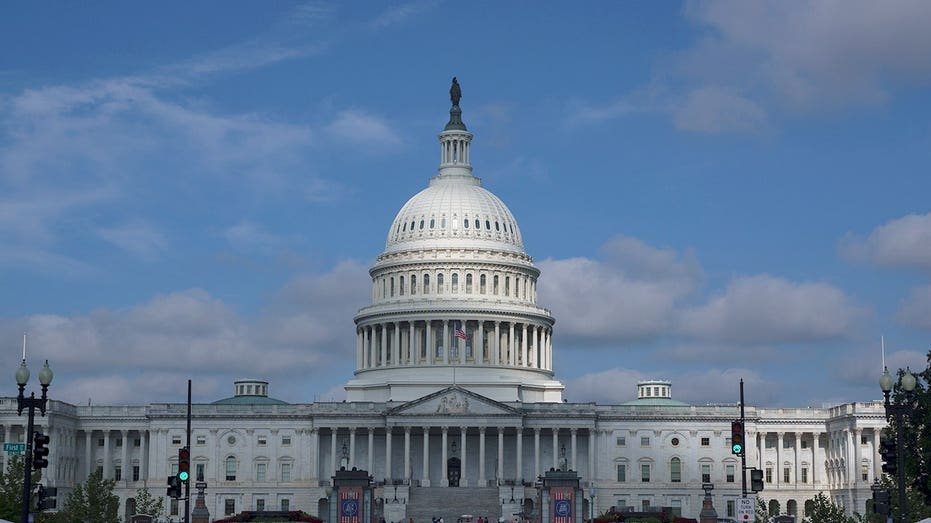
The Senate wrapped up its final session week before the midterm elections with a series of partisan votes that both parties openly described as political messaging rather than serious attempts to address the cost of living. All 100 senators understood why they were in Washington at the end of September, even as the chamber took up a college sports bill, confirmed Labor Secretary Keith Sonderling and held a high-profile hearing with former special counsel Jack Smith.
At the center of the week was the Ratepayer Protection Act, a Republican measure aimed at curbing the electricity costs associated with the construction of data centers. Republicans argued that voters are increasingly anxious about artificial intelligence and data center development, and that the bill would guarantee no electricity bills rise because of a data center. Sen. Josh Hawley of Missouri said the measure would send a clear message that AI companies and data center developers cannot simply enter local communities, raise electricity rates, take water and push people off the grid.
Democrats blocked the bill, arguing it lacked any enforcement mechanism and amounted to a suggestion rather than a requirement. Sen. Richard Blumenthal of Connecticut called it a sham and a charade because it has no enforcement. Sen. Tim Kaine of Virginia said everything in the bill could already be done by a state regulator or a data center developer, and that the legislation requires nothing of them. Senate Minority Leader Chuck Schumer of New York called the Ratepayer Protection Act a fraud that does not require any protections at all, describing it as a toothless messaging bill while Americans demand real guardrails on AI and data centers.
The politics were layered. An internal GOP memo in August revealed that the party was especially concerned about what the data center debate meant for Sen. Jon Husted of Ohio, who was appointed to the Senate last year by Gov. Mike DeWine to succeed Vice President JD Vance. Husted had helped foster data center development as a state official, and his race against former Sen. Sherrod Brown is one of the nation's most contentious Senate contests. Sen. John Hoeven of North Dakota acknowledged that the vote would help Husted, while Sen. Andy Kim of New Jersey called it clearly a political ploy that is not good for the American people but is good for Husted. Sen. Ben Ray Lujan of New Mexico said Husted was trying to pass legislation so he could go home and run a campaign ad. Husted conceded the point, saying Republicans gave everyone a chance to do something about affordability, Democrats blocked it, and Republicans will campaign on it.
Democrats also blocked a separate Republican plan to restrict stock trades by lawmakers, which included a voter ID requirement that is crucial to the GOP and its base. Republican senators knew Democrats would not accept the proposals, and Democratic senators would not accept any of the GOP's legislative propositions either. Sen. Thom Tillis of North Carolina summed up the mood by asking whether there had ever been a late September or October before an election that was not all politics.
The shifting positions illustrated the dynamic. Sen. Peter Welch of Vermont said on September 23 that he supported the data center bill and would be glad to vote on it after it overwhelmingly cleared the House. He flipped to a nay when the issue approached a roll call vote, citing the refusal to allow an amendment and the bill's lack of teeth. Senate Majority Leader John Thune of South Dakota said the measure should have been a no-brainer on the Senate floor. The week left open the question of whether the parties prefer action or would rather have the issue to campaign on, with Husted potentially deploying the blocked bill as a foil to contrast himself with Democrats.
2