Memorandum
- From
- Derek Weston via FOX News
- Date
- Filed
- Politics·6 min to read
- Re
Kavanaugh Points to Congressional Path on Birthright Citizenship After Supreme Court Rejects Trump Order
ReKavanaugh Points to Congressional Path on Birthright Citizenship After Supreme Court Rejects Trump Order
Justice Brett Kavanaugh's concurring opinion in the Supreme Court's rejection of President Trump's executive order on birthright citizenship suggests Congress could legislate limits, sparking debate among Republicans and legal experts.
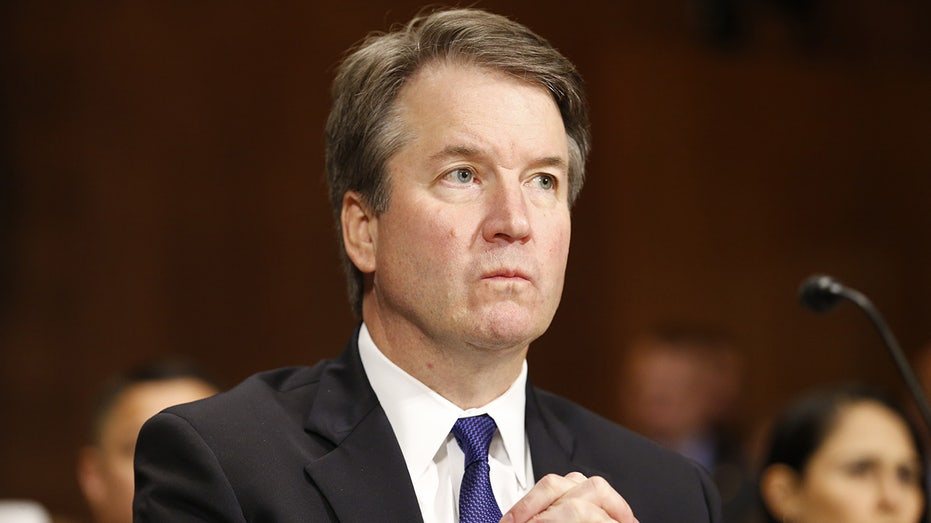
The Supreme Court dealt President Donald Trump a significant defeat this week by rejecting his executive order aimed at restricting birthright citizenship, but a concurring opinion from Justice Brett Kavanaugh, one of Trump's own appointees, has opened a potential legislative avenue for achieving similar goals. The 6-3 ruling upheld the long-standing interpretation of the 14th Amendment's Citizenship Clause, which grants automatic citizenship to nearly all individuals born on U.S. soil. However, Kavanaugh's separate opinion argued that the case could have been resolved under federal statute rather than the Constitution, offering a roadmap for Congress to enact changes through legislation.
Kavanaugh wrote that Congress could amend Section 1401(a) of the Immigration and Nationality Act or pass new laws to establish exceptions to birthright citizenship for children born to parents who are in the country illegally or temporarily. He noted that the original 1898 Supreme Court decision in United States v. Wong Kim Ark, which affirmed birthright citizenship, recognized exceptions for children of foreign diplomats and enemy forces occupying U.S. territory. Kavanaugh suggested that modern circumstances, including large-scale illegal immigration and increased international travel, justify similar exceptions for unlawful or temporary residents. «Those two categories of foreign citizens—namely, those unlawfully or temporarily in the country—are relevantly similar to the four categories of persons recognized as exceptions in Wong Kim Ark,» he wrote.
The ruling drew sharp reactions from Republican leaders, who quickly pivoted to legislative strategies. House Speaker Mike Johnson, R-La., told reporters that birthright citizenship has «been abused» and argued that a constitutional amendment may be necessary to address the issue. «It's one of those things that was intended to serve a noble and important purpose and has been thwarted and overused and abused,» Johnson said. Sen. Rand Paul, R-Ky., renewed his push for a constitutional amendment, writing on X that «the long fight for a constitutional amendment begins now.» Sen. Mike Lee, R-Utah, echoed that sentiment, calling for an amendment to explicitly exclude foreign nationals who violate U.S. laws or exploit loopholes.
Trump, however, expressed confidence that Congress could act through legislation alone, bypassing the need for a constitutional amendment. In a post on Truth Social, he wrote, «No long and unwieldy Constitutional Amendment is necessary! Congress should start TODAY to work on ending expensive and unfair to our Country, Birthright Citizenship. They will have my Complete and Total Support!» Several Republican lawmakers have already introduced bills aimed at restricting birthright citizenship, including Sen. Tom Cotton's, R-Ark., Constitutional Citizenship Clarification Act, and proposals from Sens. John Cornyn, R-Texas, and Rick Scott, R-Fla., targeting birth tourism.
The Justice Department signaled a shift in enforcement strategy, announcing a crackdown on birth tourism through visa fraud and related criminal charges rather than attempting to enforce the now-rejected executive order. Legal experts caution that Kavanaugh's roadmap is not a guaranteed solution. A 5-4 majority of the Supreme Court concluded that the Citizenship Clause itself protects birthright citizenship, meaning any congressional effort to restrict it through ordinary legislation would likely face immediate constitutional challenges. Notre Dame Law School professor Haley Proctor noted that Justice Clarence Thomas, in his dissent, expressed doubt about the decision's longevity, but added, «This is an important decision. I don't think the court's going to revisit it lightly, and the only sure way to get a new answer here would be to amend the Constitution.»
The debate over birthright citizenship has intensified amid broader discussions on immigration policy and border security. The 14th Amendment, ratified in 1868, was designed to grant citizenship to formerly enslaved people and their descendants, but its interpretation has evolved over time. The Wong Kim Ark decision in 1898 affirmed that children born in the United States to non-citizen parents are citizens, a principle that has been codified in federal law since 1940. Kavanaugh's opinion highlights the tension between historical precedent and contemporary challenges, as lawmakers grapple with how to address illegal immigration without undermining constitutional protections.
As the political and legal battle continues, the focus now shifts to Congress, where Republicans are weighing whether to pursue legislation, a constitutional amendment, or both. The outcome will likely shape U.S. immigration policy for generations, with implications for millions of families and the nation's legal framework. For now, the Supreme Court's decision reaffirms the status quo, but Kavanaugh's concurrence has provided a clear, albeit contentious, path forward for those seeking change.
138