Memorandum
- From
- Delaney Sawyer via fox - Politics
- Date
- Filed
- Politics·3 min to read
- Re
Justices Kavanaugh, Gorsuch and Barrett urge stronger civic education before 250th anniversary
ReJustices Kavanaugh, Gorsuch and Barrett urge stronger civic education before 250th anniversary
In an interview with Fox News Digital, Justices Kavanaugh, Gorsuch and Barrett described learning history and civic structure as a condition for preserving American freedoms on the eve of the country's 250th anniversary.
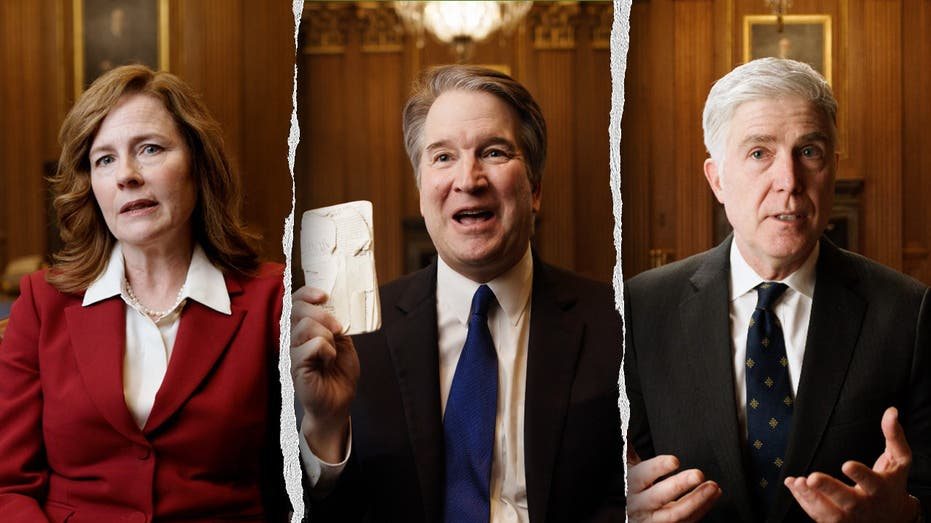
Three conservative members of the U.S. Supreme Court — Brett Kavanaugh, Neil Gorsuch and Amy Coney Barrett — called on Americans to study the nation's history and civic structure more actively, calling this a necessary condition for preserving fundamental freedoms. Their remarks, gathered by Fox News Digital in the course of interviews with the Federalist Society, appeared on the eve of the 250th anniversary of the United States in 2026.
Gorsuch, appointed by President Donald Trump in 2017 after the death of Antonin Scalia, argued that rights come from God, not from the government. He cited Daniel Webster and wrote a book about the decline of civic literacy in the country. The justice stressed that freedoms taken for granted require understanding from those who enjoy them, and that is why he sees spreading knowledge of constitutional principles as a direct responsibility of lawyers and teachers.
Kavanaugh, confirmed in 2018 after a sharp and contentious Senate process, emphasizes teaching American history and civic education to people of all ages. In his words, knowledge of how the system of checks and balances works should be passed on not only to schoolchildren but also to adults, who exercise their rights every day in practice. His position boils down to the idea that without a shared understanding of the past, it is hard to agree on the future.
Barrett stressed that citizens must actively take part in public life, and cited the closing pledge of the Declaration of Independence, in which the signers mutually pledged to one another their lives, their fortunes and their sacred honor. Her position is that democracy depends not only on laws but also on people's daily actions, from voting to participation in local affairs.
Separately from these statements, Justice Sonia Sotomayor, speaking at an event in Mount Vernon, acknowledged that democracy is going through a "difficult period" and warned that democratic norms could be lost. Her words came against the backdrop of discussions about the future of a country preparing to mark its jubilee, and showed that questions of civic culture are shared by justices with different political orientations.
The anniversary theme also became central to conversations at the 2026 national convention of the Federalist Society, whose motto is "250 Years of American Exceptionalism." The organizers combined the legal community with questions of historical memory and civic responsibility, which in the eyes of these justices bear directly on the stability of the constitutional order and trust in institutions.
1