
Memorandum
- From
- Derek Weston via fox - Most Popular
- Date
- Filed
- Politics·5 min to read
- Re
Federal Judge Rules Congress Cannot Bar Noncitizens From Voting in Federal Elections
ReFederal Judge Rules Congress Cannot Bar Noncitizens From Voting in Federal Elections
U.S. District Judge David Leibowitz dismissed charges against a Jamaican woman who voted in 2020, ruling that the Constitution gives states alone the power to set voter qualifications. The decision drew sharp criticism from conservatives and is likely to be appealed.
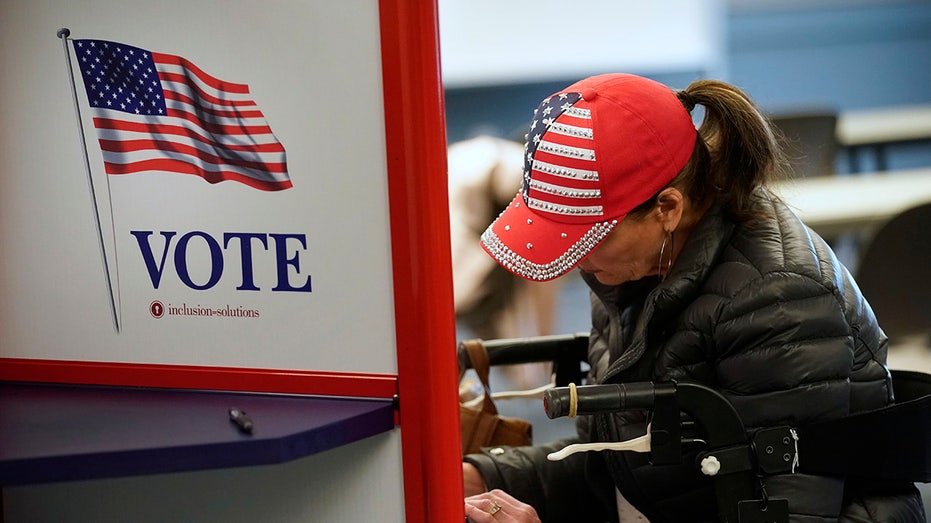
A federal judge in Florida has ruled that Congress lacks the constitutional authority to bar noncitizens from voting in federal elections, dismissing criminal charges against a woman who voted in the 2020 presidential election while not being a U.S. citizen.
U.S. District Judge David Leibowitz of the Southern District of Florida issued a 31-page ruling that the provision of the Illegal Immigration Reform and Immigrant Responsibility Act of 1996 criminalizing noncitizen voting is unconstitutional as applied to Chelsea Cox, a woman originally from Jamaica. The judge held that the Constitution reserves the power to set voter qualifications for federal elections to the states alone.
«The Constitution commits to the States, and the States alone, the general power to set voter qualifications in federal elections,» Leibowitz wrote. «This is clear from both the text of the document and the debates at the Constitutional Convention in 1787.»
The ruling comes as the Trump administration has intensified efforts to prevent noncitizens from voting, including through federal prosecutions and attempts to verify citizenship on state voter rolls. Those efforts have sparked legal battles with Democratic-led states and voting-rights groups. President Donald Trump's election integrity push has been driven in large part by his unproven claim that the 2020 election was stolen.
Leibowitz rejected the federal government's argument that Congress has total authority over immigration and noncitizens. While he acknowledged that Congress has «broad, undoubted power» over immigration, he said those powers are not «a series of blank checks» and cannot override the Constitution's assignment of voter-qualification authority to the states. He also rejected the government's reliance on the Elections Clause, which allows Congress to regulate how states conduct federal elections. Leibowitz said the statute at issue was not designed to regulate election procedures or prevent fraud but instead created a federal voter qualification by determining who could vote.
The ruling drew immediate criticism from conservatives. Sen. Mike Lee, R-Utah, co-author of the Safeguard American Voter Eligibility (SAVE) Act, which is stalled in the Senate, wrote on X that the decision «will certainly be overturned» but «gives the game away.» He added: «Democrats pretend we don't need the SAVE Act because non-citizen voting is already illegal… while activist judges try to destroy laws banning non-citizens from voting!»
Hans von Spakovsky, a senior legal fellow with Advancing American Freedom, told Fox News Digital that Leibowitz's opinion is «patently wrong» and predicted it will be «squashed» by the 11th Circuit Court of Appeals. Von Spakovsky argued that while states have authority to set voter qualifications, the Constitution gives Congress «100% authority over naturalization» under Article I, Section 8, which includes the power to ban noncitizens from voting.
He pointed to Bluman v. FEC, a 2011 decision written by then-Judge Brett Kavanaugh and later summarily affirmed by the Supreme Court, which upheld restrictions on foreign nationals' campaign spending. «The Supreme Court has long held that the government (federal, state, local) may exclude foreign citizens from activities that are part of the democratic self-regulation in the United States,» Kavanaugh wrote. «For example, the Supreme Court has ruled that the government may bar aliens from voting, serving as jurors, working as police or probation officers, or teaching at public schools.» However, Bluman involved campaign contributions, not a criminal prosecution for voting.
Anhishek Kambil, a partner at Holtzman Vogel Law Firm, said he would be «surprised» if the federal government did not prevail on appeal. He cited Oregon v. Mitchell, in which the Supreme Court upheld federal authority to set the voting age in federal elections, as an example of federal power over voter qualifications. «So the Supreme Court has held, in an instance, that there is federal government authority to regulate in certain instances some types of qualifications of voters, but the way that this judge read it kind of made everything a mess,» Kambil said.
While Leibowitz's ruling prevents federal prosecution of Cox, Florida could still bring state charges against her. The case is expected to be appealed to the 11th Circuit Court of Appeals, where the government may seek to have the ruling overturned. The decision adds to the ongoing national debate over election integrity and the scope of federal versus state power over voting rules.
5