
Memorandum
- From
- Delaney Sawyer via Fortune | FORTUNE
- Date
- Filed
- Politics·5 min to read
- Re
Democrats increasingly avoid climate talk as other issues dominate midterm races
ReDemocrats increasingly avoid climate talk as other issues dominate midterm races
Climate change has faded as a top Democratic campaign issue ahead of the midterms, with affordability, Israel policy, and opposition to Trump taking priority. Some strategists call the shift “climate hushing,” while advocates warn that ignoring the crisis is a strategic mistake.
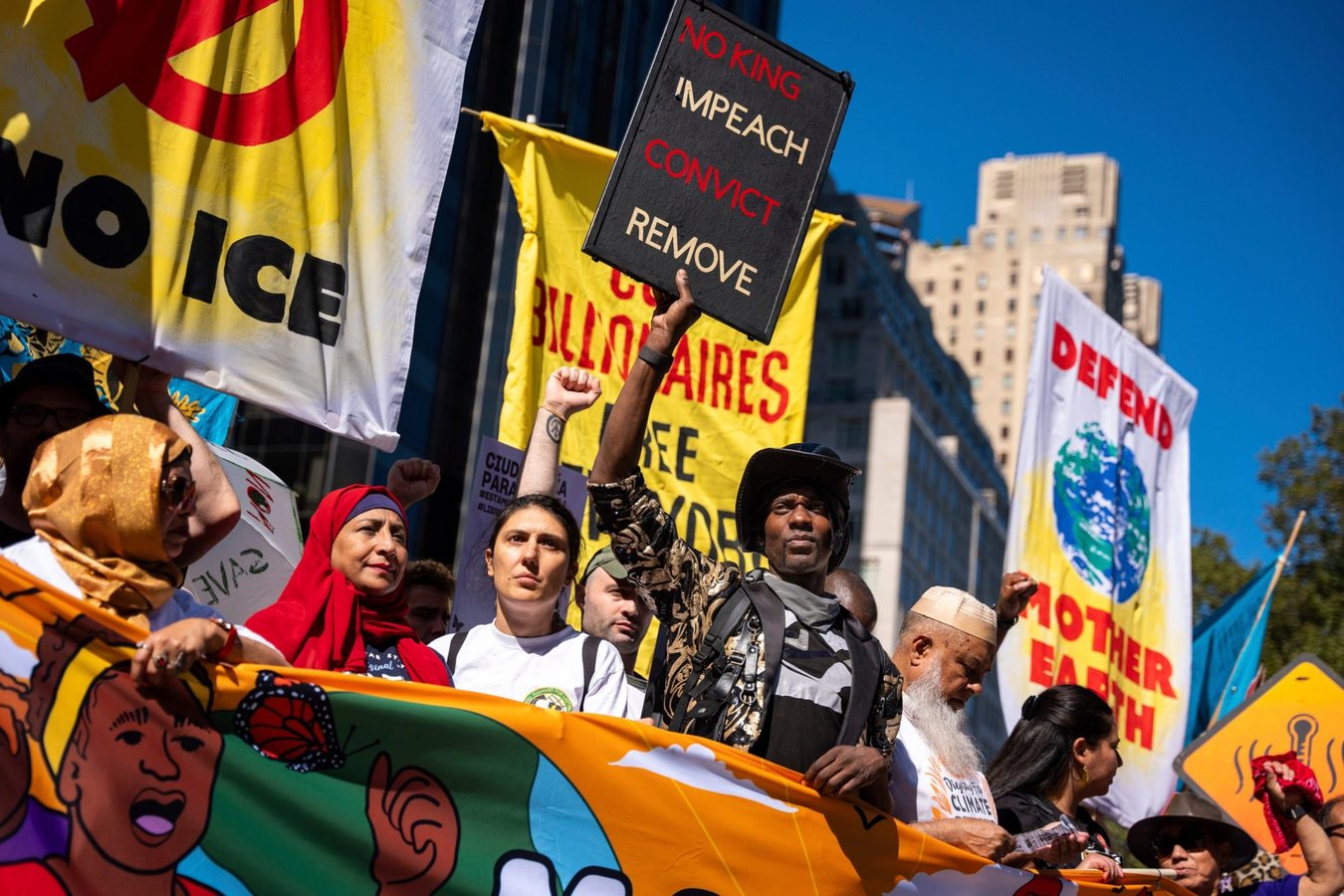
Climate change has quietly slipped down the list of priorities for Democratic candidates and voters ahead of the November midterms, replaced by concerns over the cost of living, U.S. policy toward Israel, and the broader fight against President Donald Trump. The shift has become pronounced enough that some researchers have coined the term “climate hushing” to describe the trend.
Charles Hughes, a college student in Massachusetts who chairs the state’s chapter of the College Democrats, said global warming rarely comes up in political conversations among his peers. “Honestly, it doesn’t come up as much,” he said. That marks a sharp reversal from six years ago, when Democrats spoke constantly about climate change during the 2020 presidential primaries, using it to rally young voters and push sweeping proposals like the Green New Deal.
The change is visible in the Massachusetts Democratic primary for U.S. Senate on Tuesday, where incumbent Ed Markey, 80, faces a challenge from U.S. Rep. Seth Moulton, 47. Markey, who co-sponsored the Green New Deal resolution, has shifted his campaign messaging toward other issues to burnish his left-wing credentials and counter concerns about his age. “Six years ago, Green New Deal was every phrase out of Ed Markey’s mouth every chance he got. That is not the case now,” said Mary Anne Marsh, a veteran Democratic strategist in Massachusetts. “It’s about who’s best to fight. Period, full stop. Everything falls under that.”
The political quiet on climate comes even as the planet continues to warm. Scientists say there is an increasing chance that 2026 could become the hottest year on record, or at least come close, with a strengthening El Nino forecast to spike global temperatures. Some advocates expect the issue to return to center stage if Democrats retake the U.S. House in November and climate-driven disasters dominate the winter.
Sen. Sheldon Whitehouse of Rhode Island, a prominent Democratic voice on climate, called the shift a major strategic “blunder.” “Climate change has moved from the science department into the economics department,” he said. “It’s now battering people’s home insurance, property values, pocketbook concerns. So I think it’s a very powerful argument.”
The Sunrise Movement, founded in 2017 to mobilize young voters over climate issues, announced in October that it was shifting to a broader fight against “fascism.” Executive director Aru Shiney-Ajay said the move was prescient given reports that federal agents infiltrated protest meetings during Trump’s immigration raids in Minneapolis. “We just live in a significantly more authoritarian country. Because of that, a lot of the Democratic primaries are about more existential questions,” she said. “It has felt less like people care less about climate and more like people are increasingly freaked out about other issues.”
Polling reflects the mixed picture. About 6 in 10 Democrats say climate change is “a very big problem” for the country, according to a Pew Research Center poll from April, roughly the same share as in 2016. But climate has often taken a back seat to other issues in Democratic voters’ priorities, such as inflation, healthcare affordability, and the role of money in politics.
McKenzie Wilson of Blue Rose Research, a Democratic data firm, said voters have called for sweeping changes in response to economic discontent, demonstrating a level of anger not seen in years. “In that kind of environment it’s hard to think about long-term, existential problems,” Wilson said. “If we don’t talk and focus our attention on the number one thing the electorate wants to talk about, as we saw in 2024, we’re not going to be connecting with the electorate.”
The Searchlight Institute, a Democratic think tank, last year released a provocative suggestion titled “The First Rule About Solving Climate Change: Don’t Say Climate Change.” It argued that voters saw the issue as intimidating and complex, and that Democrats were more likely to win by focusing on other subjects — thus enabling them to regain power and tackle the crisis later.
Leah Stokes, a political scientist at the University of California, Santa Barbara and author of “The Carbon Wave,” a book about former President Joe Biden’s domestic agenda, said it was “galling” when politicians made the issue less of a priority. “The climate crisis is accelerating and we can’t really not talk about it for like a decade, because the planet will be even more on fire if we do that,” she said.
47