
Memorandum
- From
- Caroline Mercer via fox - World
- Date
- Filed
- News·5 min to read
- Re
Wounded veteran and Gold Star families recall Iran-linked Iraq attacks
ReWounded veteran and Gold Star families recall Iran-linked Iraq attacks
A wounded veteran and Gold Star families describe the lasting costs of Iran-linked attacks that killed U.S. troops in Iraq, attacks that federal courts linked to Iran.
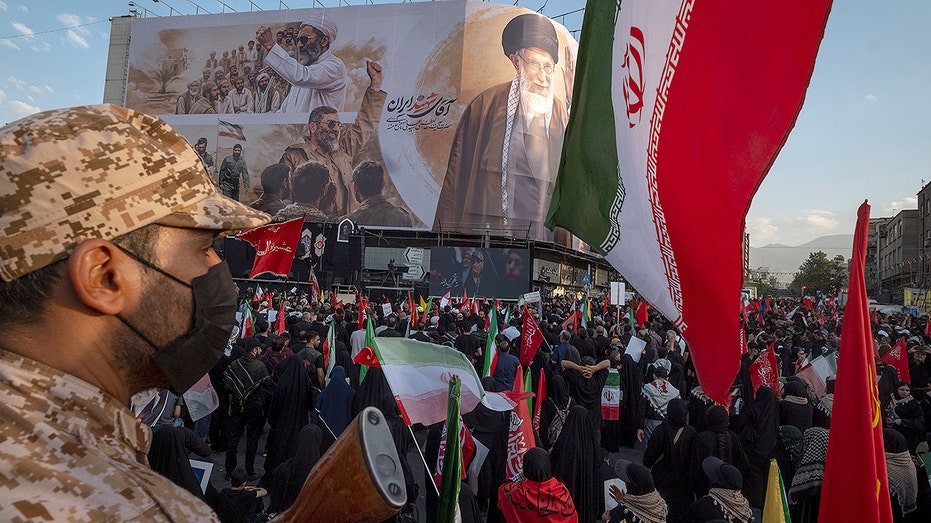
An explosively formed penetrator that tore through an armored U.S. Army Humvee on a Baghdad road killed Staff Sgt. William Brooks and wounded the driver of the vehicle so severely that he later said he «died three times». Federal courts found that Iran manufactured or supplied weapons used in such attacks and that the assailants were trained or directed by the Islamic Revolutionary Guard Corps.
Nearly two decades before the most recent conflict with Iran, the May 3, 2005, attack on Route Pluto was one of many strikes that U.S. courts have linked to an Iranian-backed campaign against American troops in Iraq. Brooks was killed in the explosion. The driver, then-Sgt. Robert Bartlett, survived but spent four years at Walter Reed receiving surgeries, reconstruction, and rebuilding. The Army casualty report described him as «very seriously injured», with massive facial and dental trauma.
Bartlett recalled that troops often do not know what hit them until intelligence reports reach their units. His command later told him the weapon was an Iranian-supplied explosively formed penetrator tied to the Revolutionary Guard campaign to arm militias attacking U.S. forces, he said. Explosively formed penetrators, or EFPs, are sophisticated roadside bombs designed to punch through armored military vehicles.
In lawsuits involving hundreds of U.S. victims, federal judges ruled that Iran provided weapons, training, financing, and other material support to the proxy forces responsible for attacks on Americans in Iraq. Among the cases were those involving Bartlett, Capt. Shawn English, and Maj. Stuart Wolfer. Those rulings gave families formal acknowledgment of the role of Iran, but did not ease their loss.
English was killed in Baghdad on Dec. 3, 2006, during a convoy operation. He was serving on a military transition team working with Iraqi forces. An Army investigation said the mixed American-Iraqi patrol was traveling north when an explosively formed projectile struck the right side of his vehicle. He was evacuated to a combat support hospital and died from his wounds.
His widow, Tricia English, said he had understood the danger before he was killed. During leave shortly before his death, he seemed distracted and stayed up late working on his computer. He told her about EFPs and said they had discovered where the weapons were coming from. «They knew where they were coming from, and it was really bad», she recalled. «He knew it was Iranian.»
Maj. Stuart Wolfer was killed April 6, 2008, when a rocket struck the roof of a gym inside a U.S. base in the International Zone in Baghdad. He had gone to exercise with a friend when an incoming-fire warning sounded. A military investigation found the rocket hit at about 3:28 p.m. and sent shrapnel into the building. Those inside the gym had only seconds to react and dropped to the floor because there was no time to reach a protected space. Wolfer and Col. Stephen Scott were almost directly beneath the point of impact and suffered severe injuries. Wolfer was transported to a combat support hospital, where he was pronounced dead. He was 36 and the father of three daughters, then about 5, 3, and 18 months old.
His sister, Beverly Wolfer Nerenberg, said he was her closest friend. At her wedding, she chose to have him as her «man of honor» instead of bridesmaids. She said her voice still breaks when she talks about him, and that even many years later the subject remains painful.
Nerenberg said the family was told soon after the attack that the rocket had come from the direction of Sadr City and was Iranian. She described the family as keepers of the memory of Wolfer, preserving it for daughters who had little time to know him. She said she is proud of how her nieces have grown up, but the family is left with memories rather than a living father. «This war began a long time ago», Nerenberg said. «For many of us, the past 18 years has been one long continuous war.»
For these families, the conflict did not begin with the latest headlines and cannot be understood only through current events. The scars from Iran-linked attacks on American troops in Iraq remain central to their lives.