
Memorandum
- From
- Connor Quincy
- Date
- Filed
- News·4 min to read
- Re
Trump Tells U.N. Iran Faces Choice Between Deal and 'Annihilation'
ReTrump Tells U.N. Iran Faces Choice Between Deal and 'Annihilation'
In his address to the U.N. General Assembly, President Trump said Iran must choose between a negotiated agreement and being 'annihilated,' while Secretary-General António Guterres urged world leaders to end conflicts.
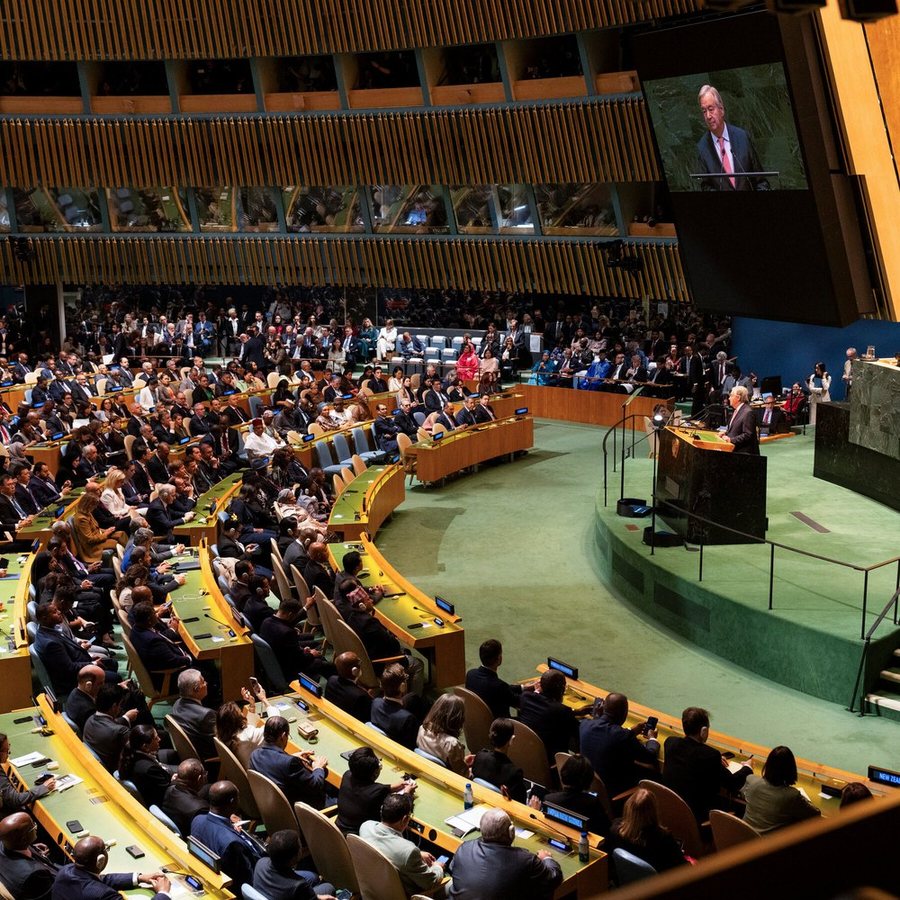
President Trump used his address to the United Nations General Assembly on Tuesday to issue a stark warning to Iran, saying the country must choose between reaching a deal or facing destruction. Trump declared that Iran had been «the bully of the Middle East, but they are the bully no longer,» according to his remarks before the assembled world leaders.
The president framed the moment as a decisive fork in the road, telling the assembly that he faces a choice whether to «annihilate» Iran or pursue a diplomatic agreement. The comment marked one of the most direct public ultimatums from a U.S. president toward Tehran in recent memory, delivered on the global stage at the U.N.'s annual gathering of heads of state and government.
Trump's speech came after U.N. Secretary-General António Guterres opened the General Assembly by calling on member states to end conflicts around the world. Guterres' appeal set a somber tone for the session, which is traditionally a venue for multilateral dialogue and de-escalation. The secretary-general's remarks underscored the broader international concern about ongoing hostilities and the need for diplomatic solutions.
The president's language toward Iran drew immediate attention, as it combined a threat of military devastation with the possibility of a negotiated settlement. Trump did not specify what terms a deal would require or what timeline he envisioned, leaving the diplomatic path undefined. His phrasing suggested that the decision rests with him personally, a characterization that puts the weight of the next move squarely on the White House.
Iran has not yet issued a public response to the president's remarks. The Iranian delegation has not commented on the ultimatum as of Tuesday afternoon. The absence of an immediate reaction leaves open the question of how Tehran will interpret the choice presented by Trump and whether it will engage with any diplomatic overture.
The U.N. General Assembly serves as a platform where leaders often air grievances and outline foreign policy priorities. Trump's address fits that pattern, using the global stage to project strength and issue warnings. His comments about Iran are likely to reverberate through diplomatic channels and among U.S. allies who have been wary of escalating tensions in the Middle East.
Earlier in the day, Guterres had urged the assembly to focus on ending conflicts, a message that contrasted with Trump's threat of annihilation. The secretary-general's call for peace reflected the U.N.'s founding mission, even as the organization faces criticism from some member states, including the United States, over its effectiveness.
The president's speech also comes amid a broader international landscape of multiple crises, from regional wars to humanitarian emergencies. World leaders gathered in New York for the high-level debate are expected to address a range of issues, including security, climate, and economic development. Trump's focus on Iran, however, ensured that the Middle East remained at the center of attention.
Whether Trump's warning will lead to a diplomatic breakthrough or further escalation remains uncertain. The president's history of unpredictable foreign policy moves suggests that both outcomes are possible. For now, the world is left to parse his words and await Iran's next move.
5