
Memorandum
- From
- Delaney Sawyer
- Date
- Filed
- News·5 min to read
- Re
Iranian president admits US sanctions are suffocating Tehran: ‘We are in a war situation’
ReIranian president admits US sanctions are suffocating Tehran: ‘We are in a war situation’
Iran’s president acknowledged that US economic sanctions are strangling the country, describing the situation as a war, as annual inflation hit 66 percent and the supreme leader urged the government to take control.
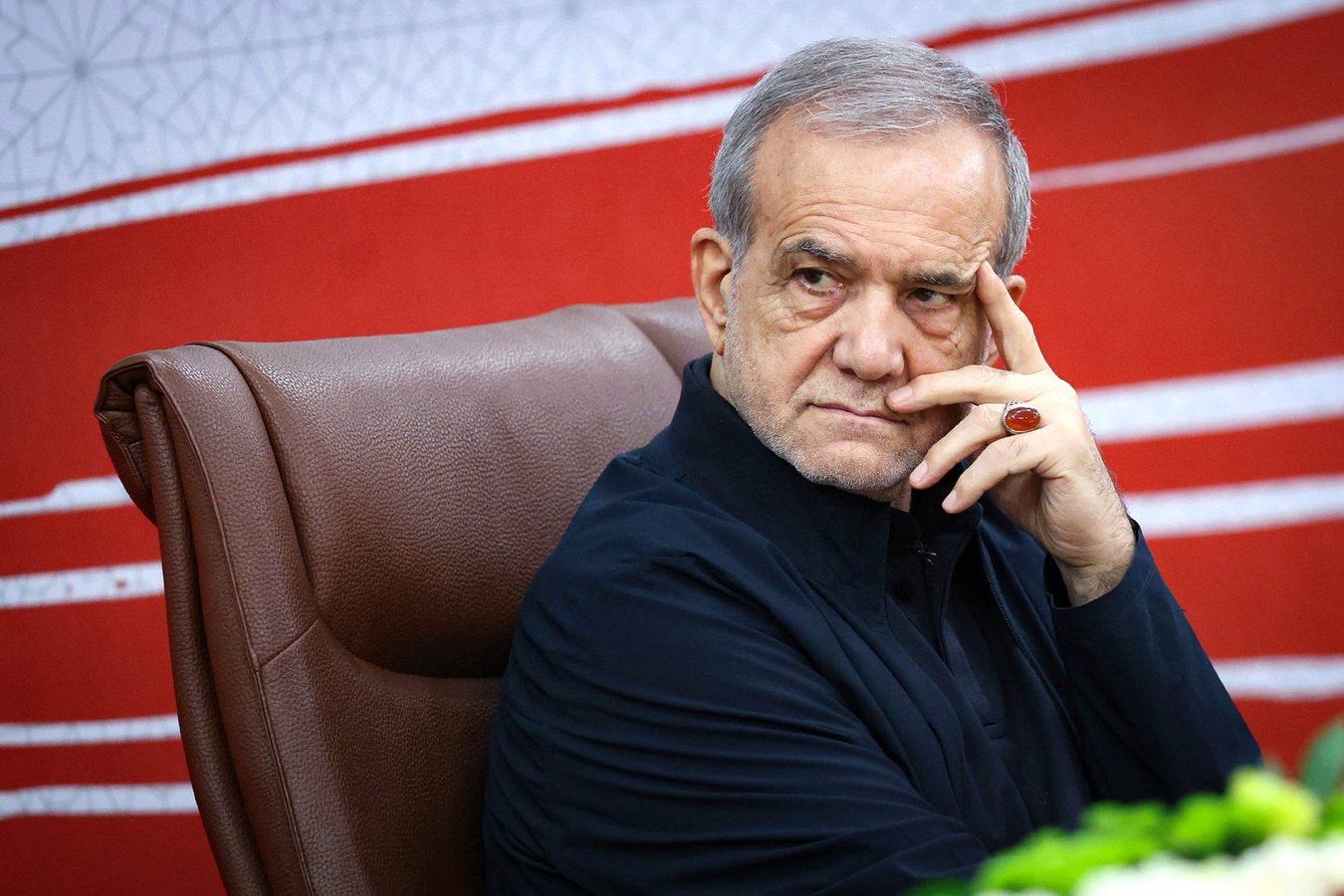
Iran’s president has admitted that American economic sanctions are suffocating the country, describing the current situation as a war and acknowledging that Tehran is struggling under the weight of the restrictions. The rare public admission came as the government faces mounting pressure from runaway inflation and growing public discontent over the collapsing purchasing power of the national currency.
In remarks reported on Saturday, the president said the sanctions have effectively placed Iran in a wartime economic posture, with the government forced to manage shortages, currency depreciation, and a severe squeeze on trade and oil revenues. The comments mark one of the most direct acknowledgments from the Iranian leadership that the US pressure campaign is inflicting serious damage on the country’s economy.
Supreme Leader Ayatollah Mojtaba Khamenei also weighed in, calling on the government to take control of the situation after official figures showed annual inflation reached 66 percent last month. The supreme leader’s intervention signals growing concern at the highest levels of the Iranian state about the stability of the economy and the government’s ability to manage the crisis.
The admission comes as Iran’s trade volumes continue to fall, with the country struggling to maintain export levels and secure essential imports. The sanctions have targeted Iran’s oil sector, banking system, and access to international financial markets, sharply reducing the government’s revenue base and forcing it to rely on informal and barter arrangements to move goods across borders.
Khamenei has also urged Iran to reduce its reliance on the US dollar in international transactions, a push that reflects the broader strategic effort to insulate the economy from American financial leverage. The call aligns with a wider campaign among some governments to diversify away from dollar-dominated trade, though analysts note that Iran’s options remain limited given the scale of the sanctions regime.
The economic crisis has also fueled political tensions inside the country. Reports indicate that the supreme leader has ordered Iran’s factions to stop fighting among themselves, as the president uses the economic emergency to press for renewed talks with the international community. The internal friction highlights the strain the sanctions are placing on the ruling establishment, with competing factions offering different prescriptions for how to respond to the pressure.
For ordinary Iranians, the impact is felt in daily life. Food prices, housing costs, and basic goods have all risen sharply, while wages have failed to keep pace. The 66 percent inflation figure means that savings are being eroded rapidly, and many households are being pushed toward poverty. Public frustration has grown, and the government has struggled to respond with measures that can meaningfully ease the burden.
The president’s acknowledgment of the war-like conditions is significant not only for what it reveals about the state of the economy but also for what it suggests about the political calculus in Tehran. By framing the sanctions as an act of war, the leadership may be seeking to rally public support and justify difficult policy choices, including potential austerity measures or further restrictions on consumption.
At the same time, the admission could be read as an opening for diplomacy. If the government is publicly conceding that the sanctions are working, it may be positioning itself to argue that engagement with the United States and its allies is the only viable path forward. The president’s push for talks, set against the supreme leader’s call for internal unity, suggests that the Iranian leadership is weighing its options as the economic pressure intensifies.
The situation remains fluid, and it is unclear whether the government will be able to stabilize the economy or whether the sanctions will continue to tighten. What is clear is that Iran’s leadership is no longer hiding the scale of the challenge it faces.
57