Memorandum
- From
- Delaney Sawyer via FOX News
- Date
- Filed
- News·5 min to read
- Re
Former Biden COVID Coordinator Says Pandemic Likely Came From Lab Leak
ReFormer Biden COVID Coordinator Says Pandemic Likely Came From Lab Leak
Former Biden administration COVID-19 coordinator Dr. Ashish Jha said he now considers a lab leak the likely source of the pandemic, while acknowledging that definitive answers remain unavailable.
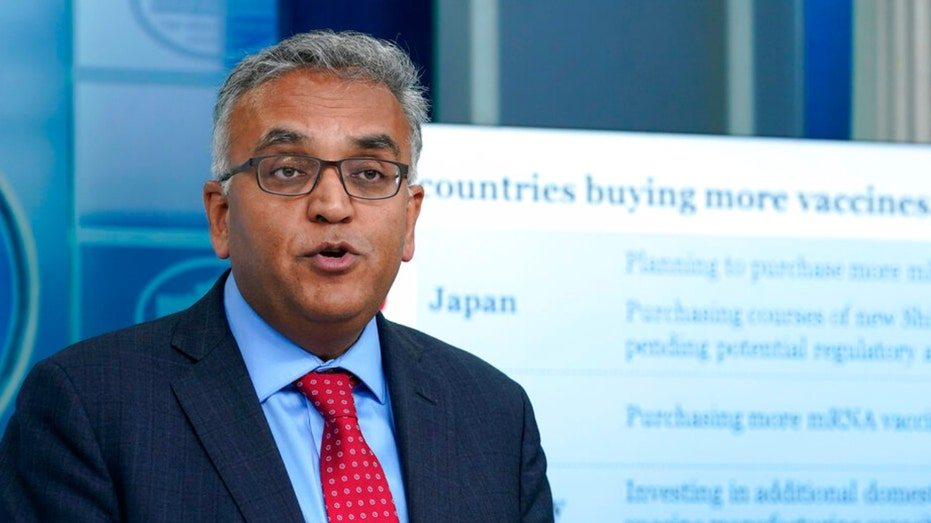
Dr. Ashish Jha, who served as the Biden administration's COVID-19 response coordinator, said Sunday that he now believes the coronavirus pandemic probably began with an accidental lab leak rather than natural transmission. In an interview on CNN, Jha said his assessment changed after reviewing evidence during his time in the White House, though he acknowledged that no one in the United States can be certain about the virus's origins.
CNN host Dana Bash raised a social media post by commentator Jamie Metzl in which he outlined the case for the virus emerging from the Wuhan Institute of Virology. Bash noted that Jha had shared the post and appeared to endorse it. When asked about that endorsement, Jha said, «I pretty much agree with everything here.» He then explained that when he first joined the administration, he leaned toward the view that the outbreak was almost certainly natural. «Based on information I learned and based on information I have seen, I have come to conclude that it is more likely to have been a lab leak,» he said.
Jha stressed that his conclusion is a best assessment, not a certainty. «Here is the bottom line. No one in the United States knows for sure. The only people who know for sure are officials in China, and we still need transparency and accountability on that.» He added that the leak, if it happened, was not engineered or deliberate; it would have been accidental. Later, in a post on X, Jha wrote that he had held his view since his time at the White House and that anyone claiming to know the answer for certain is «selling you something.» He also said reasonable people can look at the same evidence and disagree.
The statement marks a notable shift in public messaging about the pandemic's origins. Early in the outbreak, the lab-leak theory was widely disputed, and some social media platforms restricted related claims under misinformation policies. Several major news organizations, including CNN, The New York Times and The Washington Post, initially described the theory as a debunked conspiracy before later acknowledging it as a plausible possibility. Watchdogs have argued that those early dismissals damaged the credibility of the media and public institutions.
NPR came in for particular criticism. In April 2020, the taxpayer-funded network ran reports on consecutive days dismissing the lab-leak idea, including one headlined «Scientists Debunk Lab Accident Theory of Pandemic Emergence.» Critics said the coverage mischaracterized the state of scientific knowledge at the time. CNN also faced scrutiny for coverage that was seen as sympathetic to the Chinese government, including a report that praised China's top-down, one-party system as an advantage in curbing the pandemic and accelerating vaccinations.
Beyond the media response, the pandemic triggered a legal battle over online speech. The Biden administration was sued in a high-profile First Amendment case after it was accused of pressuring social media companies to remove or suppress posts from Americans who questioned official COVID-19 narratives. Under the settlement, the Office of the Surgeon General, the Centers for Disease Control and Prevention, and the Cybersecurity and Infrastructure Security Agency are barred for the next decade from threatening or coercing platforms to take down protected speech, and officials cannot direct or veto content moderation decisions.
The debate also exposed divisions within the media itself. In one well-known moment, Jon Stewart pressed his former colleague Stephen Colbert over the hesitancy to discuss the lab-leak theory, noting that the novel respiratory coronavirus appeared in the same city as the Wuhan Institute of Virology and joking that the disease shared the lab's name. The exchange illustrated how polarized the question had become even among commentators who usually agreed.
Jha's comments add another senior official to the public debate over COVID-19's origins. He said the United States still does not have definitive answers and that pressure should remain on China to provide transparency and accountability. For now, he said, his conclusion is based on strong circumstantial evidence, not proof, and he expects reasonable people to continue disagreeing about what happened.