Memorandum
- From
- Connor Quincy via FOX News
- Date
- Filed
- News·5 min to read
- Re
Holdout Juror in Lindsay Clancy Trial Disputes Fellow Jurors' Account
ReHoldout Juror in Lindsay Clancy Trial Disputes Fellow Jurors' Account
Michael P. Desronvil, the lone juror who blocked a not-guilty-by-reason-of-insanity verdict for Lindsay Clancy, says he never doubted prosecutors proved she knew what she was doing when she strangled her three children in January 2023. His statement contradicts fellow jurors' claims that he acknowledged reasonable doubt during deliberations.
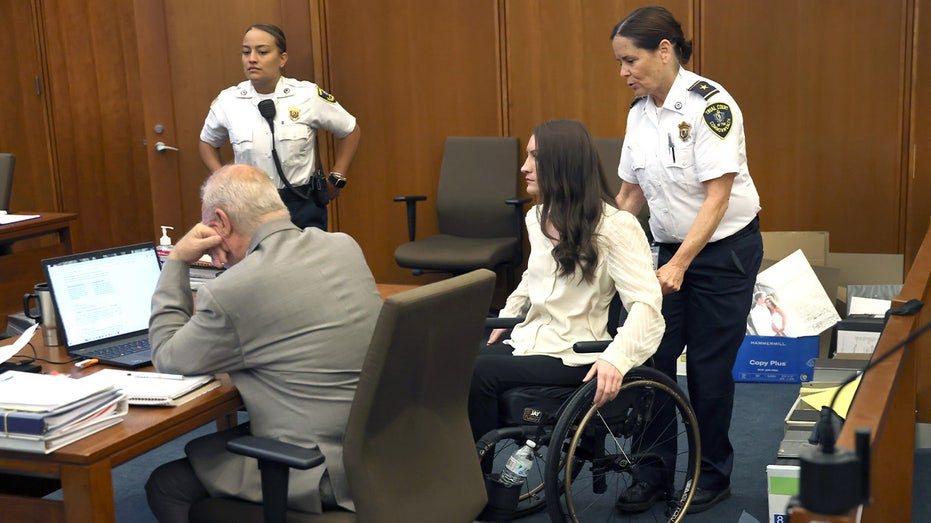
The lone juror who prevented a verdict in the Lindsay Clancy trial is publicly disputing accounts from his fellow panel members, saying he never wavered in his belief that prosecutors proved Clancy knew what she was doing when she strangled her three young children.
Michael P. Desronvil said in a statement to NewsNation that he held firm in his position throughout deliberations and that his attempts to discuss possible theories were misinterpreted as doubts about the evidence. «I didn't have any doubts. As I tried to explain different possible theories during deliberation, I kept getting cut off as if I had doubts based on the evidence present,» Desronvil said. «Based on all the physical evidence, key witnesses and what the prosecution presents, I thought it was enough proof that she knew exactly what she was doing and planned.»
His comments directly contradict accounts from other jurors, who said after the mistrial that Desronvil appeared to acknowledge reasonable doubt during deliberations but still refused to join the remaining 11 jurors in finding Clancy not guilty by reason of insanity. The jury deadlocked 11-1, with Desronvil standing alone in favor of convicting Clancy rather than accepting her insanity defense. Judge William Sullivan declared a mistrial when the panel could not reach a unanimous verdict.
The public statement comes as Plymouth County prosecutors weigh whether to retry Clancy, whose attorneys have also raised the possibility of resolving the case without another jury trial. Clancy, a former labor and delivery nurse, admitted killing her children — Cora, 5, Dawson, 3, and Callan, 8 months — in January 2023 but argued she was not criminally responsible because she was suffering from severe mental illness at the time. Prosecutors contended she planned the murders and understood the wrongfulness of her actions.
Fox News contributor Jonathan Turley previously said prosecutors face a difficult decision about whether they can persuade a future jury to unanimously reject Clancy's insanity defense after the first panel failed to reach a verdict. «The question is whether they could ever get a jury, particularly in Massachusetts, that would unanimously vote against this defendant,» Turley said. «For prosecutors, they have to weigh that, but they may find the alternative equally unappealing — to simply walk away and say, 'There are three dead children here, but we just don't think we could ever win this case.'»
Judge Sullivan has ordered jurors' identities and questionnaires sealed, citing safety concerns following the high-profile mistrial. Clancy is due back in court Sept. 29 as prosecutors determine whether to seek a retrial.
The case has drawn widespread attention, in part because of the competing narratives about Clancy's mental state at the time of the killings. Her defense argued that severe mental illness prevented her from understanding the wrongfulness of her actions, while the prosecution maintained that the killings were planned and deliberate. The mistrial leaves both sides preparing for the next phase, with no clear indication yet of how prosecutors will proceed.
Desronvil's decision to speak publicly marks the first time the holdout juror has addressed the case since the mistrial. His account challenges the characterization offered by other jurors and adds a new layer to the public understanding of how the panel reached its deadlock. The jury's 11-1 split means that a single juror's position was enough to prevent a conviction or an acquittal, a outcome that has fueled debate about the evidence and the legal standard for insanity in Massachusetts.
As the Sept. 29 court date approaches, the central question remains whether prosecutors believe they can secure a unanimous verdict in a retrial or whether they will pursue another resolution. The decision will shape the next chapter of a case that has already become one of the most closely watched in the state.