Memorandum
- From
- Connor Quincy
- Date
- Filed
- News·4 min to read
- Re
Ben Jones dies at 84, leaving a rare TV-to-Congress legacy
ReBen Jones dies at 84, leaving a rare TV-to-Congress legacy
Jones was Cooter Davenport for seven seasons of The Dukes of Hazzard, then served Georgia in the U.S. House from 1989 to 1993.
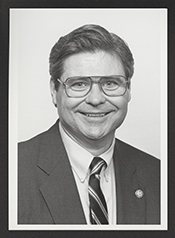
Ben Jones’s public life can be understood through two institutions that rarely share the same biography: a hit network television series and the United States Congress.
Jones, 84, died Sunday, August 9, at his home in Washington, Virginia. His wife said he had a heart attack while waiting to watch the Atlanta Braves, and the local sheriff confirmed his death.
The first part of his national fame came from The Dukes of Hazzard. Jones played Cooter Davenport, the mechanic and friend who repeatedly helped Bo and Luke Duke through the fictional conflicts of Hazzard County. He remained with the series through its entire seven-season run from 1979 to 1985.
That role gave Jones a recognizable public identity at a time when successful network shows reached extraordinarily broad audiences. The series survived well beyond its original CBS run through syndication, cable, merchandise and fan culture, leaving Jones permanently associated with the name Cooter.
The second part of his biography began in electoral politics. Jones, a Democrat, won a Georgia seat in the U.S. House in 1988. Official House records show that he served in the 101st and 102nd Congresses, from January 1989 to January 1993.
His tenure coincided with a period when Southern politics was undergoing a deep partisan realignment. Redistricting contributed to the end of his House service after two terms, but it did not end his political activity. In 1994 he ran in Georgia’s 6th District against Newt Gingrich. The official election count was 119,432 for Gingrich and 66,700 for Jones.
The contrast between those two careers explains why Jones is more than an entertainment obituary or a footnote in congressional history. His path demonstrates an early version of something now familiar in American life: celebrity can provide recognition and a public platform, but elected office still demands a different kind of campaign, constituency and record.
Jones also complicates the standard story in which an actor leaves a defining role behind. He continued to embrace The Dukes of Hazzard after his time in Washington. Cooter’s stores and attractions turned his connection to the series into a lasting fan destination, filled with memorabilia and built around the continuing appeal of Hazzard County.
That fandom existed alongside controversy. Later arguments over the Confederate battle flag on the roof of the General Lee changed how the series was discussed in popular culture. Jones defended the show and its Southern framing, keeping himself involved in the debate rather than retreating from it.
His life therefore connected several kinds of public memory. Television viewers knew a friendly mechanic. Voters knew a Democratic candidate in a changing Georgia. Political historians can place him in two Congresses and a later race against Gingrich. Fans continued to encounter him through stores, reunions and appearances long after the final episode aired.
The essential point is that none of those identities fully displaced the others. Ben Jones remained Cooter and a former congressman at the same time. That unusual overlap is the clearest explanation for why his death is being felt across both entertainment and political audiences.
Image: Ben Jones during his service-era public life. Image credit: Collection of the U.S. House of Representatives, Gift of the U.S. Association of Former Members of Congress.
91