Memorandum
- From
- Derek Weston via fox - Opinion
- Date
- Filed
- Culture·5 min to read
- Re
Jennifer Griffin Recalls Career Covering Wars and Tragedy for Fox News
ReJennifer Griffin Recalls Career Covering Wars and Tragedy for Fox News
Veteran correspondent Jennifer Griffin reflects on her career from Moscow in 1997 through the Second Intifada, describing the Fox News team as a family.
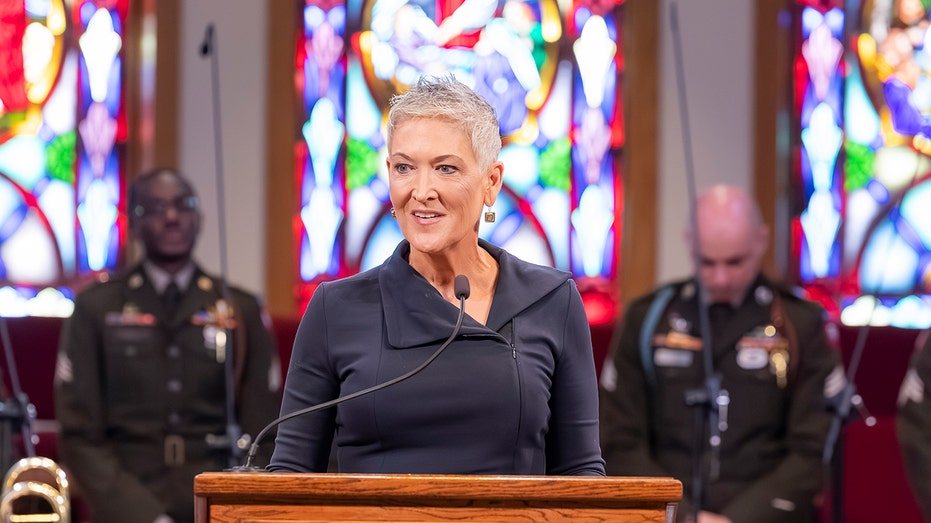
Veteran correspondent Jennifer Griffin is reflecting on a career that took her from the collapse of the Soviet Union to the front lines of the Second Intifada, describing the Fox News team she joined in 1997 as a family. Griffin, who started reporting for the network shortly after its launch, shared her memories in a first-person account that traces her path from a Moscow-based correspondent learning television on the job to a full-time Jerusalem posting covering some of the most consequential events of the era.
Griffin began her Fox News career in 1997 while based in Moscow, a period of intense political and social upheaval. Russian President Boris Yeltsin had just undergone heart surgery, and the Mir Space Station caught fire with American astronauts aboard. Griffin recalls the chaotic atmosphere of the time, including Yeltsin's frequent cabinet shake-ups and the rise of Vladimir Putin, who moved to Moscow in 1996 and was appointed deputy chief of the Presidential Staff in March 1997. She also describes the violence that gripped the capital, with bankers gunned down in the streets as the ruble crashed and a new class of oligarchs divided up state assets.
Working for Simon Marks, a former ITN correspondent, Griffin was hired as the Fox News correspondent in Moscow for Feature Story Productions. Trained in print and radio rather than television, she learned on the job how to do stand-ups and live shots for the fledgling cable network, which was hoping to compete with CNN. She remembers standing on an icy bridge on New Year's Eve, with snow blowing over the Moskva River and St. Basil's Cathedral lit up in the background, as she learned the craft of television reporting.
In March 1999, Fox assigned Griffin to cover the Kosovo War from NATO headquarters in Brussels during the bombing campaign. She recalls the mood at NATO when a U.S. B-2 Spirit dropped satellite-guided bombs on the Chinese Embassy in Belgrade, killing three Chinese journalists and injuring dozens. The strike was later attributed to a CIA miscalculation of coordinates for an intended Yugoslav weapons storage facility. Months later, after Serbian forces withdrew, Griffin flew to Kosovo and joined Fox's Greg Palkot on the ground, taking over from David Lee Miller and the Jerusalem team. She talked her way into a Russian base by offering cigarettes to a soldier and onto an American Black Hawk helicopter delivering 82nd Airborne troops to observe the Serbian withdrawal. The team captured footage of the withdrawal and rushed back to make it on air for «Fox Report.»
At the end of 1999, Fox hired Griffin full time as its Jerusalem correspondent, and she and her husband moved from Moscow. It was the tail end of the Oslo Peace Accords, which she describes as being on life support, with President Clinton trying to rescue them through frequent meetings with Israeli Prime Minister Ehud Barak and Palestinian Chairman Yasser Arafat. Expecting a quiet assignment after previous postings in South Africa, Islamabad, and Kabul, Griffin and her husband decided to start a family. Instead, months later, on September 28, 2000, Ariel Sharon's visit to the Temple Mount triggered the Second Intifada, which lasted seven and a half years while she was posted in Jerusalem.
During that period, Griffin gave birth to two daughters in Jerusalem and responded with her Fox team to every suicide bombing and incursion into the West Bank and Gaza. She wore a flak jacket and was at an Israeli checkpoint in Ramallah doing a stand-up when the first plane struck the World Trade Center on 9/11. That night, she reported outside the Jerusalem bureau for «America's Most Wanted,» discussing likely suspects including Osama bin Laden. She also profiled Hezbollah military commander Imad Mughniyah, who at that point had the blood of more Americans on his hands than any other terrorist following his role in the Marine barracks bombing.
Griffin's account underscores the personal and professional bonds formed in a newsroom that she came to regard as a family, even as she covered wars, terror, and tragedy across multiple continents.
4