Memorandum
- From
- Delaney Sawyer via fox - Most Popular
- Date
- Filed
- Culture·4 min to read
- Re
Hollywood’s silence on 9/11 weakens America, historian argues
ReHollywood’s silence on 9/11 weakens America, historian argues
A historian argues that Hollywood’s reluctance to make feature films about the September 11 attacks has left a cultural vacuum filled by conspiracy theories, weakened public understanding of the event, and contributed to a decline in military enlistment.
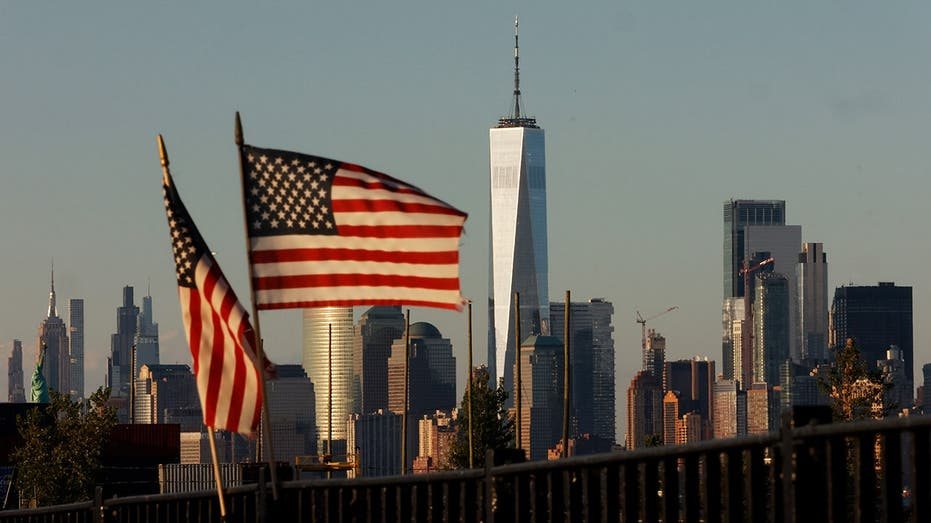
A quarter-century after the September 11, 2001 attacks, Hollywood has largely stopped making feature films about the event, and that silence is making America less safe, according to a historian’s opinion essay published this week. The essay argues that movies have long served as the primary lens through which Americans understand their history, and the absence of serious cinematic engagement with 9/11 has created a cultural void that conspiracy theorists have rushed to fill.
The piece notes that only two major studio dramas directly addressed the attacks: Oliver Stone’s World Trade Center and Paul Greengrass’s United 93, both released in 2006 and both focused on the heroism of ordinary Americans. Beyond those films and a handful of documentaries, the author contends, the cultural machine that once produced enduring stories about World War II, Vietnam, and the Civil War has gone largely silent on 9/11. No feature film on the subject has been made in over a decade, and none is currently in development.
The essay offers several explanations for this gap. It points to progressive sensibilities and diversity, equity, and inclusion priorities that may make studios wary of portraying Muslims as antagonists. It also cites postmodernism’s preference for irony and metaphor over direct engagement with difficult subjects, noting that Steven Spielberg has described his 2005 film War of the Worlds as his 9/11 movie, despite its lack of explicit reference to the attacks. The piece further suggests that global financing structures, with investors from countries uninterested in celebrating Western values, have discouraged studios from tackling the subject.
The consequences of this silence, the author argues, are measurable. The essay draws a direct line between Hollywood’s portrayal of military service and enlistment rates, citing a 500 percent spike in Navy recruiting interest following the 1986 release of Top Gun. By contrast, the early 2000s saw a drastic decline in enlistment, with a recruiting crisis peaking in 2022 and 2023. The author suggests that the absence of films portraying military service as worthy and desirable has contributed to this trend.
Beyond recruitment, the essay contends that the lack of serious films about 9/11 has fostered moral confusion. It argues that decades of movies exploring Nazi wickedness solidified public understanding of World War II, and that even during the Vietnam era, no serious filmmaker glorified the Vietcong. That cultural foundation, the author says, allowed Americans to disagree about policy while maintaining a shared sense of national purpose. Without similar cinematic engagement with 9/11, the essay claims, conspiracy theories propagated by figures like Alex Jones, Candace Owens, and Tucker Carlson have flourished.
The author also criticizes filmmakers who, in the aftermath of the October 7, 2023 Hamas attack on Israel, advocated for Gaza rather than for America and its allies. The essay describes this as adding insult to injury, given that Hamas shares an ideology with the jihadists who attacked the United States in 2001.
Despite the grim assessment, the essay ends on a note of cautious optimism. It suggests that advances in technology, including artificial intelligence, could lower production costs and enable more ambitious storytelling. What is needed, the author writes, is an enterprising young director willing to look back at that September day and deliver the stories that Americans still need to hear.
63