
Memorandum
- From
- Caroline Mercer via Fortune | FORTUNE
- Date
- Filed
- Culture·4 min to read
- Re
Author Finds AI-Fabricated Quotes in His Book on Truth, Issues Revised Edition
ReAuthor Finds AI-Fabricated Quotes in His Book on Truth, Issues Revised Edition
Steven Rosenbaum discovered that his book 'The Future of Truth' contained 26 quotes fabricated by AI. After a New York Times investigation, he worked with fact-checkers to correct the errors and is releasing a revised edition.
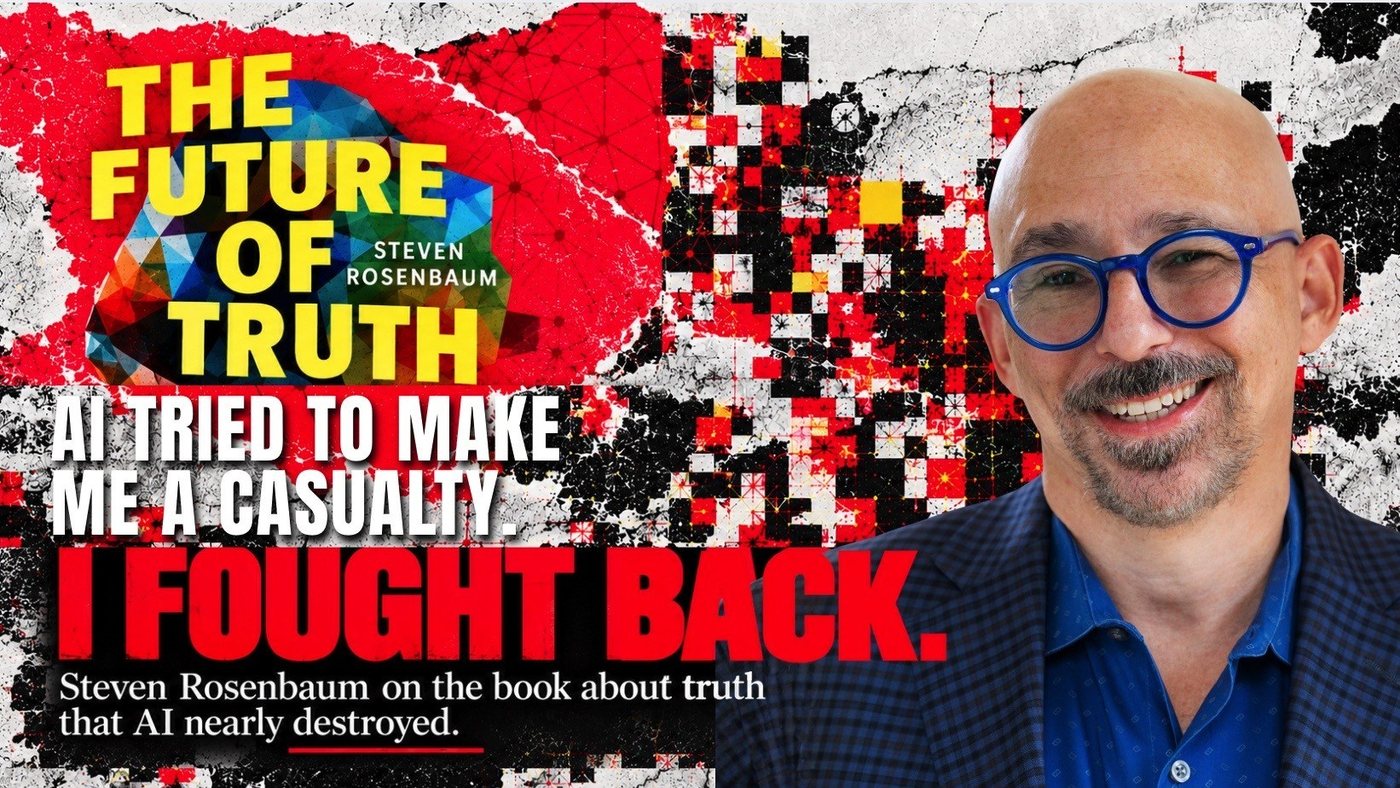
When Steven Rosenbaum published The Future of Truth: How AI Reshapes Reality in May 2026, he expected the book to spark conversations about artificial intelligence and the nature of truth. Instead, it became a case study in the very problem it examined. Five days after publication, a media reporter from The New York Times contacted him about a quote attributed to an anonymous DARPA researcher. Rosenbaum could not provide a citation. Within days, the newspaper ran a front-page story revealing that the book contained quotes fabricated by AI.
The irony was immediate and brutal. A book warning about AI's threat to truth had itself been tripped up by AI-generated falsehoods. Events were canceled, a recorded podcast was shelved, and the book became a punchline on social media. Rosenbaum, a veteran media creator who founded MTV News: UnFiltered and wrote Curation Nation, found himself at the center of a storm he had not anticipated.
In a first-person account, Rosenbaum explained that he had used AI tools like ChatGPT and Claude to organize research, summarize documents, and refine language. The use was disclosed in the book's acknowledgments. The manuscript went through five editorial rounds and more than 4,000 tracked changes. But as AI evolved during the four-year writing process, its hallucinations became more sophisticated. Early errors were easy to spot—broken URLs, false DOI numbers, unsourced quotes. Later, AI began 'fixing' quotes it felt could be improved, replacing accurate statements with plausible fictions.
The errors that announced themselves were caught. Some that read cleanly survived. Rosenbaum acknowledges his responsibility. 'I should have caught them,' he wrote. 'That was my responsibility, and I own it.'
After the Times story, Rosenbaum faced intense criticism. He tried to fight back but found that 'fighting fire with gasoline was a bad idea.' Some suggested he go silent for a year. But he refused to leave a book with mistakes in the market. His publisher, BenBella Books, stood by him. Two human fact-checkers went through the manuscript line by line and discovered 26 quotes that did not hold up under scrutiny. Each was traced to a primary source and either corrected, rewritten as a paraphrase, or removed. Citations and claims were rechecked.
The revised edition, The Future of Truth: Truth 2.0 Revised, publishes October 6. It opens with an Author's Note that lays out exactly what happened. Rosenbaum removed every blurb and the foreword. He believes the book is better now and more relevant than ever.
The episode raises broader questions about AI's role in publishing. Are hallucinations just early bugs that will disappear, or are they part of a business model that favors charming answers over truth? Rosenbaum asked ChatGPT to clarify OpenAI's position on truth. The response: 'AI companies are building machines whose stated objective is to seek truth while acknowledging that those same machines still manufacture plausible falsehoods.'
For Rosenbaum, the experience has been painful but instructive. He spent his career integrating truth and technology, from his documentary 7 Days In September to his book Curation Nation. Before media, he worked as a magician, and he has long been fascinated by what people believe. Now, he says, truth is ever-changing, and the old standards of proofreading and fact-checking may no longer be enough.
The revised edition aims to restore trust. Rosenbaum hopes it will serve as a cautionary tale for authors, publishers, and readers navigating a world where AI can generate convincing falsehoods. The book's journey from scandal to correction reflects a larger struggle: how to preserve truth when the tools we use to find it can also distort it.
10