Memorandum
- From
- Derek Weston
- Date
- Filed
- Business·6 min to read
- Re
Why Accell’s restructuring failed after lenders took control
ReWhy Accell’s restructuring failed after lenders took control
Accell had already cut debt, changed ownership and sought a strategic buyer before entering insolvency proceedings. The failure of that sequence explains why the next step is likely to be a country-by-country breakup rather than another group-wide rescue.
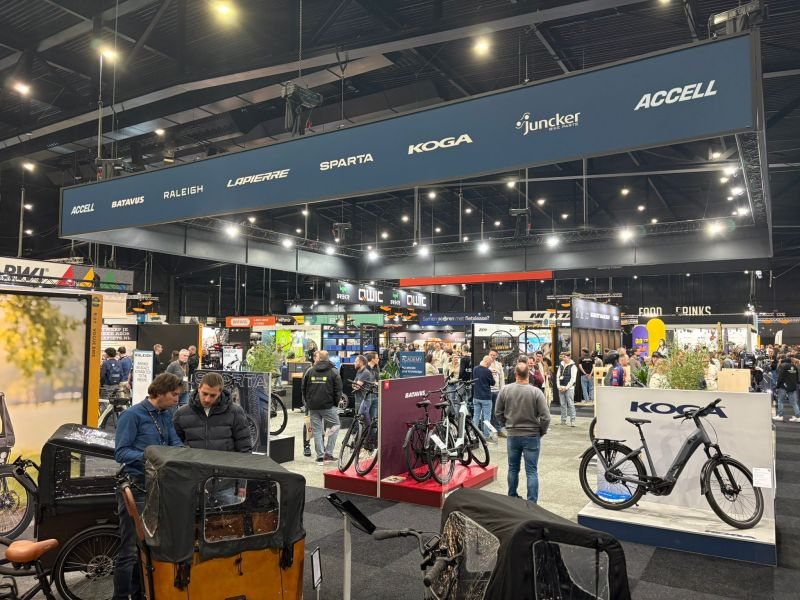
Accell Group did not arrive at insolvency without trying the standard rescue sequence. It restructured debt, secured fresh financing, transferred ownership from its private-equity sponsors to lenders, cut operating costs, reduced inventory and launched a sale process. By early August, each of those steps had been tried. What failed was the final requirement: restoring enough confidence and liquidity to keep the entire group together.
On August 5, Accell said its Dutch entities had been granted a provisional suspension of payments. Under Dutch law, that process is designed to give an organization with payment problems breathing room while creditors are addressed. Accell’s statement went further, saying an exhaustive review had not produced a realistic solution for continuing the group in its current form.
That wording is the key to understanding what comes next. The legal entity called Accell Group may be in distress, but the portfolio contains businesses with their own customers, employees and brand equity. The economic question is no longer whether the group can be refinanced as one unit. It is whether individual clusters can attract capital before uncertainty damages their value.
Germany has already begun that process. Accell Germany, Winora Staiger, Ghost Bikes and Engelbert Wiener Bike-Parts entered self-administered insolvency proceedings. About 370 employees work at Sennfeld and Waldsassen, and the businesses reported roughly €340 million in 2025 revenue. Their operations are continuing while management seeks an investor and aims to separate them from the Dutch parent.
France is also creating a legal perimeter around a local asset. Cycles Lapierre filed for judicial restructuring in Dijon, citing the parent company’s instability as a barrier to ordinary short-term financing. Lapierre had €99.1 million in 2025 revenue and narrowed its operating loss to €27.2 million from €46.3 million in 2024. Management has explicitly said it wants to regain independence.
Those local actions follow two years of balance-sheet engineering. KKR and its partners took Accell private in 2022, when pandemic-era demand encouraged confidence in the long-term growth of bicycles and e-bikes. The Financial Times values that buyout at €1.8 billion. The operating environment then reversed: demand normalized, supply-chain decisions contributed to excess inventory, discounting pressured margins, and cash flow weakened.
Accell’s first major recapitalization did not end the problem. The group said in 2025 that debt in its operating business had been reduced to about €800 million. In February 2026 it announced additional funding and another substantial debt reduction. At the same time, lenders assumed ownership, effectively ending KKR’s control after the sponsors lost their equity investment.
The lender takeover created a new problem. Creditors are rarely ideal permanent owners of a consumer-products platform. They needed either a credible long-term operating plan or an exit. A sale to Dutech Group appeared to offer that exit. Tri Star E-Moving, a Dutech entity, filed for merger approvals, and German competition authorities cleared the prospective combination.
But a merger filing is not a signed deal. Industry reporting at the time emphasized that the parties had discussed a combination without reaching a final agreement. When negotiations collapsed in the first week of August, the capital structure lost its last group-wide solution. Insolvency protection followed within days.
The market cycle explains why a third refinancing was not enough. French industry data show 2025 bicycle unit sales down 6%, with market value down 4.8%. Repair activity, however, rose 10.5%. Consumers did not abandon cycling; they became less willing to replace bikes. That distinction is painful for a manufacturer carrying inventory and debt because usage can remain healthy while new-product cash generation deteriorates.
Raleigh illustrates how value can persist below the parent. The Nottingham brand dates to 1887 and has been part of Accell since 2012. It no longer manufactures bikes in Britain, but its history and recognition survive. Lapierre, founded in 1946, has a similar case in France. Winora’s roots go back to 1914 in Germany. These are potentially saleable assets even if Accell’s consolidated balance sheet is not.
The surprising part is how recently management believed the turnaround was working. In April, Accell said it had completed its transformation, highlighted a focused portfolio and planned to present 2027 models from key brands to dealers. That operating optimism was not necessarily false; it simply did not solve the funding problem quickly enough.
The lesson is that restructuring has two clocks. An operating turnaround may require several seasons. Liquidity can run out in weeks. Accell’s lenders reached the point where the second clock beat the first. The next restructuring will therefore happen through asset sales, national procedures and new owners rather than through another attempt to preserve the old group.
75