Memorandum
- From
- Connor Quincy via Fortune | FORTUNE
- Date
- Filed
- Business·5 min to read
- Re
Regard Cofounders Credit 10-Month Trip for $350 Million Business
ReRegard Cofounders Credit 10-Month Trip for $350 Million Business
Nate Wilson and Eli Ben-Joseph, cofounders of AI healthcare company Regard, say a 10-month journey through China, the Philippines, and Colombia served as an unconventional compatibility test before they built a business now valued at $350 million.
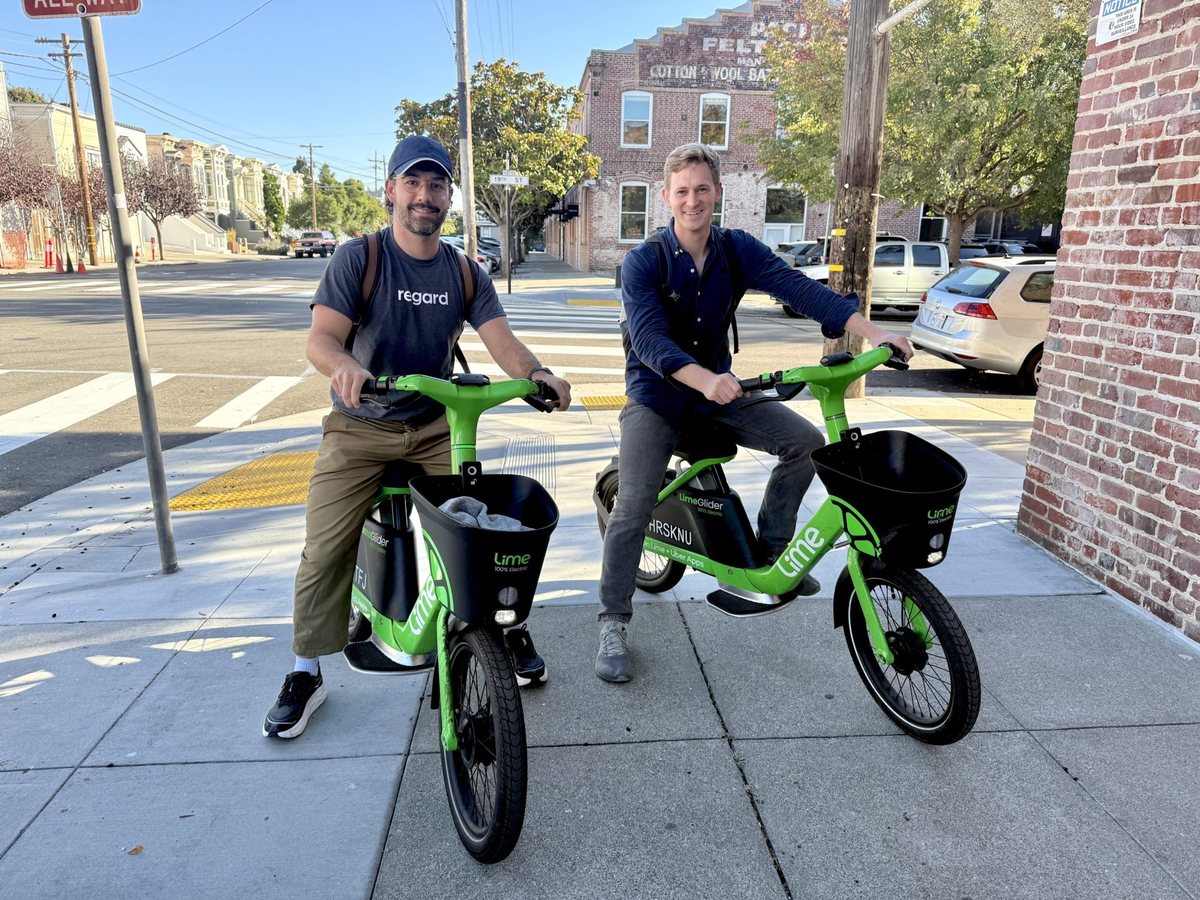
Nate Wilson and Eli Ben-Joseph, the cofounders of AI healthcare company Regard, built a business now valued at $350 million after a 2024 Series B round and generating more than $150 million in revenue. But before they wrote a line of code together, they spent ten months traveling through China, the Philippines, and Colombia — an experience they now describe as an accidental cofounder boot camp.
The two met in Boston through a Craigslist sublet. Both were engineers who had been preparing for medical school but were reconsidering their paths. Wilson, a biomedical engineer, had decided to pursue consulting instead and later started a data science firm. Ben-Joseph, a bioengineer at MIT, was also weighing whether to attend medical school. With time on their hands, they decided to travel together.
They say they did not set out to test their compatibility as business partners. But the trip quickly became something closer to a stress test. They got stranded, lost control of plans, and had to navigate unfamiliar places as a pair. According to Wilson, now president and cofounder of Regard, the experience was «extremely high-stress» and «very ambiguous.» He said, «You're dropped into situations where you've lost a lot of control. Things are going sideways, and you see what a person's really like when you travel together for months.»
The itinerary took them through China, including Hong Kong, Beijing, and Shanghai, as well as the Philippines and Colombia in what Wilson described as a «daisy chain» of trips. They encountered bad trains, power outages, remote towns, and moments when they had little money and no easy way out. Wilson said those situations revealed things that ordinary work meetings never could. «You really just get to know someone on a level that transcends the work,» he said. «I know what they're like at their best. I know what they're like at their worst.»
One trait stood out immediately: Ben-Joseph was «very cool under pressure.» The pair developed a shared assumption that when something went wrong, they would simply work it out. That mutual understanding, Wilson said, became the foundation for their partnership. «We have had so many highs and lows over the past eight, nine years,» he said, «and the highs are higher with someone who has a shared understanding of the world — who you really like to bond with, and you know really you know respect deeply — and the lows are like way less bitter. So to have that in someone that you're building a company with, it's magical.»
Wilson now encourages other founders and would-be cofounders to take a similar approach. He is not arguing that everyone should take a ten-month trip, but he believes out-of-work and unprepared chaos can be a good litmus test for whether a business partnership will succeed. «I would encourage every founder or would-be-co-founders to do exactly that — because it's a blunt metaphor,» he said. «But in many ways it's like a marriage, right? You get started, you're working together, and there's no easy way out.»
He added that if he was going to spend years building a business with someone, he had to give it a test run first. «You got to really know this is the person,» he said. «Don't look for the resume. Don't check the boxes. You've got to spend some serious, serious time with the person. And ideally, in a place where it's not smooth sailing. You want to see what it's like when things go sideways, and for better and worse, we got plenty of that when we were traveling for those months.»
Regard, the company they eventually founded, uses artificial intelligence to analyze medical records and help physicians identify diagnoses and other clinical information that might otherwise be missed. According to Wilson, the company is now used across several hundred hospitals. The partnership that began on the road has since produced a business that has raised significant capital and reached a nine-figure valuation.
For Wilson, the lesson is simple: the best way to know whether you can build with someone is to see how they handle adversity outside the office. The trip may not have been designed as a compatibility test, but it became one — and the company it helped create is now worth hundreds of millions.
5