
Memorandum
- From
- Derek Weston via Fortune | FORTUNE
- Date
- Filed
- Business·4 min to read
- Re
Kevin O’Leary says he still shops at Walmart for $29 jeans despite $400 million net worth
ReKevin O’Leary says he still shops at Walmart for $29 jeans despite $400 million net worth
Shark Tank investor Kevin O’Leary says he still hunts for bargains at Walmart, buying $29 jeans and everyday essentials despite a $400 million fortune. He joins a list of ultrawealthy figures, including Warren Buffett and Lucy Guo, known for frugal spending habits.
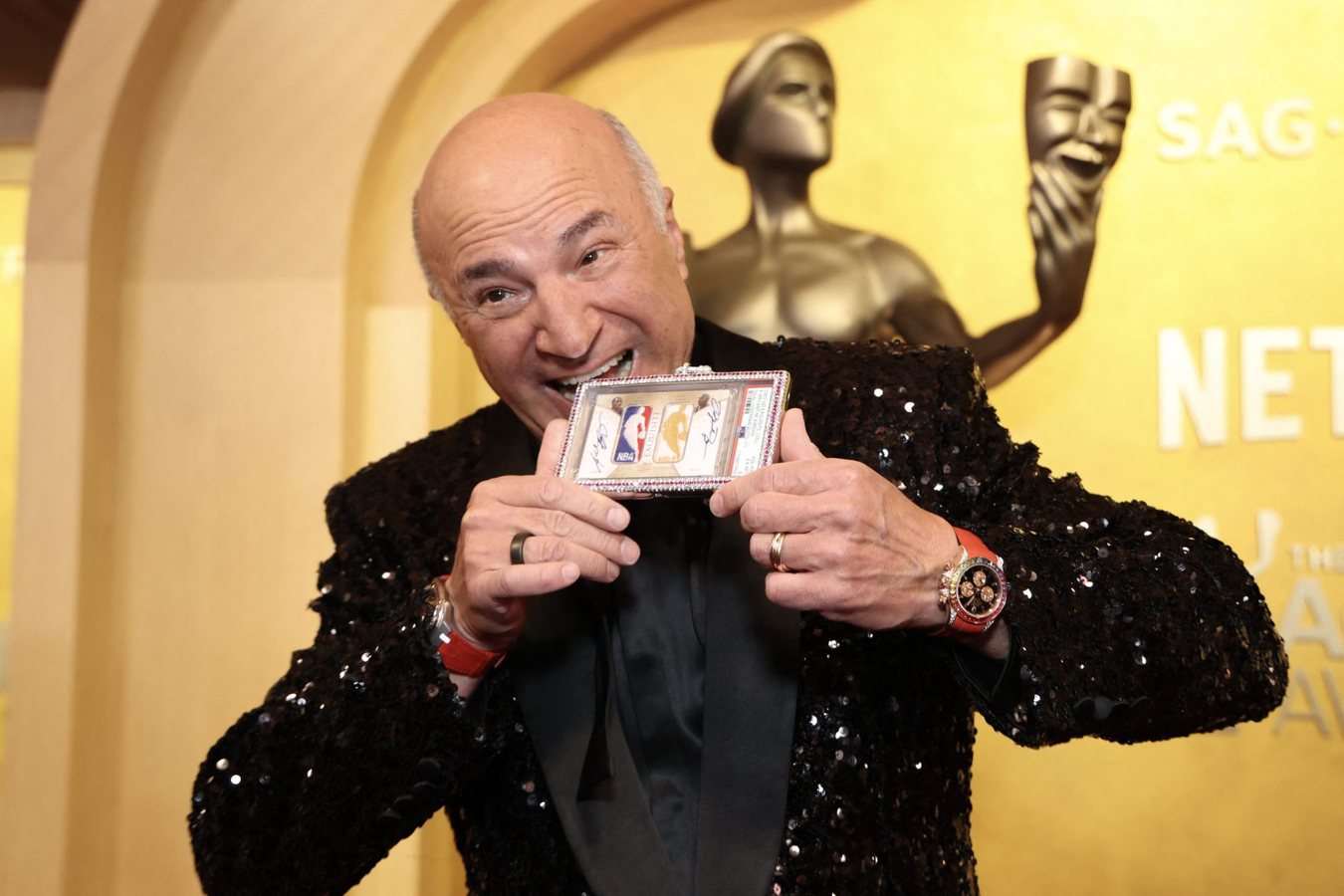
Kevin O’Leary, the Canadian businessman and longtime Shark Tank investor with an estimated net worth of $400 million, says he still shops at Walmart for everyday essentials and even his signature black jeans. In a recent Instagram video, the 72-year-old showed himself browsing the store, explaining that he is always on the lookout for a deal.
“I’m always looking for a great deal, that’s why I’m in Walmart,” O’Leary said in the video. “You know those fantastic black jeans I’m always wearing? That’s right—Walmart special, 29 smackaroos. That’s how you save dough.” He added that his wife had sent him to pick up batteries, butter, paper towels, and OxiClean laundry spray, but he used the trip to compare prices and hunt for savings. He pointed out that a 12-plus roll package of Bounty paper towels was equivalent to about 18 smaller rolls, calling the larger pack the better value.
O’Leary, who owns multimillion-dollar homes in Florida, Massachusetts, and Toronto, has made a point of shopping at Walmart on multiple occasions over the years. He has long argued that there is no reason to pay more for everyday items when a cheaper option works just as well. In 2021, after a Walmart run went viral, he told CNBC: “I hate wasting money. I just don’t get why you would do that. It’s so hard to make it in the first place.”
O’Leary is far from alone among the ultrawealthy in keeping a frugal streak. Warren Buffett, whose net worth is estimated at about $144 billion, still lives in the same five-bedroom, two-and-a-half-bath home in Omaha, Nebraska, that he bought in 1958 for $31,500. The property is now valued at more than $1.3 million. Buffett also famously used to stop at McDonald’s on his way to the Berkshire Hathaway office, letting the stock market dictate his order: when markets were down, he would spend $2.61 on two sausage patties; on better days, he would splurge $3.17 on a bacon, egg, and cheese biscuit, according to a 2017 HBO documentary.
Ingvar Kamprad, the late billionaire founder of Ikea, had a similar approach to spending. Despite a fortune once estimated at $58.7 billion, Kamprad bought second-hand clothes and drove an old Volvo. “I don’t think I’m wearing anything that wasn’t bought at a flea market,” he said in a 2016 documentary on Sweden’s TV4. “I want to set a good example.” Kamprad continued working at Ikea until he was 87, more than three decades after becoming a billionaire. He died in 2018 at 91.
A more recent example is Lucy Guo, cofounder of Scale AI, who became a billionaire in her early thirties. The 31-year-old has long embraced the FIRE movement—financially independent, retire early—by going to extremes to save money. She has said she buys discounted clothing, skateboards to work, and has booked flights she later cancelled so she could eat for free in American Express airport lounges. “Everything I wear is free or from Shein…Some of them aren’t going to be that great quality, but there’s always like two pieces or so that really work out, and I just wear them every day,” she previously told Fortune. “I still literally buy buy-one, get-one-free on Uber Eats.”
For O’Leary, the habit is less about necessity and more about principle. As he sees it, there is no guarantee that money spent today will still be available when it is needed later. His Walmart runs, he has said, are a reminder that wealth does not have to mean wasteful spending.
54