
Memorandum
- From
- Caroline Mercer via fox - Politics
- Date
- Filed
- Business·5 min to read
- Re
Huawei chip revenue set to surge 60% despite US export controls
ReHuawei chip revenue set to surge 60% despite US export controls
Despite American export restrictions, China's Huawei is expected to post a 60% jump in chip revenue by 2026, fueled by government grants and a strategic pivot to domestic technology, raising questions about the effectiveness of US policy.
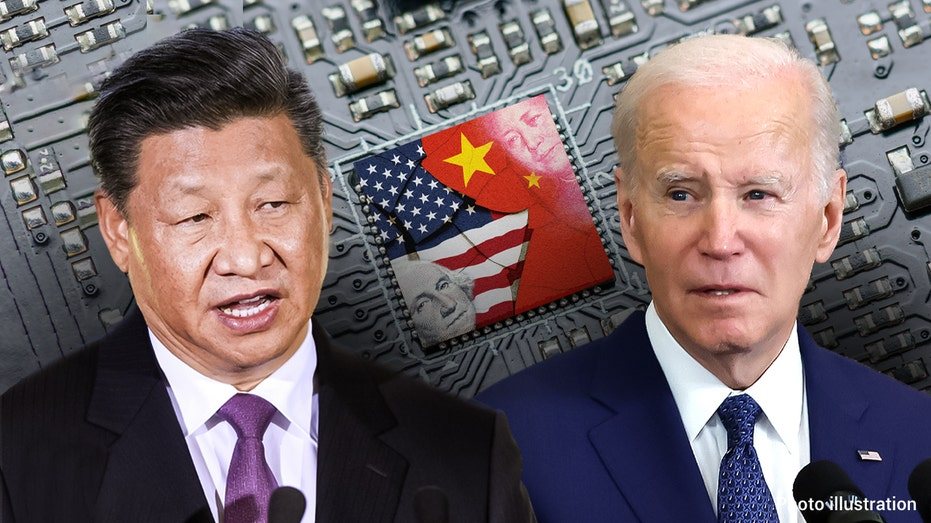
Despite sweeping American export controls designed to cripple its access to advanced semiconductor technology, China's largest technology company, Huawei, is on track to post a 60% increase in chip revenue by 2026, according to analysts. The projected jump, from $7.5 billion in 2025 to roughly $12 billion, stands in stark contrast to the death blow the Biden administration had hoped the restrictions would deliver. The development has ignited a fierce debate over whether US export controls have inadvertently strengthened Huawei or merely slowed its progress in competing on the global stage.
The US originally placed restrictions on Huawei in 2019, blacklisting its devices from government use. The Biden administration tightened those measures further in 2022, banning sales and imports from the company and halting export licenses entirely, citing national security concerns. In 2024, Washington pressed its allies to follow suit, and the Trump administration has continued those efforts in 2025, blocking dozens of Chinese groups from accessing semiconductors and other advanced technology. The cumulative effect created a de facto ban on Huawei, which the US Department of Commerce justified by arguing that advanced chips could be used by China to produce military systems, including weapons of mass destruction, and to improve autonomous military systems.
However, China had already begun laying the groundwork to reduce its reliance on US technology. Following the 2023 export controls, Beijing directed state agencies to purchase hardware, chips, mobile devices, and software from Huawei, while also pouring over $1 billion in government grants into the company. Huawei's annual reports show that government grants skyrocketed from 2.5 billion yuan (about $403 million) in 2021 to 6.5 billion yuan in 2022 and 7.3 billion yuan in 2023. Although government investment dipped to 3.9 billion yuan in 2025, the cumulative support has coincided with a major milestone: the emergence of the Ascend 910B chip, a cutting-edge product designed to compete with Nvidia's offerings.
Jensen Huang, CEO of Nvidia, the world's largest semiconductor engineering company, has acknowledged Huawei's resilience. In an interview with the Financial Times earlier this year, Huang called Huawei «the single most formidable technology company in China» and noted that «they've conquered every market they've engaged in.» Despite the restrictions, Huawei believes it can push the boundaries of existing technology. In May, the company announced a new strategy based on what it calls the «Tau scaling law,» which aims to make electrical signals move faster and take more efficient shortcuts, rather than focusing solely on shrinking chip components. He Tingbo, a Huawei executive, expressed optimism about collaborating with global partners to drive semiconductor development.
While debates persist about the true effectiveness of the Ascend 910B chip and other breakthroughs Huawei has promised, some US lawmakers argue that the export controls have succeeded in one key area: forcing China to offshore at least some of its production. Representative John Moolenaar, a Republican from Michigan, wrote in a letter to Commerce Secretary Howard Lutnick that «Huawei's only path to meeting China's internal demand has been to illegally procure chips from Taiwan — a humiliation the CCP would prefer to avoid at all costs.» Moolenaar also noted that the United States has accumulated roughly 75 percent of the world's AI computing power, suggesting that while Huawei struggles, America remains dominant.
The situation underscores the complex dynamics of the global semiconductor industry, where geopolitical tensions and technological competition are deeply intertwined. As Huawei continues to receive state support and pursue innovative approaches, the long-term impact of US export controls remains uncertain. The company's ability to generate $12 billion in chip revenue by 2026, despite being cut off from the most advanced technology, signals that China's push for self-sufficiency in semiconductors is far from over. Whether this represents a strategic victory for Beijing or a temporary setback for Washington will likely depend on how effectively Huawei's new chips perform in real-world applications and whether the US can maintain its technological edge.
96