
Memorandum
- From
- Caroline Mercer via Fast Company
- Date
- Filed
- Business·5 min to read
- Re
Cisco CEO Robbins Warns Workers Uncomfortable With Change Face a Tough Road as AI Reshapes Business
ReCisco CEO Robbins Warns Workers Uncomfortable With Change Face a Tough Road as AI Reshapes Business
Cisco chairman and CEO Chuck Robbins, who chairs the Business Roundtable, says the pace of AI-driven change is too fast for employees who resist it, while urging companies to treat AI as an innovation play rather than a cost-cutting exercise.
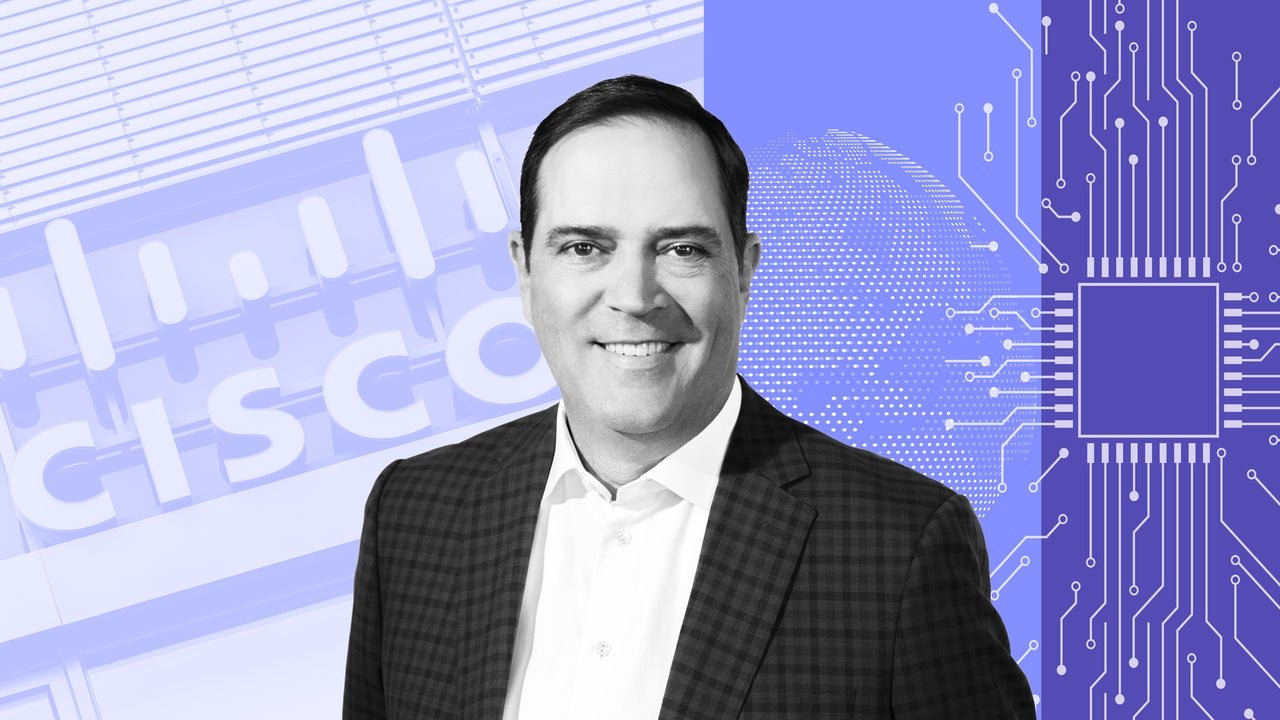
Employees who are uncomfortable with constant change will find little relief in the current business environment, Cisco chairman and CEO Chuck Robbins warned, as artificial intelligence accelerates the pace of transformation across American corporations.
Robbins, who has led the networking giant since 2015 and has served as chair of the Business Roundtable since January 2024, offered the blunt assessment in an interview. «If you're an employee who is uncomfortable with a lot of change and a constant dynamic environment, nothing's going to feel good right now,» he said. «The pace of change is too fast, too dynamic, and they're going to have to figure out their role in this world we're living in.»
His comments carry weight beyond Cisco. The Business Roundtable represents more than 200 chief executives of America's largest corporations, and Robbins will relinquish the chairmanship at the end of this year. He described his tenure as a sounding board for fellow CEOs navigating AI's rapid arrival, including a hastily convened 7:30 a.m. meeting that drew more than 100 chief executives after a major model release.
Robbins said the questions he fields from other CEOs fall into two categories. The first concerns model risk, open-source and open-weight models, Chinese and U.S. systems, and how to deploy them safely. Cisco was one of the original 11 participants in Project Glasswing, giving its teams an advanced view of these models and their capabilities. The second category is productivity: executives want to know what Cisco is doing that they should be doing too.
His answer is that the most innovative companies should not treat AI as a cost-reduction exercise. «You should view this as an innovation enhancement play,» Robbins said. A company could do exactly what it does today with perhaps 20% fewer people, he noted, or it could deliver 20% more innovation with the same headcount. He said the clearest applications at Cisco are coding and customer service.
In coding, Robbins said unchecked AI can generate plenty of code, but the bottleneck simply shifts from writing to verifying it, and eventually to customers' ability to deploy the resulting innovation. On the customer service side, Cisco has deployed personalized agent technology for every employee, with sales teams among the heaviest users. Preparing for a customer meeting now takes a fraction of the time it once did, he said, because agents connect a client's business developments to Cisco's capabilities.
The broader context is a corporate landscape in which every CEO is worried about the speed of AI and whether their company can keep up. Robbins said industry leaders are setting the pace, leaving most companies no choice but to match it. He also pointed to cybersecurity concerns, noting that executives question whether they have the defenses to protect their organizations.
After the interview, AI executives began publicly calling for the industry to slow development of the technology. Asked for his response, Robbins said in a written statement that the concerns of those building the most advanced models deserve attention. But he argued the more important question for customers is not whether frontier models advance faster or slower. Companies are deploying AI today and want to do so safely, securely, and within cost controls, regardless of which model they choose.
«Whether AI speeds up or slows down, our job is to make sure customers don't have to choose between moving fast and moving safely,» Robbins said. He added that the network becomes strategically important in that effort because it can observe how AI agents and applications behave.
Robbins also cited pro-growth tax reform as a capstone accomplishment of his Business Roundtable tenure, alongside the group's recent role helping the business community digest the pace and dynamics AI has brought to bear. For workers and executives alike, his message is that the transformation is not slowing down, and adapting is now part of the job.