Memorandum
- From
- Caroline Mercer via Fortune | FORTUNE
- Date
- Filed
- Business·4 min to read
- Re
AT&T CEO says telecom needs 200,000 workers as AI data centers boom
ReAT&T CEO says telecom needs 200,000 workers as AI data centers boom
AT&T CEO John Stankey says the telecommunications industry will need nearly 200,000 more construction and technician workers by 2032, driven by the AI-fueled data center boom. Many of the entry-level jobs pay around $70,000 a year and do not require a college degree.
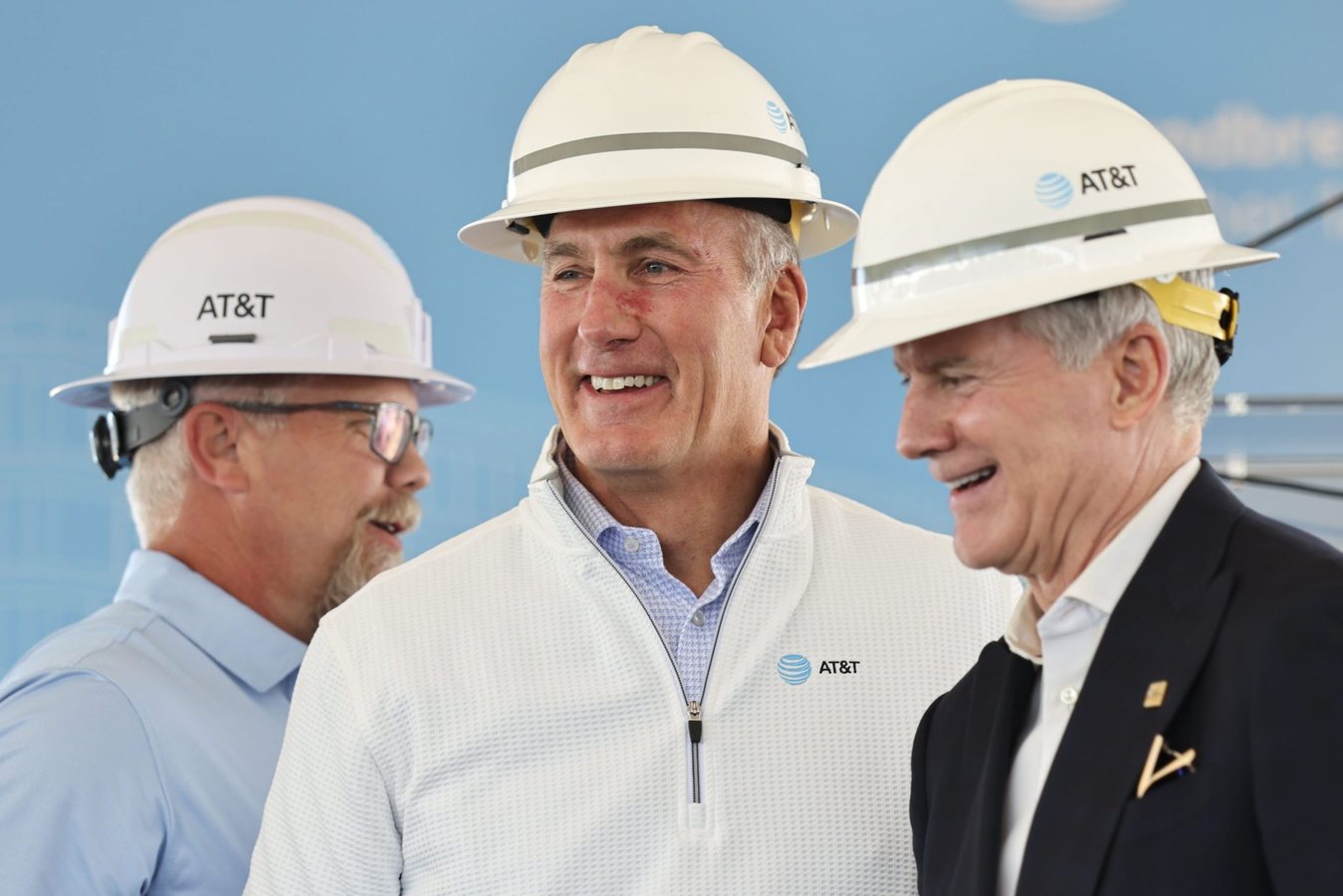
The telecommunications industry will need to bring in nearly 200,000 additional construction and technician workers by 2032, according to AT&T CEO John Stankey, who says the shortage has become an increasingly urgent challenge. The demand is being driven by the rapid buildout of data centers supporting artificial intelligence, a development that is also opening a path into well-paid work for people who do not want to pursue a four-year degree.
Stankey made the comments on the This Old House Radio Hour podcast. “We all know there’s a huge building boom going on, trying to bring the next foundational technology of AI out, and all those data centers have to be connected,” he said. “If we want to keep growing, we really need to address this and step up to it.” Data center development has become one of the largest contributors to U.S. economic growth, with roughly $800 billion expected to be spent in 2026 alone, and the U.S. does not currently have enough workers to keep pace.
Beyond the data center construction, the gradual expansion of broadband infrastructure to homes and businesses is adding pressure. The industry also has to replace workers leaving through retirement and attrition. Stankey said that AT&T has been hiring between 3,000 and 3,500 people a year for technical fiber work, and that the company now has to work hard to find talent. Since 2023, AT&T has hired 10,000 workers for these types of roles.
Much of that opportunity is aimed at younger workers. With the college-to-career pipeline becoming less reliable, telecommunications technician jobs could offer an alternative to a four-year degree. Most entry-level positions, including fiber technician, telecommunications installer and construction roles, do not require a bachelor’s degree and offer paid, on-the-job training. According to the U.S. Bureau of Labor Statistics, the median annual salary for these roles hovers around $70,000, and total compensation can approach six figures when overtime and bonuses are included.
AT&T offers sign-on bonuses of up to $10,000 in select markets. A company spokesperson said the company hires based on “skills and potential” rather than requiring a degree, adding, “we teach the rest.” New fiber splicers receive four weeks of hands-on training, while line technicians receive five weeks of training along with certification to obtain a commercial driver’s license.
The shortage extends well beyond telecommunications. The same construction boom is straining the supply of electricians, plumbers, HVAC technicians and other skilled tradespeople needed to build and maintain data centers. Earlier this year, AT&T joined other Fortune 500 companies, including Meta, Google and Ford, to form the Alliance for America’s Skilled Trades, a coalition focused on U.S. skilled labor shortages. In its first major report, released in September, the group estimated that employers will need to fill about 1.7 million skilled trades openings every year through 2035, while existing training programs produce only roughly half the workers needed.
According to Stankey, closing that gap starts with reducing the stigma attached to careers that do not follow the traditional path of a college degree and a white-collar job. “There’s other people who love to be outdoors; they like to work with their hands; they like physical aspects, and that’s just as valid as somebody who does thought work in a white-collar administrative complex,” he said. “As a society, we need to respect that,” he added, calling for a more balanced view of different kinds of work.
27