Memorandum
- From
- Caroline Mercer via Fortune | FORTUNE
- Date
- Filed
- Business·6 min to read
- Re
American Fast Food Chains Expand in China as Chinese Brands Push Into the U.S.
ReAmerican Fast Food Chains Expand in China as Chinese Brands Push Into the U.S.
American restaurant chains are aggressively expanding across China while Chinese food and beverage brands make inroads in the U.S., creating a two-way commercial exchange that persists despite political tensions over tariffs and technology.
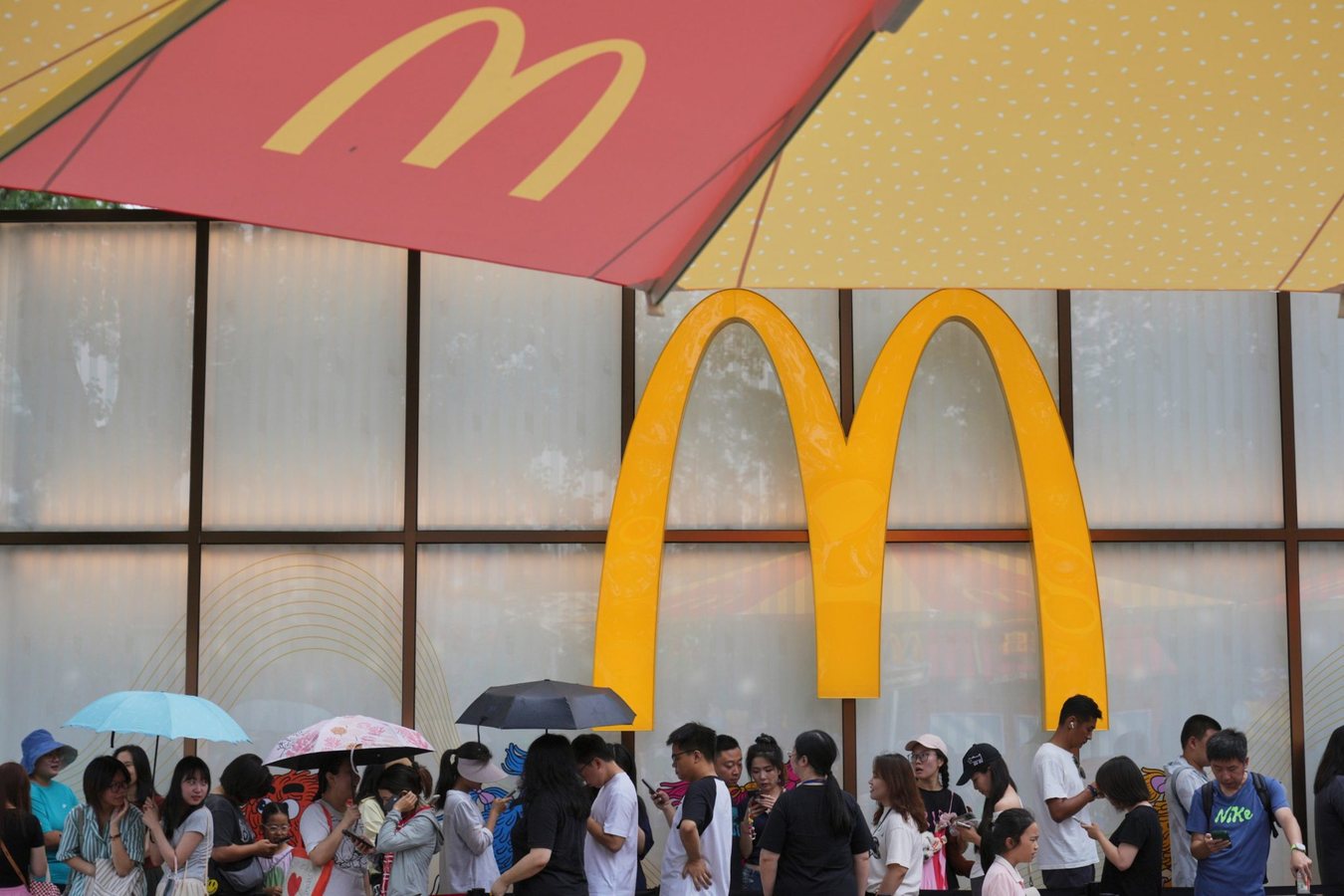
American fast-food and beverage chains are expanding rapidly across China, drawn by a customer base four times the size of the U.S. market, while Chinese restaurant brands are simultaneously making their own push into American cities. The two-way flow of burgers, fried chicken, bubble tea, and coffee is proceeding largely on commercial terms even as Washington and Beijing remain divided on tariffs, technology, and Taiwan.
Church's Texas Chicken drew lines in the rain for its first Shanghai opening last month and plans at least 600 more locations across China. Wendy's says it anticipates opening 1,000 restaurants there over the next decade. McDonald's plans 1,000 new Chinese restaurants this year and 10,000 total by 2028, while Burger King, which entered China in 2005, expects to triple its store count to 4,000 by 2035.
KFC became the first major American fast-food chain to enter mainland China with a Beijing restaurant in 1987, when it was viewed as a premium destination worth taking a date to, according to Shaun Rein, founder of the Shanghai-based China Market Research Group. McDonald's and Pizza Hut arrived in 1990. China is now KFC's largest market by far, with about 13,000 restaurants compared with roughly 3,750 in the U.S.
«Despite political tensions between the U.S. and China, Chinese actually still go crazy for American brands,» Rein said. Yaling Jiang, founder of the market research firm ApertureChina, described recent American arrivals like Popeyes and Five Guys as a guilty pleasure for Chinese consumers, while increasingly international American palates have created space for Chinese brands to serve as unofficial ambassadors. «Consumerism builds a safe, introductory channel for contemporary Chinese culture and can be a great way to elevate China's soft power,» Jiang said.
The exchange runs in both directions. Mixue, one of the world's largest fast-food chains with more than 53,000 locations, opened its first three U.S. stores in December. New York customers waited in the cold at a Herald Square location to sample soft-serve ice cream, fruit teas, and milk tea with toppings like coconut jelly and taro balls. The company has announced at least two dozen more planned locations across four states.
At least nine other mainland Chinese chains have made their U.S. debuts since 2023, all but one specializing primarily in drinks and snacks. They include Heytea, with 40 U.S. locations, and Luckin Coffee, which overtook Starbucks as China's biggest coffee brand and has 20 stores in New York. Wallace, founded in 2000, grew to more than 20,000 restaurants by selling American-style chicken and hamburgers in China. In California, where its second U.S. location opened last month, the company tweaked its chicken sandwich recipe to appeal to American diners.
Success in China is not guaranteed for foreign chains. Most American companies now rely on Chinese partners to find locations and share financial risk. Earlier this year, a Chinese investment firm acquired a 60% stake in Starbucks' China operation after several years of falling store traffic. American chains trade on their brand names but often tailor menus to local tastes. KFC restaurants in China serve french fries and Original Recipe chicken alongside custardy egg tarts and congee, a savory rice porridge.
«They need to operate like a Chinese company but deliver American menus that incorporate Chinese values, eating habits, and tastes,» said Sory Park, a project manager at China-focused market research and strategy firm Daxue Consulting. Much of China's population lives in smaller, inland cities where brands like McDonald's and Starbucks are rolling out stores, Park noted.
For Chinese chains, expansion abroad follows a real estate slump and weak consumer spending that made growth harder to find at home. Before entering the U.S., many major Chinese food-and-beverage chains expanded in Southeast Asia. The average life span of China's 16 million restaurants and chains was expected to fall to 15 months last year, according to a U.S. government report. The American restaurant industry is considerably smaller, with 1 million locations, according to the National Restaurant Association.
Jiang sees another advantage for Chinese brands in a social media trend called «Chinamaxxing,» in which Westerners adopt Chinese lifestyle habits or wellness practices. The White House has not revealed the menu for the state dinner President Donald Trump is hosting for Chinese President Xi Jinping on Thursday, but a taste for cheap, crowd-pleasing meals may be something the two leaders share. Xi made a rare public visit to a steamed-bun restaurant in Beijing in 2013, waiting in line for a 21-yuan meal of pork-and-scallion buns, vegetables, and stewed pork liver and intestines. Trump's affection for fast food is well documented, including a stint at a Pennsylvania McDonald's fry station during his 2024 campaign.
3