Memorandum
- From
- Delaney Sawyer via Fortune | FORTUNE
- Date
- Filed
- Society·6 min to read
- Re
U.S. Scientists Leave Abroad as Federal Research Cuts Reshape Careers
ReU.S. Scientists Leave Abroad as Federal Research Cuts Reshape Careers
Delayed grants and political pressure on research are pushing American and foreign-born scientists to take posts in Finland, the U.K., Australia and China, raising concerns about a lasting talent drain.
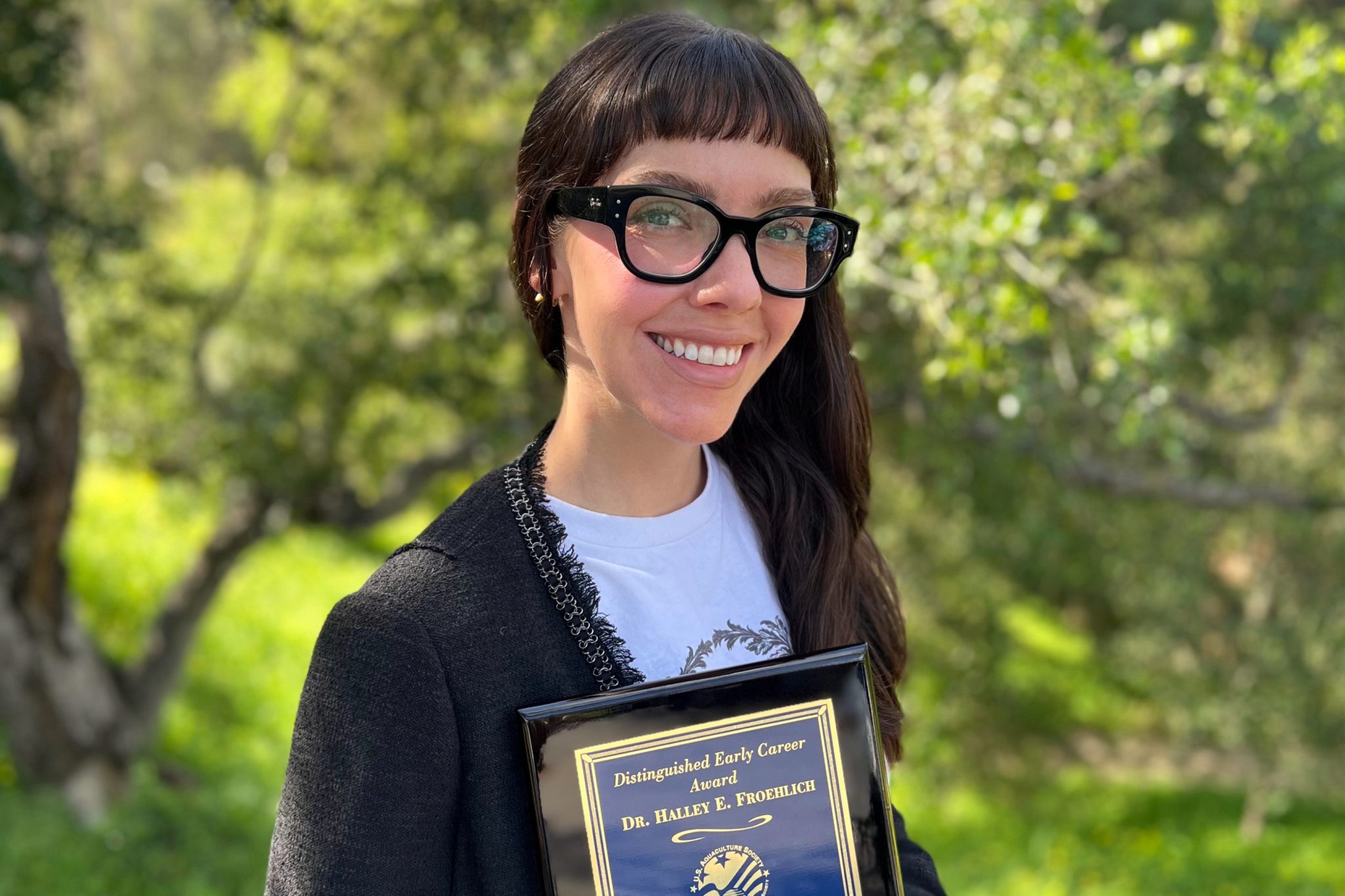
American scientists are increasingly relocating to universities and research institutions overseas, driven by delayed federal grants and growing uncertainty about the direction of U.S. science policy. The departures span disciplines and career stages, and researchers say the trend is both unprecedented and difficult to reverse.
Halley Froehlich, a researcher who studies how fish, shellfish and seaweed consumed by humans are responding to climate change, had expected to build her career in the United States. Her family has lived in the country since the 1700s. But over the past two years, postponed federal funding and concerns about the future led her to move with her husband and daughter to Finland, where she continues her work at the University of Helsinki. She was recruited through an initiative by the Research Council of Finland and now has five years of guaranteed funding totaling about $3 million. She lives in a flat by the Baltic Sea and is taking Finnish lessons offered by the university.
Froehlich described her decision as a slow burn. She was already worried about school safety and gun violence when the national research landscape was upended. At the University of California, Santa Barbara, colleagues' grants were repeatedly postponed or canceled, and student researchers came to her office in tears, unsure how to plan their futures. She also worried about future federal support for her own climate-related work. «The cumulative effect of those things ultimately ended up making us really serious about, I don't think here is our home anymore,» she said.
Foreign universities have moved to capitalize on the disruption. Institutions in Canada, France, Belgium and Finland have adopted programs designed to lure U.S.-based researchers, promising steadier funding and greater academic freedom. More than half of American states have lost scientists to such recruitment efforts, according to an April report from the Business for Federal Research Funding Coalition. Early-career biomedical scientists last March were about 20 percentage points less likely to say they would stay in the U.S. than they had been six months earlier, and physics Ph.D. graduates in 2025 left the country at the highest rate in 30 years, according to the American Institute of Physics.
The shift is visible even at the top of the profession. Omar Yaghi, who won the 2025 Nobel Prize in chemistry, left his post at the University of California, Berkeley, this year to direct an artificial intelligence lab at China's Tsinghua University. Forty percent of U.S. science Nobel Prizes have been won by immigrants, a reminder of how much the country's research standing has depended on its ability to attract talent from abroad.
International researchers who came to the U.S. for its scientific reputation are also leaving. Biologists James Letts and Maria Maldonado, who are married, left their posts at the University of California, Davis, for Monash University in Australia. Letts is from Canada and Maldonado from Argentina; both earned doctoral degrees in New York and spent more than a decade doing science in the U.S. Grant-related uncertainty, including having to lay off a staff scientist while waiting for stalled funding, pushed them to make the move. «All I want to do is do great science and make discoveries, but I want my work to mean something as well,» Letts said. «And the opportunity to do that seemed very difficult in the U.S.»
Christine Stawitz left her job at the National Oceanic and Atmospheric Administration last year to become a research software engineer at the University of Birmingham in England. She said the agency no longer aligned with her values, particularly after she was asked to strip websites of references to climate change and diversity, equity and inclusion topics. She said the upheaval in U.S. science is now a common topic at scientific meetings. «People talk about the U.S. at conferences in the U.K. now like, I don't know what's going on there. It's not good,» she said.
The White House disputes the framing of the cuts. Spokesperson Liz Huston said Trump is «ending waste» and is «committed to keeping America the world leader in scientific innovation, and that means funding real science.» The administration has cut or frozen up to $174 billion in federal grants since the president's second term began.
The United States remains a science powerhouse, with well-resourced institutions and robust research communities that continue to attract foreign scientists. Not everyone is leaving; many researchers are staying, seeking new funding sources or moving into industry. Even if every European country opened its doors, there would not be enough capacity to absorb every American scientist who might want to leave. But scientists and professional groups warn that the reputational damage may be lasting. «It used to be the shining city on the hill where we all want to go,» Stawitz said. «That reputational loss, I think, is hard to quantify, but also really damaging.»
4