Memorandum
- From
- Derek Weston via FOX News
- Date
- Filed
- Society·5 min to read
- Re
Anthropic CEO Dario Amodei Pushes Independent AI Oversight as Watchdog's Industry Ties Draw Scrutiny
ReAnthropic CEO Dario Amodei Pushes Independent AI Oversight as Watchdog's Industry Ties Draw Scrutiny
Anthropic CEO Dario Amodei is calling for independent third-party evaluators to supervise frontier AI companies, pointing to METR as a model. But METR's founders share deep ties to the effective altruism movement and to Anthropic itself, raising questions about how independent such oversight can be.
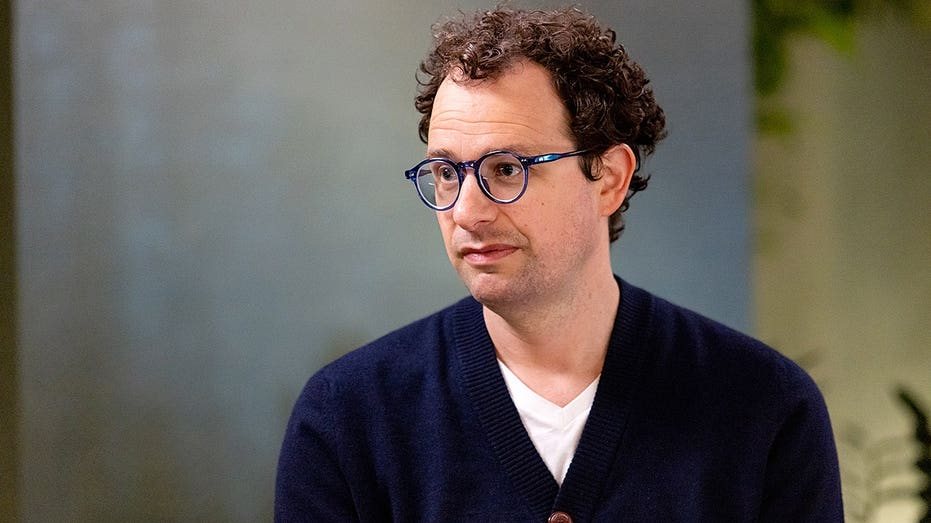
Anthropic CEO Dario Amodei wants independent watchdogs to police the artificial intelligence industry. In a recent letter, he proposed that frontier AI companies grant ongoing, employee-like access to embedded third-party evaluators whose job would be to verify safety practices, report incidents, and assess not just finished models but the training pipelines behind them.
Amodei named METR as an example of the kind of organization that could fill that role. METR describes itself as an AI safety testing laboratory. «METR evaluates frontier AI models to help companies and wider society understand AI capabilities and what risks they pose,» its website states. In his letter, Amodei argued that companies currently decide what to disclose about their own systems. «Regardless of what commitments we make, the public deserves to know what is going on. We are still the ones choosing what to include and omit. Embedded evaluators will change this dynamic,» he wrote.
The proposal arrives as AI safety and governance remain unsettled public questions, with lawmakers, researchers, and industry figures debating who should verify that powerful models behave as intended. Amodei has become one of the most prominent voices urging the industry to accept outside scrutiny rather than self-regulation alone.
METR's connections to that same safety community are extensive. Its founder and CEO, Beth Barnes, worked at OpenAI alongside Amodei as the company developed early versions of ChatGPT. At an Effective Altruism Global event, Barnes described her vision for AI safety work. «Our overall plan is — it sort of seems like it would be good if it was someone's job to look at models and decide if they're going to kill us, think through the ways that that might happen, anticipate them, figure out what the early warnings would be, that sort of thing,» she said.
Paul Christiano, who led research on OpenAI's efforts to ensure its models followed acceptable strategies, later founded the first iteration of METR. He has also framed parts of his approach to AI safety as a form of effective altruism, the belief that evidence and careful reasoning can maximize the good people and companies do with their time and resources. «My suspicion is that it is more important for the 'effective altruism' movement to have a fundamentally good product and to generally have our act together than for it to grow more rapidly,» Christiano wrote in 2014.
Both Barnes and Christiano have worked on evaluations involving Anthropic models, providing safety checks for Anthropic's flagship AI, Claude. Those ties extend to Anthropic's financing as well. Sam Bankman-Fried, the founder of the cryptocurrency exchange FTX, led Anthropic's 2022 Series B financing round before his company collapsed and he was convicted in a multibillion-dollar fraud case. Before FTX's downfall, Bankman-Fried was among the highest-profile proponents of effective altruism, publicly saying it shaped his approach to earning and giving money. Skype co-founder Jaan Tallinn led Anthropic's 2021 Series A financing round. Tallinn has been one of the movement's most prominent supporters, speaking at Effective Altruism Global conferences, helping found the Centre for the Study of Existential Risk and the Future of Life Institute, and donating more than $1 million to the Machine Intelligence Research Institute.
Amodei is not asking the rest of the industry to submit specifically to METR's thinking. He holds METR up as an example of the guidance he believes the sector needs. His own path to AI safety work began in science. He studied biophysics, earning a Ph.D. from Princeton in 2011, then became a postdoctoral scholar at the Stanford University School of Medicine. He went on to work at Baidu, Google Brain, and, in 2016, OpenAI, where he helped develop speech recognition through machine learning and later worked on safety while contributing to neural-net research.
At OpenAI, Amodei rose to vice president of research as the company developed its ChatGPT 2 and ChatGPT 3 models. He left in 2020, believing the company was not doing enough to install guardrails on the technology he had long theorized about, and unsure whether it could set aside its financial interests. He founded Anthropic the following year. The company has since positioned itself around AI safety, and Amodei's call for embedded evaluators now tests whether the industry will accept outside verification — and whether watchdogs with roots in the same close-knit safety community can credibly provide it.