Memorandum
- From
- Derek Weston via FOX News
- Date
- Filed
- Politics·5 min to read
- Re
Trump’s new birthright citizenship orders take narrower legal approach
ReTrump’s new birthright citizenship orders take narrower legal approach
President Donald Trump has signed new executive orders targeting birthright citizenship and birth tourism, taking a narrower legal approach than his first attempt after the Supreme Court rejected it in June. Conservative legal experts see stronger footing in exceptions for children of foreign-government employees and terrorist group members, while critics argue the orders overstep executive power.
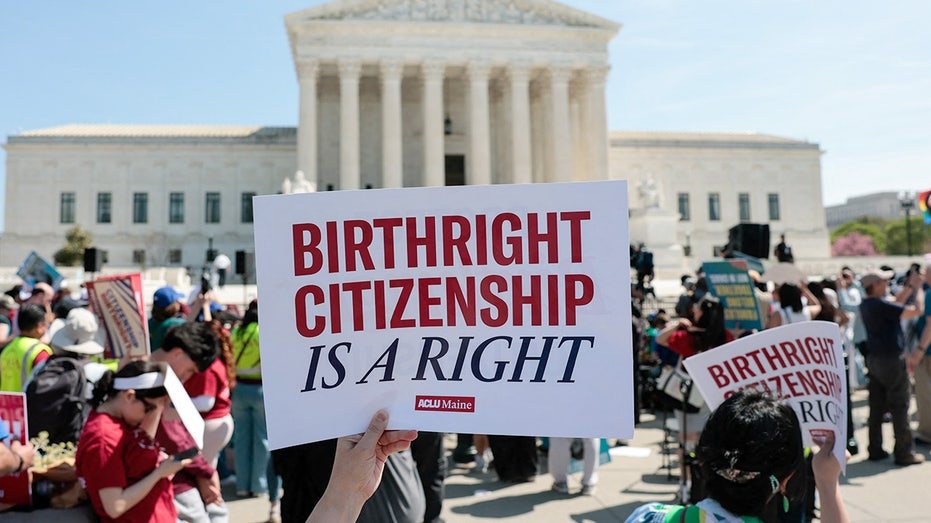
President Donald Trump has signed two new executive orders aimed at narrowing birthright citizenship and cracking down on birth tourism, adopting a more targeted legal strategy after the Supreme Court rejected his first attempt in June. The new orders direct federal agencies to withhold citizenship-recognition documents from certain children born in the United States when neither parent is a citizen, including children of members of designated foreign terrorist organizations, foreign-government employees, and participants in transactions or fraud intended to obtain birthright citizenship.
Conservative legal experts say the new approach rests on longstanding exceptions to the 14th Amendment’s citizenship clause, which the Supreme Court has recognized for children of diplomats and children of alien enemies during hostile occupation. Chad Mizelle, a senior fellow at the America First Policy Institute and former Justice Department chief of staff, argued that members of foreign terrorist organizations fit within the enemy exception. Ilya Shapiro, director of constitutional studies at the Manhattan Institute, said the order targets those who owe allegiance to a foreign government or who qualify as invaders or terrorists, categories he described as classic exceptions to birthright citizenship.
The Supreme Court ruled 6-3 in June that children born in the United States to parents who are unlawfully or temporarily present are citizens at birth under the 14th Amendment. That decision, which cited the 1898 case United States v. Wong Kim Ark, recognized exceptions for children of diplomats and children of alien enemies born during hostile occupation. Trump’s new order argues that members of foreign terrorist organizations can fall within that enemy exception.
Critics, however, contend the administration is overstepping its authority. David Bier, director of immigration studies at the libertarian Cato Institute, said Congress, not the president, establishes what it means to be subject to U.S. jurisdiction. He called the idea that the president can decide on his own authority who is subject to U.S. laws a radical expansion of executive power that would be unprecedented in American history. Bier said the new case tests a different proposition from the earlier one, focusing more on executive power than on birthright citizenship itself.
Amanda Frost, a professor at the University of Virginia School of Law, pointed out that Wong Kim Ark specifies that only children of enemies occupying some portion of the country are barred from citizenship at birth. That means Trump’s order would not apply to terrorists simply residing within the United States. Frost also noted that expanding the legal definition of diplomat to exclude more people from birthright citizenship could complicate prosecutions of those individuals for criminal offenses, a concern Bier echoed. Both Frost and Bier believe the new executive order should be ruled unconstitutional.
Legal standing could become a central issue in challenges to the order. To sue, plaintiffs must show they suffered or imminently face a concrete injury caused by the defendant that a court can remedy. Gene Hamilton, co-founder and president of America First Legal, said it will be interesting to see who actually has standing to challenge the order, questioning whether anyone could credibly claim they would be swept up in the definition of a foreign terrorist organization.
The same groups that challenged Trump’s initial order are now arguing that the new one unlawfully creates exceptions to birthright citizenship that conflict with the Supreme Court’s June ruling. The order is already facing legal resistance, setting the stage for another round of litigation over the scope of the 14th Amendment and the limits of presidential authority.
61