
Memorandum
- From
- Delaney Sawyer via fox - Politics
- Date
- Filed
- Politics·6 min to read
- Re
Republicans Outspent Democrats but Still Lost Ground in 2026 Midterms
ReRepublicans Outspent Democrats but Still Lost Ground in 2026 Midterms
Republican committees and allied super PACs raised about $1.7 billion for the 2026 midterms, yet the party suffered heavy losses, prompting experts to question how much money can really shape election outcomes.
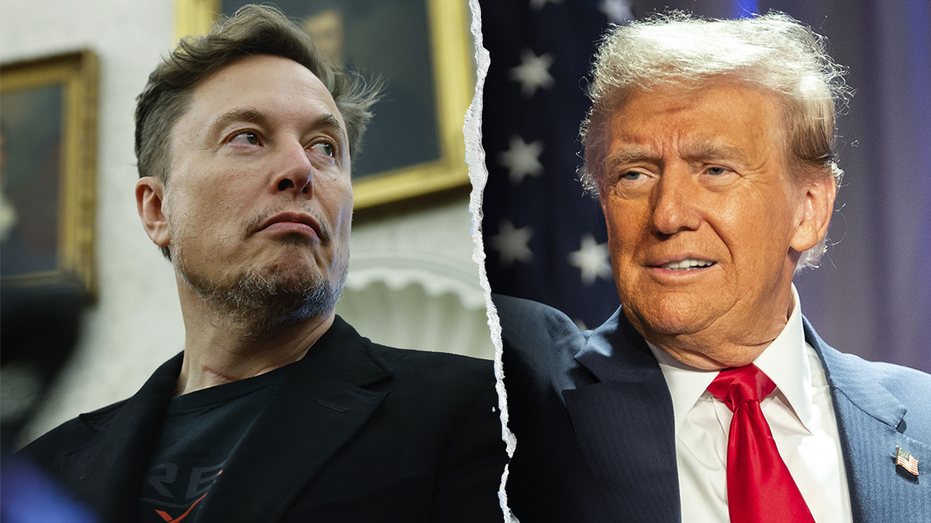
Republicans entered the 2026 midterm elections with what many in conservative circles viewed as a decisive financial advantage, but the cash did not translate into the results the party had hoped for. Across the Republican National Committee, the Senate Leadership Fund, the Congressional Leadership Fund, the National Republican Congressional Committee and the National Republican Senatorial Committee, the GOP raised roughly $1.7 billion to fuel its campaigns. Democratic committees, by comparison, raised well over $300 million less, yet still scored significant gains in traditionally Republican strongholds including Texas, South Carolina, Kansas and Mississippi.
The Republican advantage grew further with the help of two political action committees. President Donald Trump's MAGA Inc. and Elon Musk's America PAC together collected an additional $665.4 million for Republican candidates to spend. Despite that nine-figure edge, the party posted one of its weakest midterm performances in recent history, losing Senate seats even in deep red jurisdictions such as South Carolina and Mississippi. Experts from across the political spectrum told Fox News Digital that the result shows the limits of fundraising when a party faces strong political headwinds.
Scott Walter, president of the right-of-center Capital Research Center, summed up the argument in two words: «Money is not magic.» He warned both sides against drawing the wrong lesson. Democrats, he said, should be wary of using donation limits to curtail political speech, while Republicans should not assume that more money automatically produces more votes. Walter also cited data aggregated by OpenSecrets to argue that the biggest donor in a given election cycle rarely gets what they want from the American political system. He directed his criticism at Senator Sheldon Whitehouse, D-R.I., who has argued that billionaires and «dark money» control the political landscape.
Brendan Glavin, director of insights at OpenSecrets, a nonprofit that tracks money in politics, said money clearly matters in elections but that its effect can be reduced by other factors, many of which were present this cycle. «Certainly, the money makes a difference,» Glavin said. «When both sides are engaging in a sort of arms race, and they're both spending almost equivalently, then really the effect is lost.» He described how a voter who sees an ad for one candidate immediately followed by an ad for the opponent may simply be left where they started. In marquee races such as the Senate contests in Texas and Michigan, both parties had enough money to saturate the airwaves with their messages, creating exactly that environment.
Glavin said the broader political mood also limited what advertising could accomplish. «This election was very unique,» he said. «What people probably really didn't see until afterward is there was this significant headwind, and voters were feeling a certain way, and more ads were not going to change that.» To illustrate the point, he noted that self-funding candidates often struggle to gain ground despite spending heavily. Former New York City Mayor Michael Bloomberg, for example, spent roughly $1.1 billion of his own money on his 2020 presidential campaign and won only 55 delegates in the Democratic primaries, at an approximate cost of $18 million per delegate.
Academics disagreed on how much money shapes outcomes. Ray La Raja, a professor of political science at the University of Massachusetts Amherst, said money has diminishing returns and that in an election wave where the president and his party are widely disliked or distrusted, spending can do little to save them. John Sides, a political science professor at Vanderbilt University, pointed to a 2022 study he co-authored with two other academics on television advertising. That research found a relatively direct relationship between ad spending and vote share, with diminishing returns at very high spending levels but still a measurable marginal impact.
Joe Arlinghaus, a Texas-based conservative political strategist, argued that how money is spent matters more than how much is spent. He said that could help explain the GOP's poor showing despite its cash advantage, and he contrasted the party's approach with Democratic campaigns that he said have steadily refined their methods through trial and error. «I am inclined to believe that almost every dollar spent by the big SuperPAC funded by Elon Musk was worthless,» Arlinghaus said. The debate over whether the 2026 results reflect a failure of money or a failure of message is likely to continue as both parties look ahead to future campaigns.
49

Source: Why deep pockets weren’t enough to save the GOP in 2026: 'Money is not magic'