
Memorandum
- From
- Connor Quincy via FOX News
- Date
- Filed
- Politics·5 min to read
- Re
Michigan Democratic Senate Primary Too Close to Call
ReMichigan Democratic Senate Primary Too Close to Call
Progressive Abdul El-Sayed and moderate Rep. Haley Stevens remained locked in a razor-thin contest early Wednesday after a record-spending Michigan Senate primary, with the outcome likely to shape the fight for Senate control.
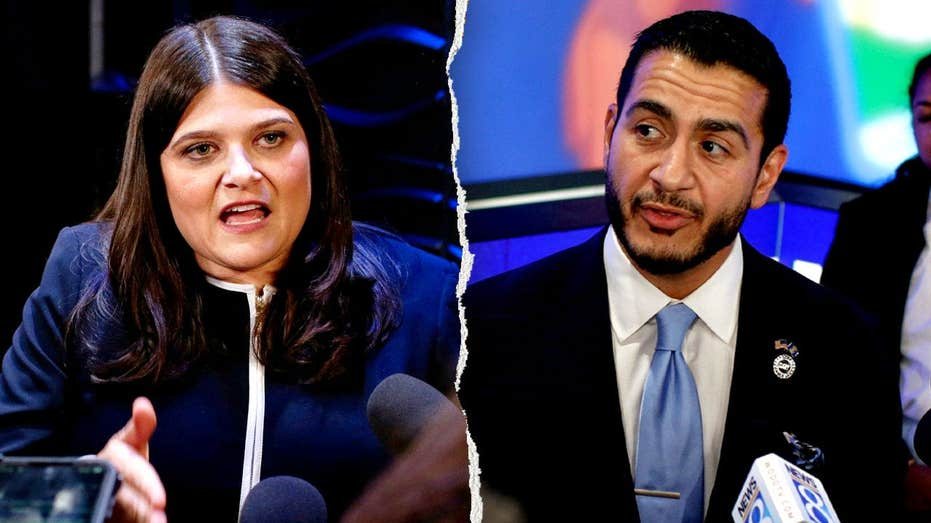
The bitter ideological war inside the Democratic Party reached a boiling point in Michigan on Tuesday, but its most anticipated outcome remained unresolved early Wednesday as the Senate primary between progressive Abdul El-Sayed and moderate Rep. Haley Stevens was too close to call.
El-Sayed, a former Wayne County health director backed by Sen. Bernie Sanders and Rep. Alexandria Ocasio-Cortez, held a razor-thin lead over Stevens, who was endorsed by Senate Democratic leader Chuck Schumer and retiring Sen. Gary Peters. The winner will face Republican Mike Rogers in the general election, a contest that could help determine control of the Senate.
The race to succeed Peters became the most expensive Democratic Senate primary in history, with more than $80 million spent. Much of that money came from outside groups, including United Democracy Project, a political action committee aligned with the American Israel Public Affairs Committee, which poured resources into opposing El-Sayed. The candidate told supporters in Detroit that his campaign was outspent by roughly 11 to 1.
«We all knew that we were going to spend their money. We didn't know they were going to spend $70 million of their money,» El-Sayed said. «And yet we're still standing.»
El-Sayed, an epidemiologist who ran unsuccessfully for governor in 2018, would become the nation's first Muslim senator if elected. His campaign has centered on «Medicare for All,» and he has called for abolishing Immigration and Customs Enforcement. He has also been a vocal critic of Israel's military campaign in Gaza, which he has described as genocide.
Tuesday's primary was the biggest test yet of a progressive strategy to challenge establishment Democrats on their home turf. Progressives had racked up a string of victories this spring in largely Democratic congressional districts, and Michigan was seen as the best opportunity to prove that the movement could win a statewide race.
Stevens, who flipped a Republican-held district in Michigan during her first congressional run in 2018, is viewed by Schumer and other establishment Democrats as a more electable general-election candidate. In her primary night remarks, she argued that defeating Rogers was paramount.
«Republicans are going to do everything they can to throw all the dirt, all the mud, the kitchen sink at us, because they want to keep the U.S. Senate red, so Mike Rogers can keep rubber-stamping Donald Trump's ridiculous agenda,» Stevens said.
El-Sayed also urged party unity, telling supporters that whoever wins must take on Rogers.
The eventual Democratic nominee will face Rogers, the Republican Senate nominee, in a race seen as one of roughly a dozen Senate contests expected to decide whether Republicans keep their narrow majority.
The intraparty fight extended beyond the Senate race. In Michigan's 7th Congressional District, William Lawrence, a co-founder of the Sunrise Movement climate advocacy group, defeated two more moderate Democrats in a primary for a Republican-held swing seat. Lawrence was backed by Sanders, El-Sayed and several progressive groups and will face Republican Rep. Tom Barrett in November.
In the heavily Democratic 13th District, which includes parts of Detroit, the race between Rep. Shri Thanedar, who is supported by House Democratic leaders, and state Rep. Donovan McKinney, backed by Sanders and members of the «Squad,» had not been called early Wednesday.
Democratic voters in Missouri delivered another high-profile result, as Rep. Wesley Bell defeated former Rep. Cori Bush in a rematch of their 2024 primary. Bush, a former member of the «Squad» and a Democratic Socialists of America-backed candidate, lost again to Bell, who was supported by House Democratic Leader Hakeem Jeffries. Outside money again played a major role in the contest, with Bell substantially outspending Bush.
President Donald Trump's influence over the Republican Party was also on display Tuesday night, as Trump-backed candidates won gubernatorial nominations in Michigan and Kansas.
Tuesday's primaries across five states showed that both parties remain deeply divided heading into the midterm election, with the Michigan Senate race emerging as the clearest test of whether the progressive movement can translate grassroots support into a victory in a key battleground state.