
Memorandum
- From
- Caroline Mercer via fox - Most Popular
- Date
- Filed
- Politics·6 min to read
- Re
Kavanaugh Signals USPS Mail Ballot Rule Could Survive Despite Supreme Court Setback
ReKavanaugh Signals USPS Mail Ballot Rule Could Survive Despite Supreme Court Setback
The Supreme Court declined to lift an injunction blocking a Postal Service mail-ballot rule before the 2026 midterms, but Justice Brett Kavanaugh's concurrence suggests the rule may ultimately be upheld, keeping the legal fight alive for future elections.
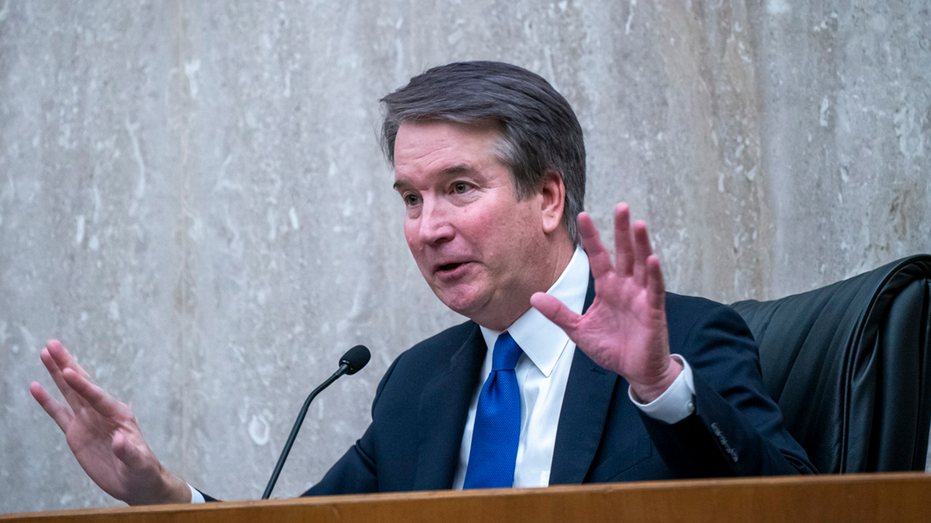
The Supreme Court on Monday denied the Trump administration's emergency request to lift a lower court injunction that blocks a U.S. Postal Service rule imposing new requirements on mail-in ballots, ruling that the government was unlikely to succeed on the merits of its challenge. The decision keeps the rule sidelined for the 2026 midterm elections, with ballots already being sent to voters in some states.
But the court's action did not end the legal battle. Justice Brett Kavanaugh, in a concurring opinion in United States Postal Service v. California, wrote that there is «at least a fair prospect» that the final rule falls within the Postal Service's statutory authority. That assessment, legal observers say, leaves the door open for the rule to be revived in future litigation, possibly in time for the 2028 presidential election.
«I would note though that Justice Kavanaugh threw the government a lifeline by saying that he views it as likely that they do have the statutory authority,» Jason Snead, executive director of the Honest Elections Project, said. «And I think if you read the dissent, you can see where Justices Thomas and Alito are on questions like that as well.»
The rule at issue requires federal ballot-mail envelopes to include an election-mail logo, be scannable by high-speed processing equipment, and carry a specialized barcode unique to each voter. States would also have to upload certain voter information to a Postal Service portal. A coalition of 24 Democratic state attorneys general sued the Trump administration, arguing the rule violates the Constitution's Elections Clause, which grants Congress the power to regulate elections. The administration countered that the Postal Service is regulating the mail, not election procedures.
Justice Samuel Alito, joined by Justice Clarence Thomas, dissented from the court's decision, arguing the government had made the necessary showing for a stay. He also questioned whether some plaintiffs had standing and described their legal approach as a «Hail Mary pass» that the Supreme Court has previously said «rarely succeeds.»
«The hail mary passes seem to be succeeding to a certain extent,» Iowa Solicitor General Eric Wessan said. He pointed to timing as a major factor, noting that earlier litigation and an injunction in Massachusetts delayed the Postal Service's ability to publish the final rule. «So I'm not surprised now, close to the deadline when ballots have to go out to people that the Supreme Court took the approach of maintaining the status quo, although I think that Justice Alito's dissent highlights a lot of issues with the approach taken by the majority, and I would not be sure that the same result would be what the Supreme Court reaches in advance of, for example, the 2028 election,» Wessan said.
Snead echoed that the rule is effectively dead for the midterms but predicted further legal wrangling. «I do think that as a practical matter, the rule is not going to be implemented in time for the midterms. I think that's a done deal at this point. But I do hold out hope that there will be some additional litigation over this that could allow this rule to be implementing ahead of the 2028 presidential election,» he said. «So this case is still alive and well, and I think that Kavanaugh has given us all some hope that as it progresses eventually, this rule might be allowed to go into effect hopefully in time for the 2028 election since the left has successfully killed it for 2026.»
The court's majority issued an unreasoned order, a point that stood out to some legal analysts. «I think the biggest surprise was the fact that it came with an unreasoned order, especially right after they granted a stay in Missouri, which was also on an unreasoned order,» Abhishek Kambil said. «So, in cases like this, where there's a lot at stake, you would hope that in a stay opinion that the Supreme Court would explain its reasoning.»
The concurrence is the latest instance of Kavanaugh outlining a legal pathway for a Trump policy even when the immediate outcome goes against the administration. Roughly three months ago, he laid out a route for Trump to implement an executive order curtailing birthright citizenship in his concurrence in Trump v. Barbara. He also offered a blueprint for implementing sweeping tariffs in his dissent in Learning Resources, Inc. v. Trump.
With the rule blocked for 2026, the litigation is expected to continue in lower courts. The case could return to the Supreme Court, where the concurrence and dissent suggest at least four justices may be open to upholding the rule under different circumstances. For now, the midterm elections will proceed under existing mail-ballot procedures, but the legal fight over the Postal Service's authority remains unresolved.