
Memorandum
- From
- Caroline Mercer via fox - World
- Date
- Filed
- Politics·5 min to read
- Re
Janez Janša Returns as Slovenia's Prime Minister With Conservative Agenda
ReJanez Janša Returns as Slovenia's Prime Minister With Conservative Agenda
Slovenian lawmakers approved Janez Janša as prime minister for a fourth non-consecutive term, clearing the way for conservative shifts on Israel, immigration, and the economy.
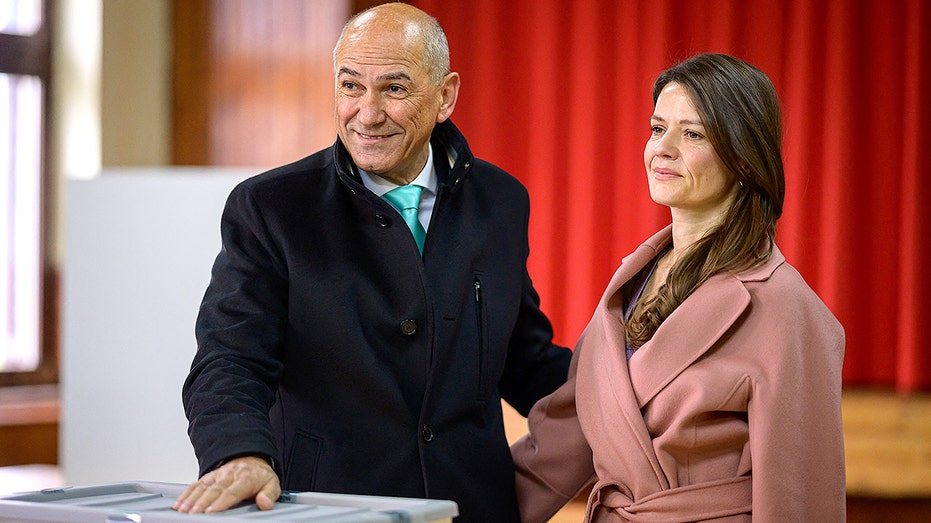
Janez Janša, a veteran conservative politician often likened to Donald Trump, has returned as Slovenia's prime minister for a fourth non-consecutive term after parliament approved his coalition in a secret ballot. The vote ended weeks of political deadlock and installed a government that promises to reverse several policies of the previous left-leaning administration led by Robert Golob.
Janša's Slovenian Democratic Party did not win the most seats in the March 22 parliamentary election. It took 28 of 90 seats with 27.9% of the vote, while Golob's Freedom Movement won 29 seats with 28.7%. Although Golob's party finished first, it lost 12 seats compared with its 2022 result and was unable to secure the 46 votes needed to form a ruling coalition.
President Nataša Pirc Musar declined to nominate a candidate for prime minister after no one appeared able to command a majority. Janša, described by analysts as a skilled coalition builder, then secured 51 votes in the National Assembly: 48 from his coalition partners, two from representatives of the Italian and Hungarian minorities, and one from an anonymous opposition lawmaker. The 29-28 split mirrored the outcome in 2008, when Janša also lost an election but still managed to form a government.
Since taking office, Janša has signaled a sharp shift in foreign policy, particularly toward Israel. He has announced plans to move Slovenia's embassy to Jerusalem, freeze his predecessor's recognition of a Palestinian state, and revoke a 2025 ban on military trade with Israel, undoing Golob's anti-Israel measures.
Domestically, he has promised to reverse what he called the inefficiency of the Golob government and turn Slovenia into «a country of opportunity, prosperity and justice, where each responsible citizen will feel safe and accepted.» His agenda includes cutting government red tape, supporting private education and healthcare, reforming the pension system, shrinking the state, and investing in infrastructure, including a second reactor at the Krško nuclear power plant.
Janša has also emphasized strong relations with the United States. At an America 250 event hosted by the U.S. Embassy in Ljubljana, attended by Viktor Knavs, Melania Trump's father, Janša described America as a model for Slovenia's independence. «We imagined America, the United States of America, as the ideal embodiment of that free world,» he said. «That Slovenia, too, would become the home of the brave in a land of the free.»
On Ukraine, Janša has maintained support for Kyiv. He traveled to Ukraine in March 2022 with the then-prime ministers of Poland and the Czech Republic, an early display of European Union solidarity after Russia's full-scale invasion. He recently returned to Kyiv for Ukraine Statehood Day as part of the Ukraine-Southeast Europe Summit. He favors more military aid for Ukraine and additional sanctions against Russia.
Immigration is another area where Janša has taken a hard line. During the 2015 migration crisis, when large numbers of people moved along the Balkan Route through Slovenia, he was staunchly opposed to open-border policies. He has often praised Trump's immigration approach. Shortly after taking office, he joined 18 other EU leaders in signing a letter calling for «a fundamental change in immigration policy» and practice, including reducing irregular migration, combating human smuggling, increasing deportations, and strengthening cooperation with third countries. «The end is approaching for social tourism, overlooked people smuggling and the importation of voters for the European left,» Janša wrote.
Janša remains a divisive figure in Slovenian politics. Critics have called him «the greatest threat to Slovenia's sovereignty and democracy.» He has clashed with news outlets that accuse him of undermining media independence, and he is known for combative posts on X, often written late at night. He also served time in prison after a conviction he described as politically motivated.
His political career reaches back to the final years of Yugoslavia. In 1988, he was arrested and tried behind closed doors, an experience that helped define his political identity. Now, at the head of a narrowly approved government, Janša faces the challenge of translating a thin majority into lasting policy change in a country of about two million people.